
Walking the Shikoku Pilgrimage: Keeping a 1,200-Year Tradition Alive for Future Generations
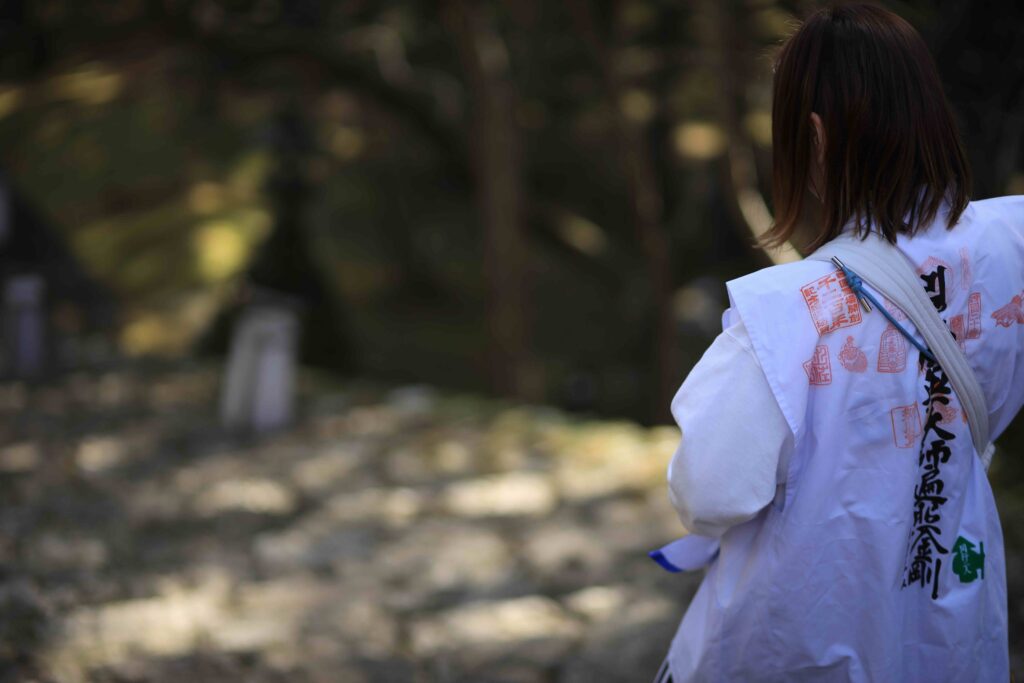
On a crisp February morning in Kochi, a group of walkers gathered with a shared purpose: to experience the Shikoku Pilgrimage not as tourists, but as participants in a living cultural tradition. This was part of a special pilgrimage walk event designed to pass Japan’s extraordinary henro culture on to the next generation — and to share it with the world.
Our route took us from Chikurinji Temple (Temple 31) to Zenjibuji Temple (Temple 32), walking the ancient trail that pilgrims have followed for over twelve centuries. Along the way, we picked up litter — a small act of gratitude to the communities that have welcomed and supported o-henro-san throughout the ages.
What Is the Shikoku Pilgrimage?
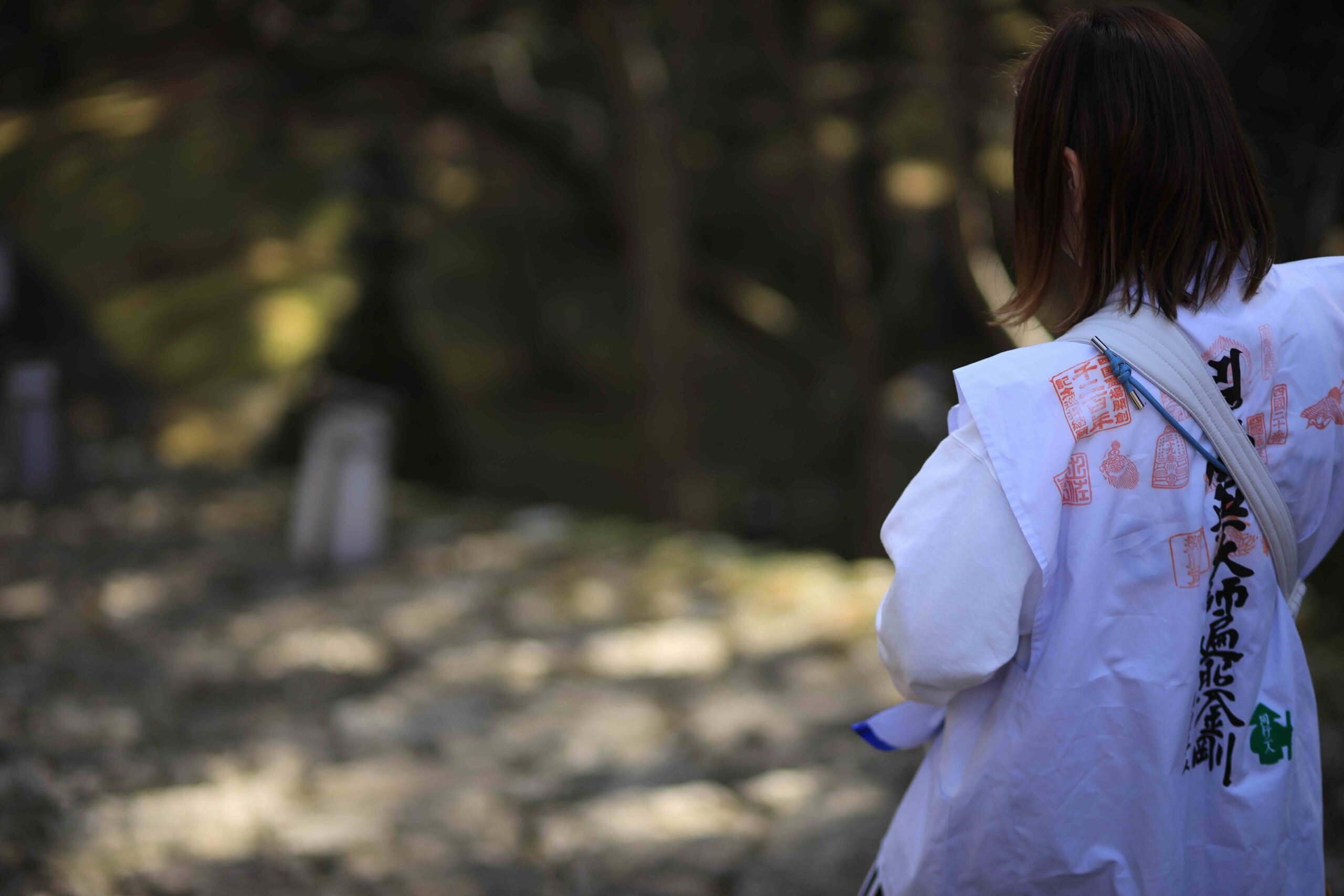
The Shikoku Pilgrimage — Shikoku Hachiju-hakkasho — is one of the world’s great pilgrimage routes. It winds 1,200 kilometers across Shikoku Island, connecting 88 temples associated with Kobo Daishi (774–835), the founder of Shingon Buddhism who was born on this island. Pilgrims, called o-henro-san, traditionally walk in white robes (hakui), carrying a wooden staff and wearing a conical straw hat. The white robe fills gradually with red temple stamps — a visible record of the journey, worn on the body.
The full circuit takes 30 to 60 days on foot. Kochi Prefecture covers temples 24 through 39, known as the Dojo of Ascetic Training — considered the most demanding and spiritually intense of the four prefectures. The landscape is wild and beautiful, and the temples of Tosa carry a particular gravity.
For generations, this pilgrimage has been part of the fabric of life in Kochi. Yet like many traditional practices, it faces the challenge of continuity — of being understood and valued by younger generations and shared authentically with the world beyond Japan’s shores.
A Walk Event with a Mission
This walk was organized as part of an ongoing effort to connect people — especially younger generations — with the henro tradition in a meaningful, hands-on way. Rather than simply reading about the pilgrimage or visiting temples by car, participants walked the actual trail between temples, experiencing the rhythm of the pilgrim’s journey firsthand.
Events like this matter. The Shikoku Pilgrimage is not just a religious practice — it is a cultural treasure that belongs to Japan and, increasingly, to the world. Walkers from across Japan join the route each year, and international pilgrims are steadily growing in number. Keeping this tradition alive requires exactly this kind of intentional effort: bringing people together to walk, to learn, and to care for the path itself.
The Route: Chikurinji to Zenjibuji
Our walk began at Chikurinji Temple (Temple 31), one of Kochi’s most beloved temples, set within an ancient moss garden on the slopes of Mount Godai. After prayers at the main hall, we set out on foot for Zenjibuji Temple (Temple 32), approximately 5 kilometers away.
The route is a genuine cross-section of Kochi life. It passes through quiet residential streets where early-blooming cherry and plum trees line the roads, then climbs into forested hillsides where the trail narrows to ancient stone-paved paths. These stones — smooth and moss-edged, worn down by countless footsteps over centuries — are one of the most tangible connections to the pilgrims who came before.
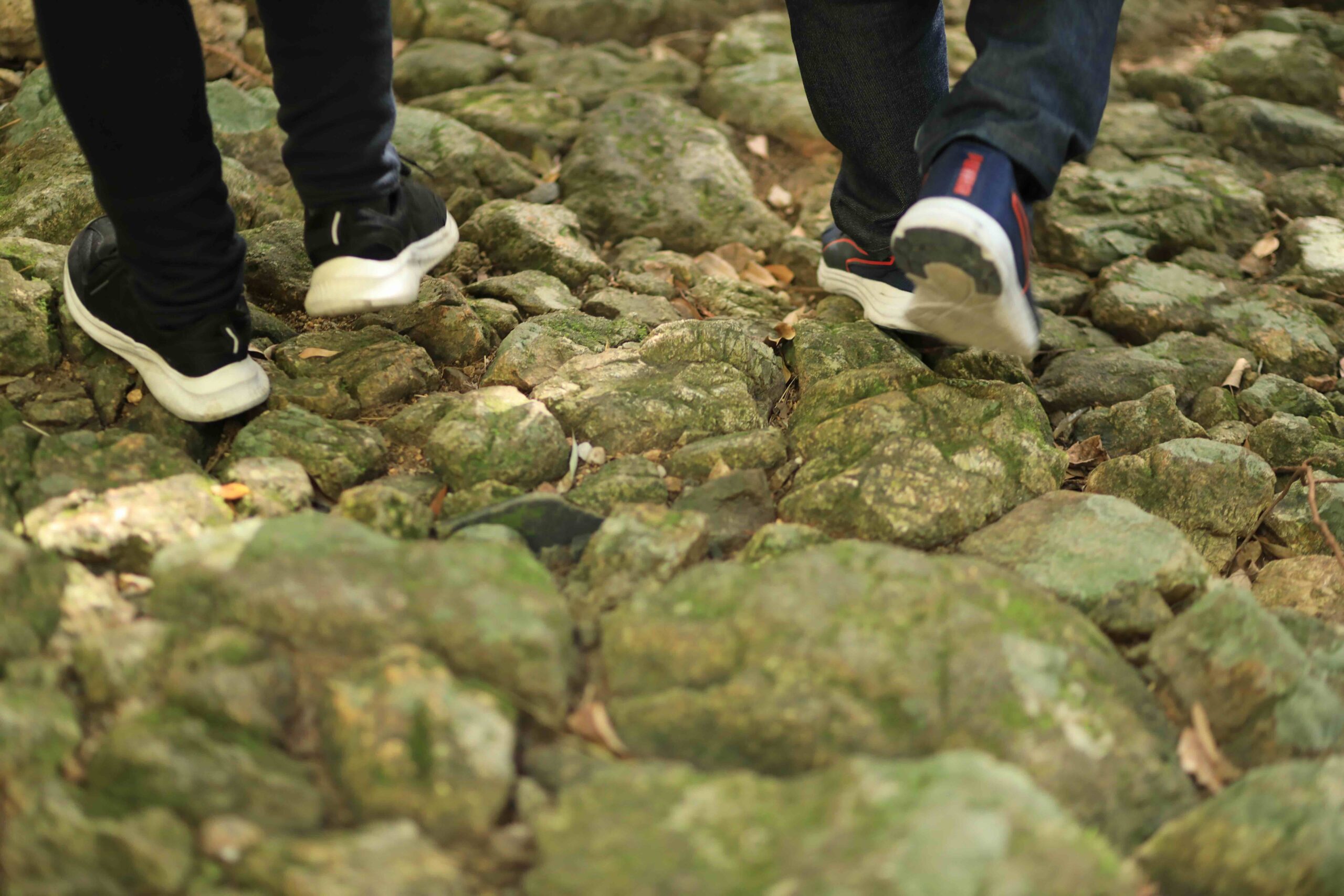
Along the way, our group walked alongside other o-henro-san — some walking the full 88-temple circuit, their white robes already filled with stamps from weeks on the road. There is a quiet camaraderie on the henro trail. A nod, a gentle bow, the shared understanding of putting one foot in front of the other with intention. No words are necessary.
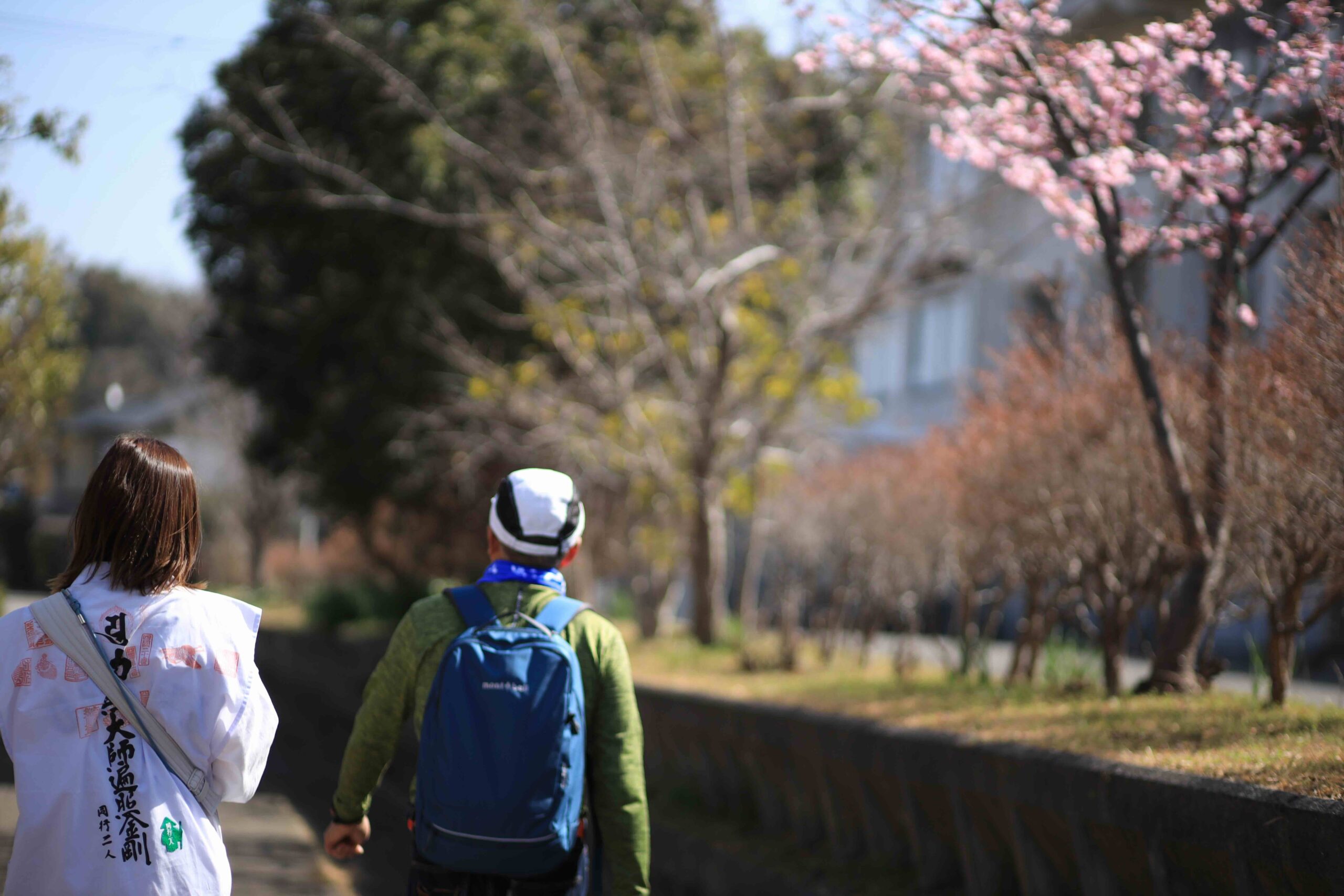
Giving Back: The Litter Cleanup as Osettai
Throughout the walk, our group collected litter along the trail. This practice connects directly to one of the pilgrimage’s most important values: osettai. For centuries, local communities along the Shikoku route have supported pilgrims with gifts — food, water, a place to rest, a kind word. This generosity, offered freely and without expectation, is considered an act of devotion in itself.
Cleaning the trail is a form of osettai in reverse — the pilgrims giving back to the land and the communities that sustain them. It is a small gesture, but it carries genuine meaning. And for newer participants joining the henro tradition for the first time, it provides an immediate, tangible way to contribute — to feel part of something larger than themselves.
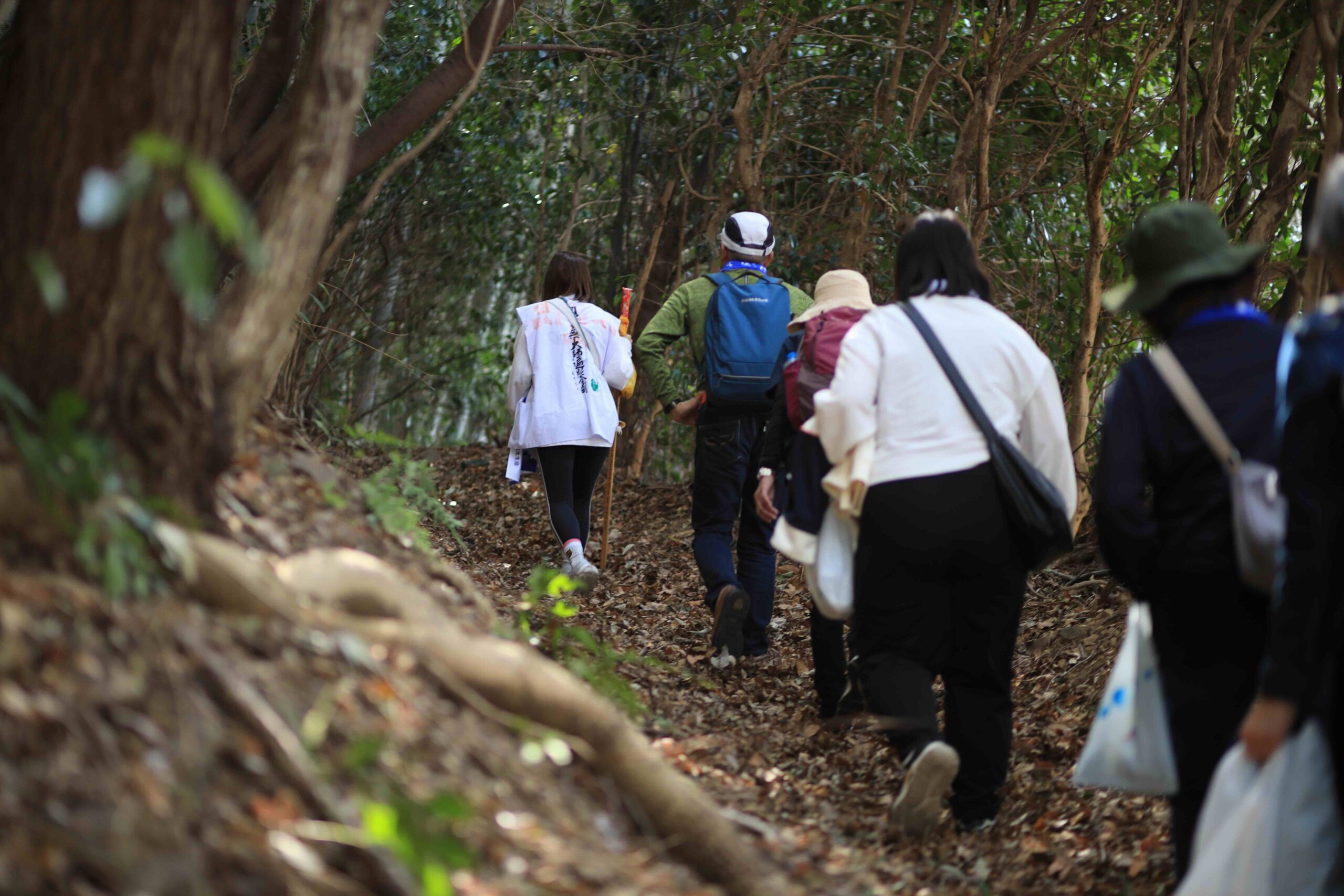
Zenjibuji Temple: Where Rock, Sea, and Prayer Meet
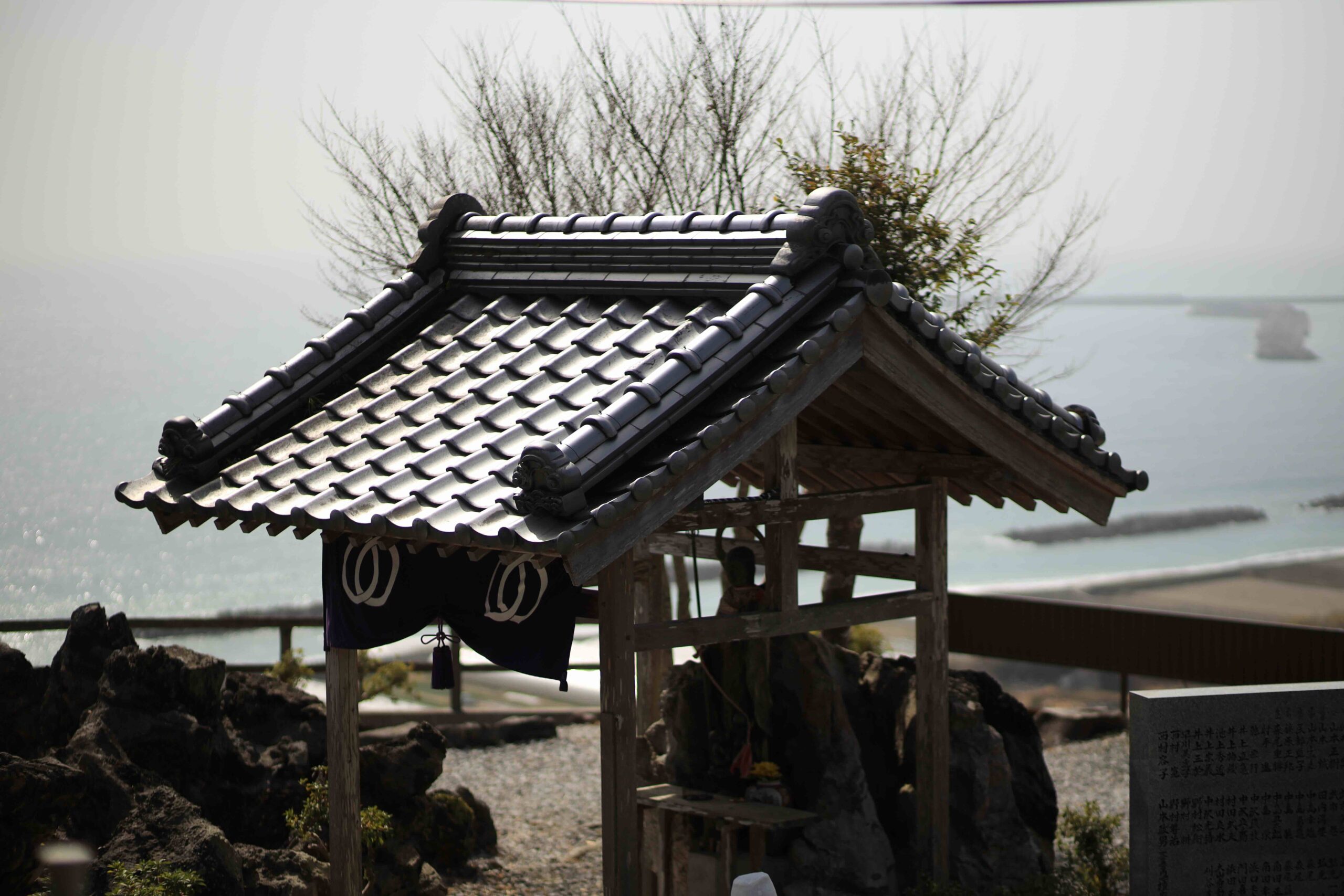
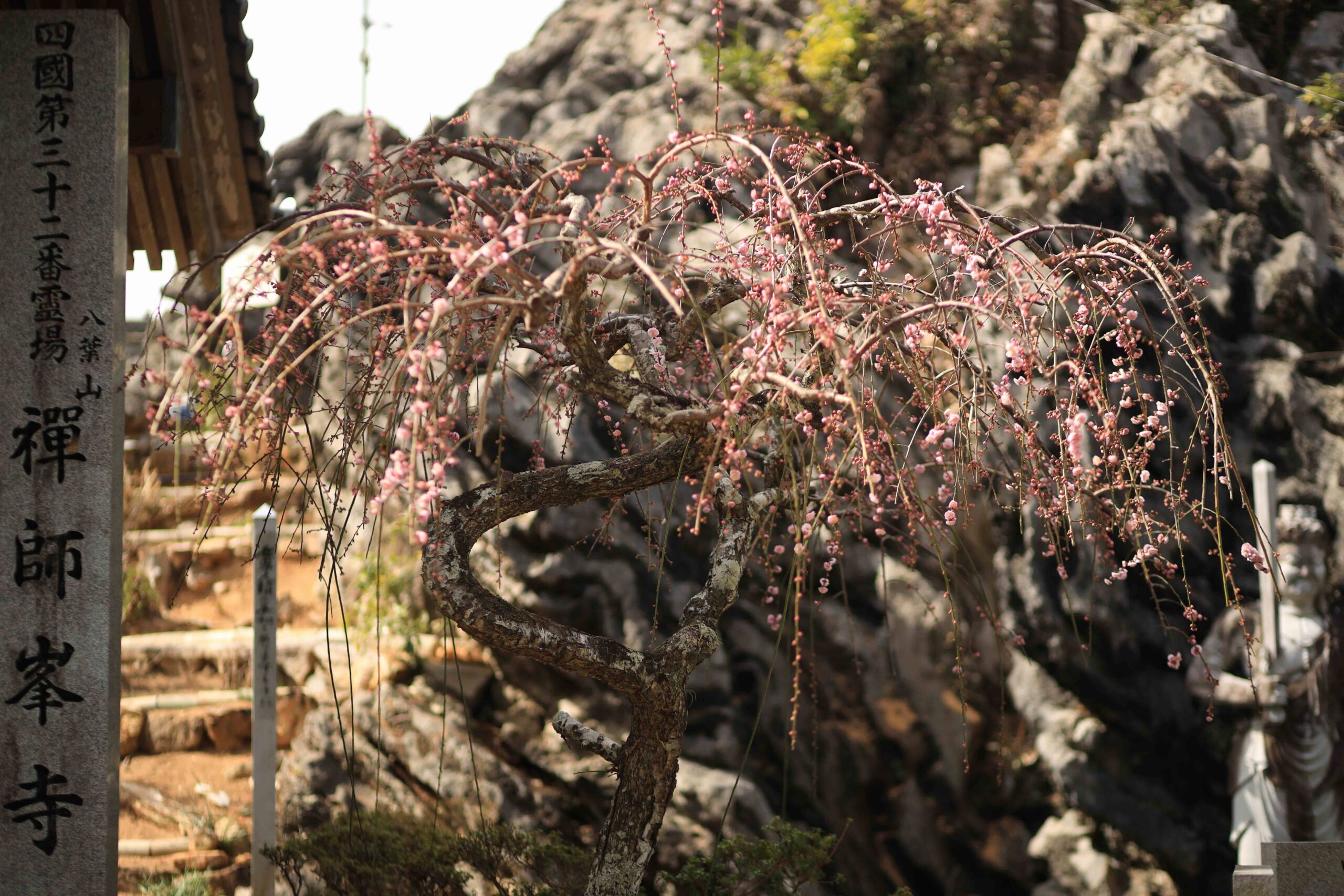
Zenjibuji Temple (Temple 32) is one of the most dramatically situated temples on the Tosa stretch of the pilgrimage. Perched on the rocky headland of Cape Urado, the temple grounds look directly out over Tosa Bay. The contrast between the solemn ancient structures and the shimmering open ocean is unlike anywhere else in Kochi.
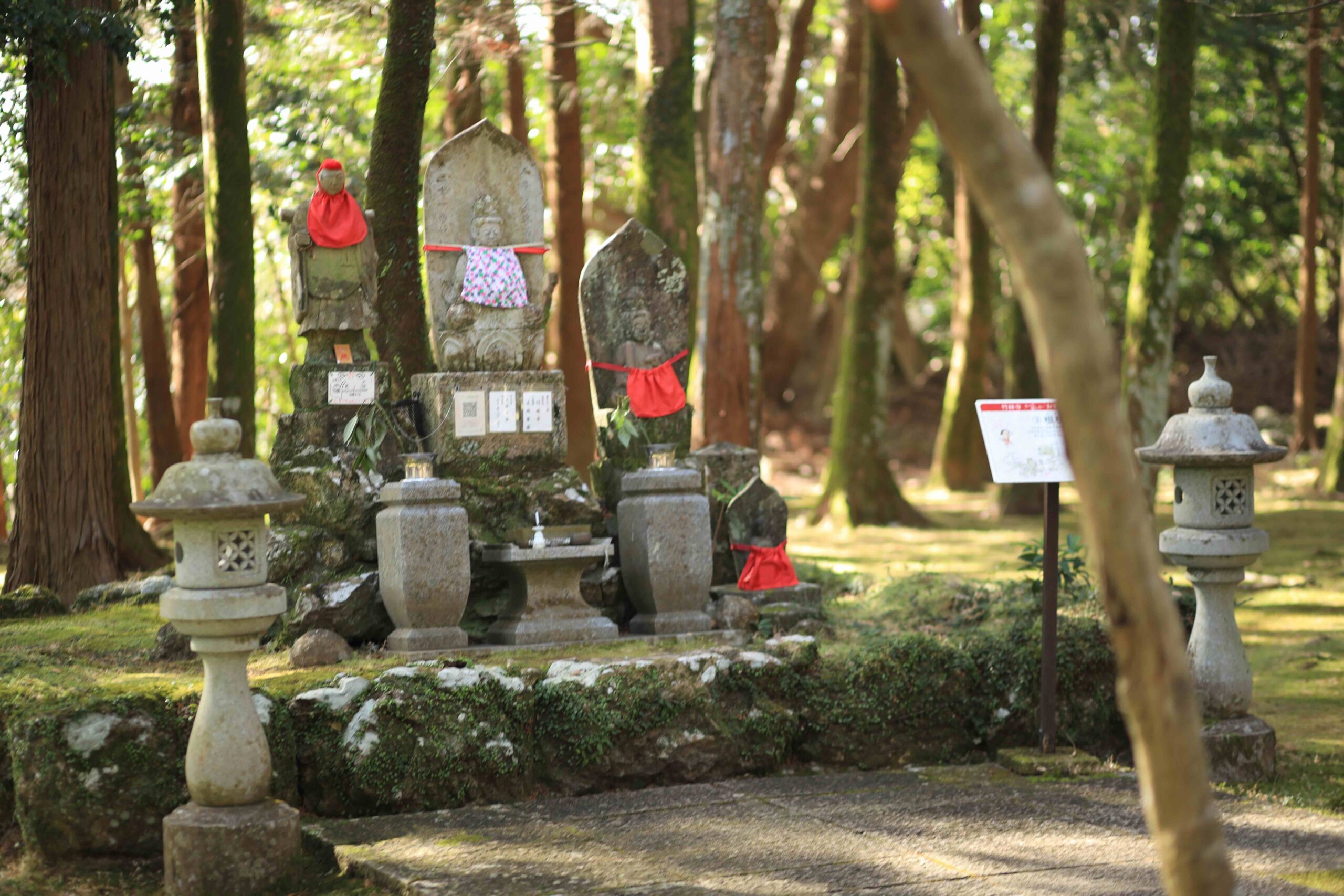
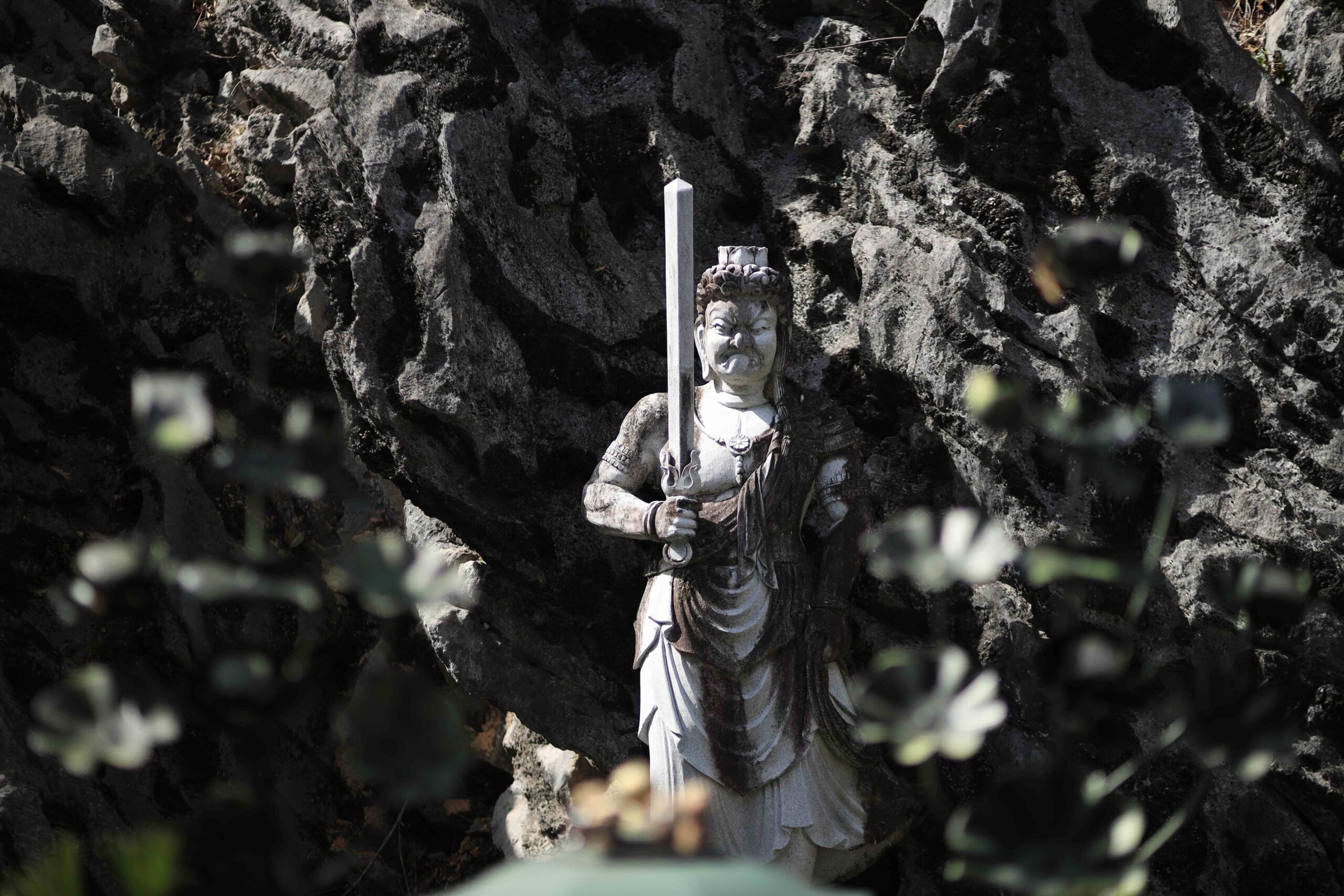
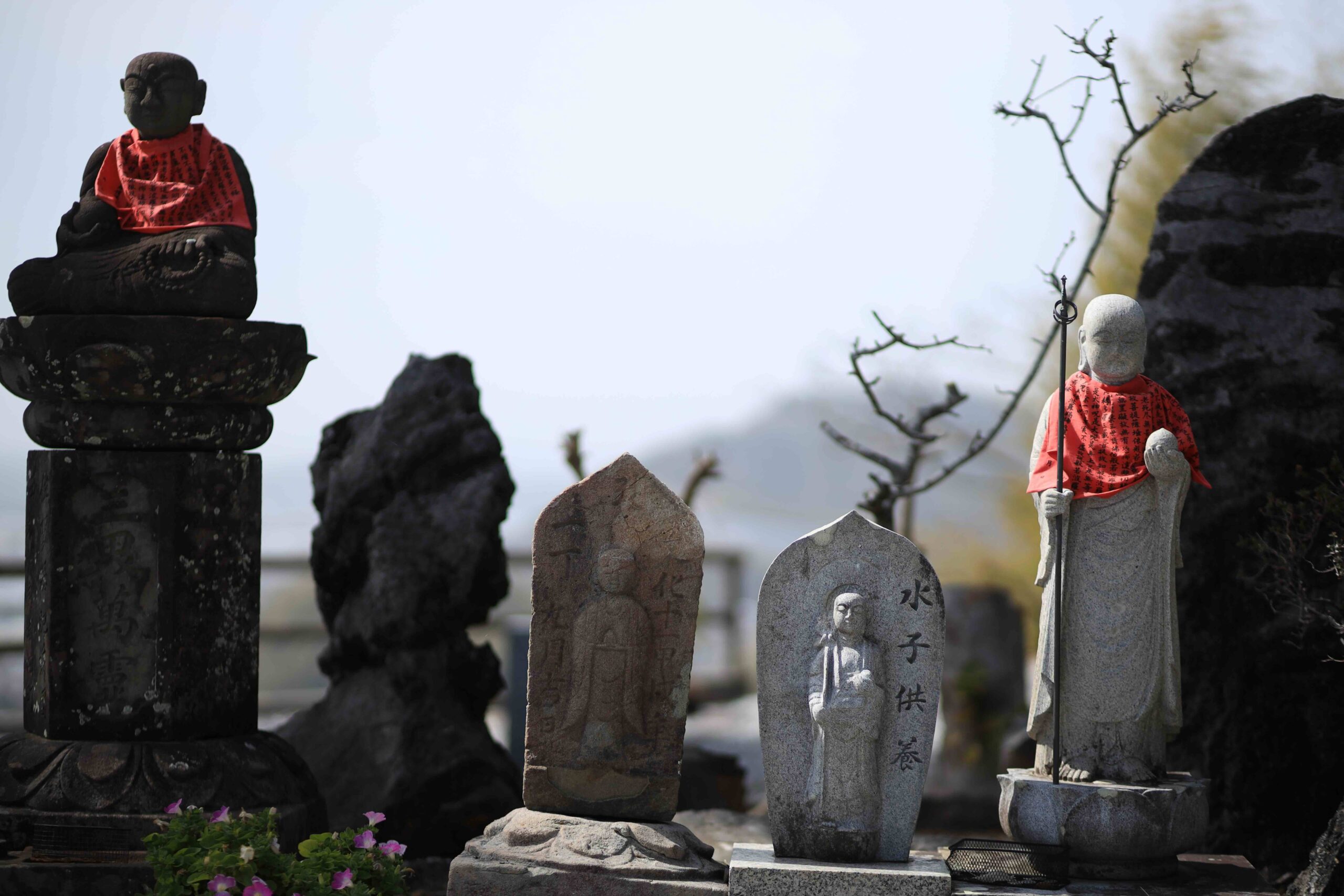
Massive black rock formations rise throughout the grounds, and tucked into their crevices are stone guardian deities — fierce expressions, swords raised — watching over the temple with an intensity that reflects the rugged landscape itself. Jizo statues dressed in red bibs stand in quiet rows, their gentle faces offering a counterbalance of compassion.
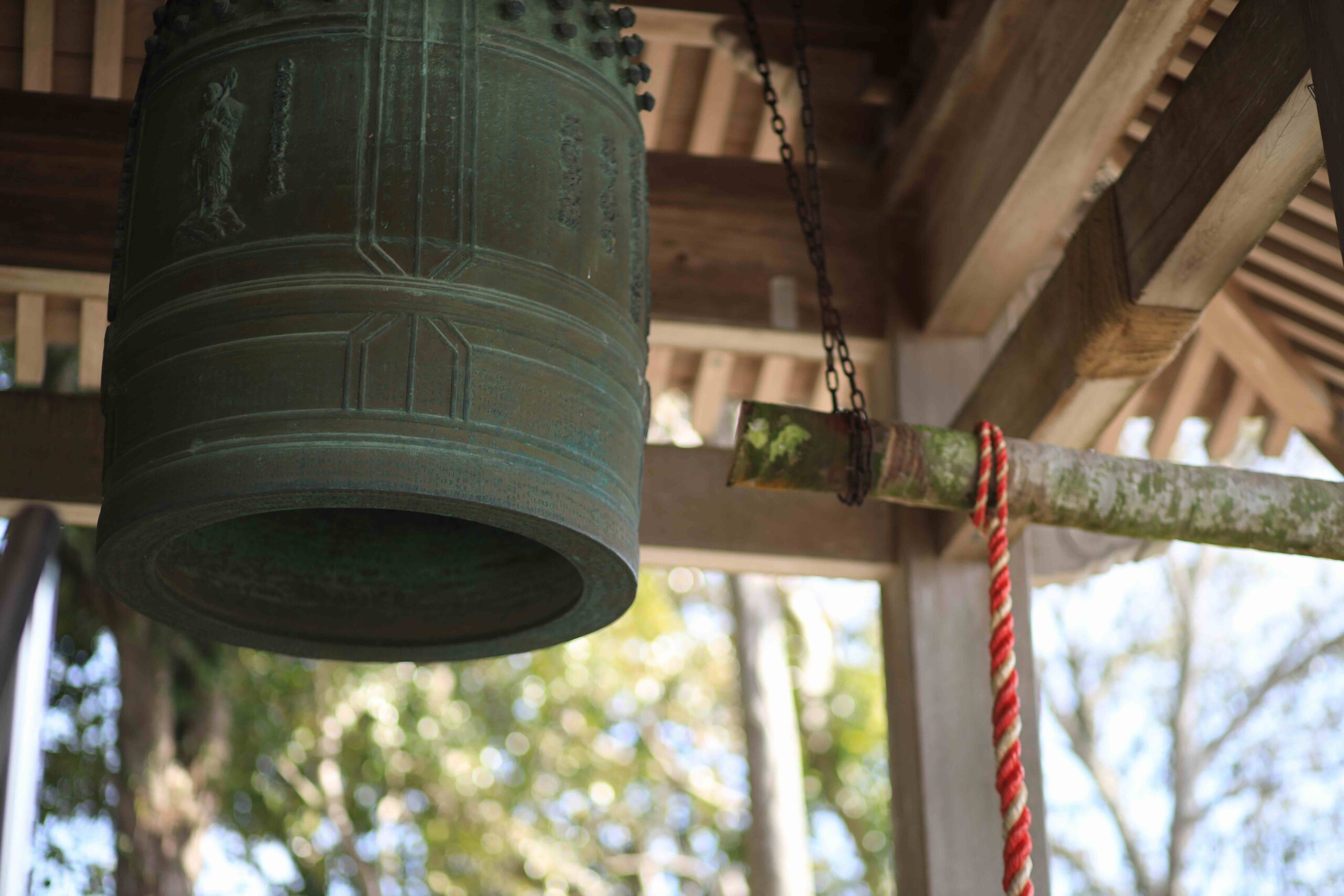

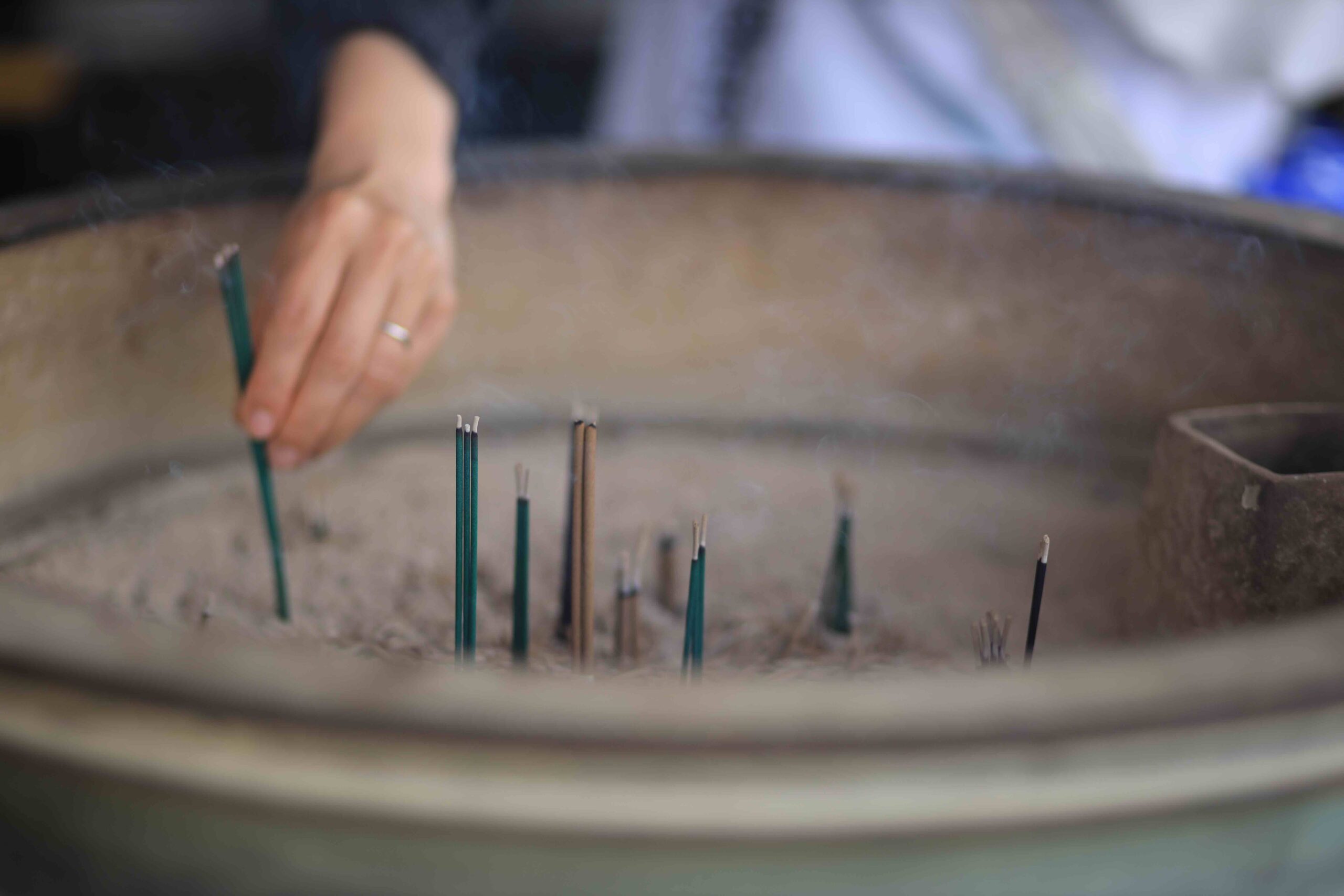
At the main hall, participants lit incense and placed the sticks in the large stone urn, watching smoke rise slowly into the winter sky. Rows of candles flickered behind glass — each flame placed by a different pair of hands, carrying a different prayer. The bronze temple bell, green with age, hung in its open pavilion above the tree line.
The Rituals of the Pilgrimage
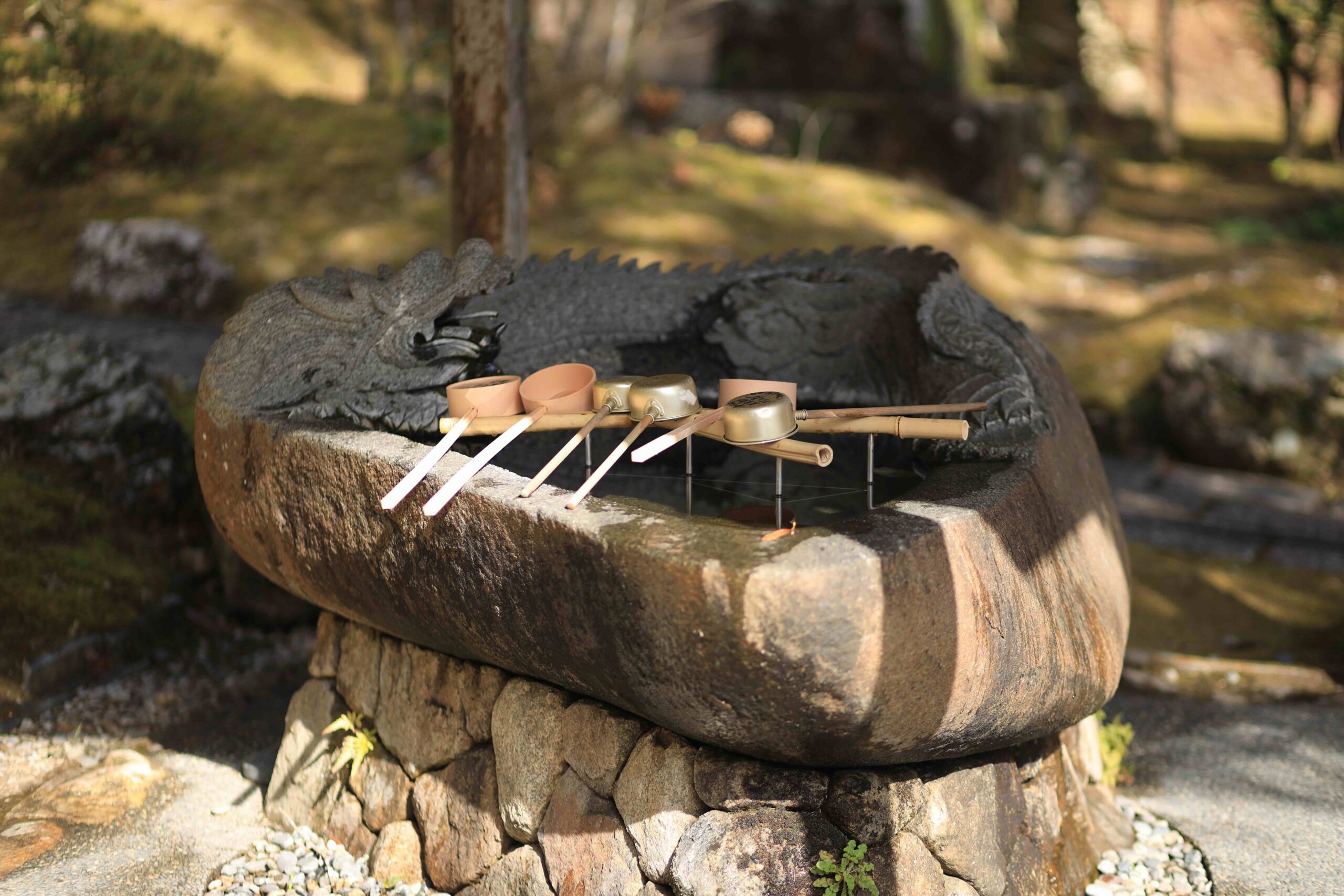
For those joining the pilgrimage for the first time, the rituals at each temple follow a clear and welcoming structure. At the gate, visitors wash their hands at the chozuya — a stone water basin, often carved with dragons — as an act of purification. At the main hall and Daishi hall, incense is lit, candles are offered, and sutras are recited. Those carrying a pilgrimage book (nokyocho) have it stamped with the temple’s seal.
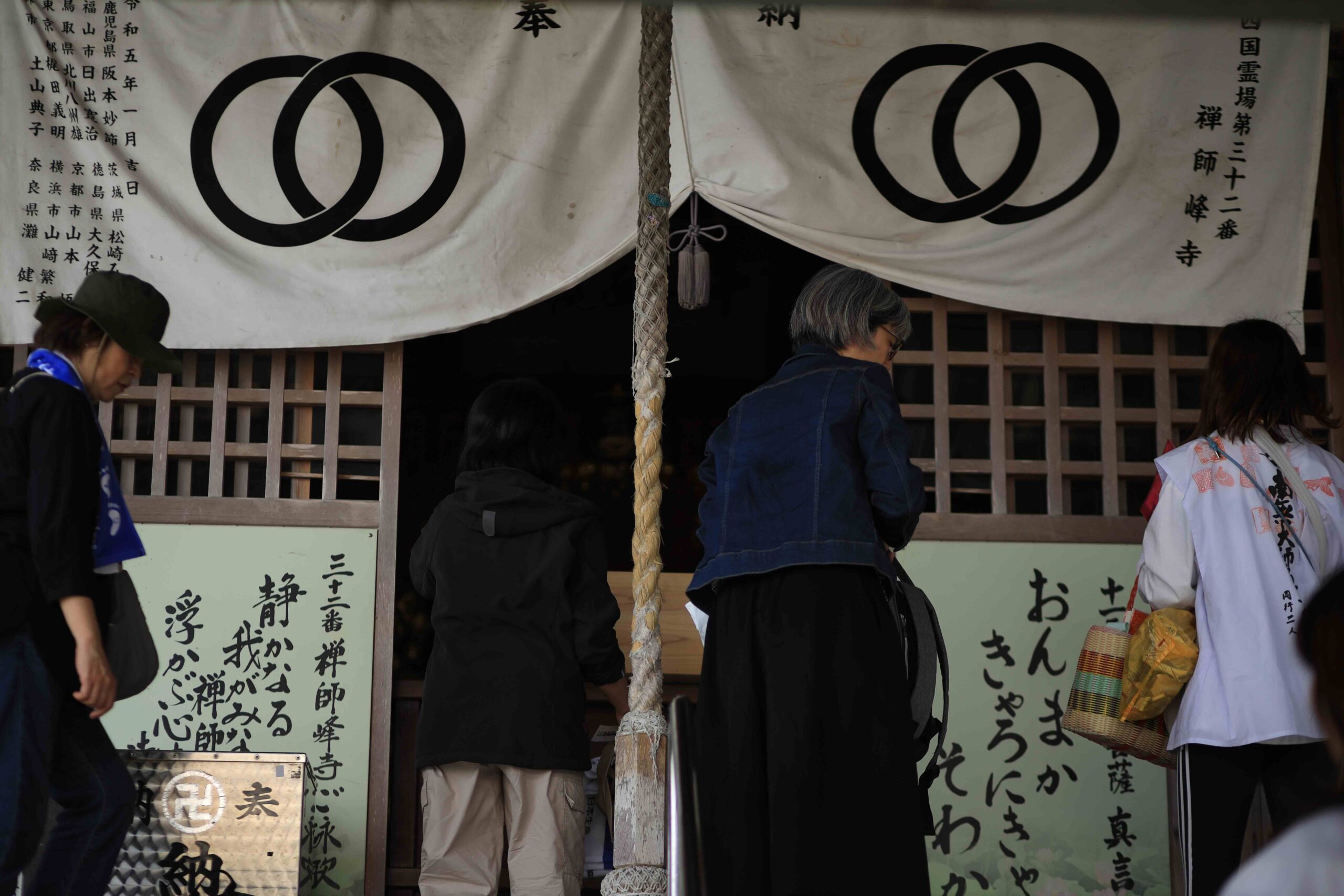
These rituals are not barriers to participation — they are invitations. You do not need to be Buddhist, or Japanese, or an experienced traveler to join. The henro path has always welcomed anyone who comes with sincerity. That openness is part of what makes the pilgrimage worth sharing with the world.
Passing the Tradition to the Next Generation
What struck me most on this walk was the range of participants. Young people in their twenties and thirties walked alongside seasoned pilgrims who have completed the circuit multiple times. Some wore full traditional pilgrim dress; others walked in everyday clothes. All were there for the same reason: to be part of something that has outlasted empires, survived earthquakes and wars, and continues to draw people from every corner of Japan — and increasingly, from every corner of the world.
The Shikoku Pilgrimage is not a museum piece. It is alive. Events like this walk help ensure it stays that way — not through preservation alone, but through participation. Every pair of feet on the ancient path is a vote for continuity.
If you are visiting Kochi and want to experience the pilgrimage for yourself — whether as part of an organized walk event or on a private guided experience — I would be glad to help you find your way onto the trail.
Experience the Shikoku Pilgrimage in Kochi
Kochi is one of the best places in Japan to experience the Shikoku Pilgrimage in an accessible, meaningful way. The temples of Tosa are spaced within walking distance of each other, the scenery is extraordinary, and the local culture of welcoming pilgrims runs deep.
On our Kochi Highlights Tour, we include visits to Chikurinji Temple (Temple 31) — one of the most beautiful temple grounds on the entire pilgrimage route — alongside Kochi’s other iconic sights. For visitors who want a deeper experience, we can arrange a guided walk on the ancient trail between temples, with full explanation of the rituals, history, and meaning of the henro tradition.
- Private guided experience — no large groups
- Licensed English-speaking guide with deep knowledge of the pilgrimage
- Authentic participation in temple rituals (incense, candles, hand-washing)
- Flexible itinerary to match your schedule