
Kochi in Spring: Chikurinji Temple, Makino Botanical Garden, and Katsurahama Beach
Chikurinji Temple Makino Botanical Garden KochiSpring is the best time to visit Kochi. The cherry blossoms are out, the gardens are in full bloom, and the warm Pacific air makes every step outdoors a pleasure. On this particular tour, we spent a beautiful spring day with two couples exploring three of Kochi’s most iconic destinations: Chikurinji Temple, Makino Botanical Garden, and Katsurahama Beach. It was the kind of day that reminds you why you travel.
Katsurahama Beach: Where the Pacific Meets the Pine Forest
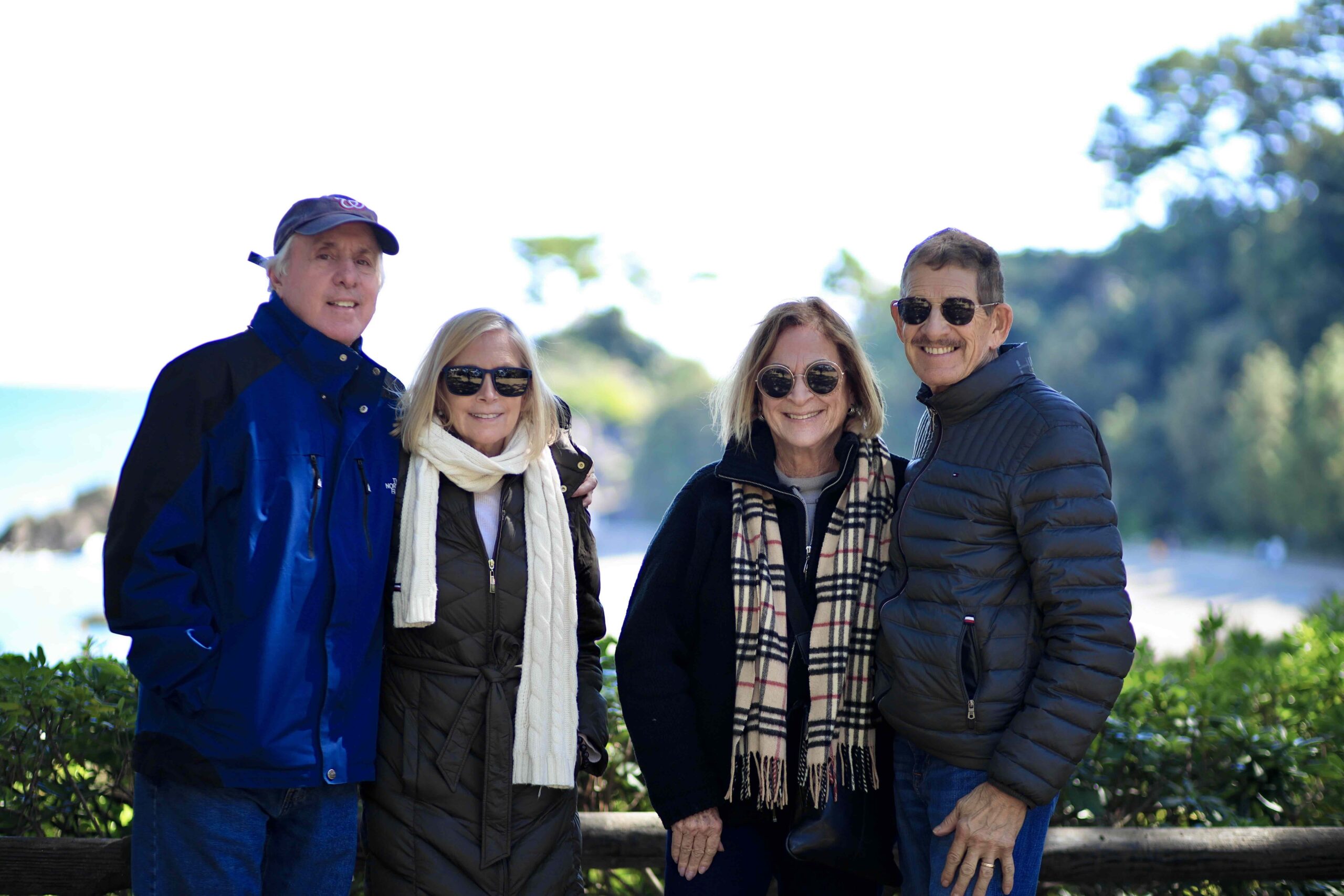
We started the morning at Katsurahama, Kochi’s most famous beach. The crescent of dark sand is framed by a pine forest on one side and the open Pacific on the other — a scene so classically Japanese that it has been celebrated in poetry and painting for centuries. Swimming is not permitted here due to the strong currents, but the dramatic scenery more than compensates. Waves crash against the rocks, the sea air is clean and bracing, and the view stretches uninterrupted to the horizon.
Katsurahama is also home to a shrine dedicated to Sakamoto Ryoma, Kochi’s most famous historical figure and a hero of the Meiji Restoration, whose bronze statue stands watch over the bay from a hilltop above the beach. For first-time visitors to Japan, it is one of those places where the landscape itself tells a story.
Chikurinji Temple: Temple 31 of the Shikoku Pilgrimage
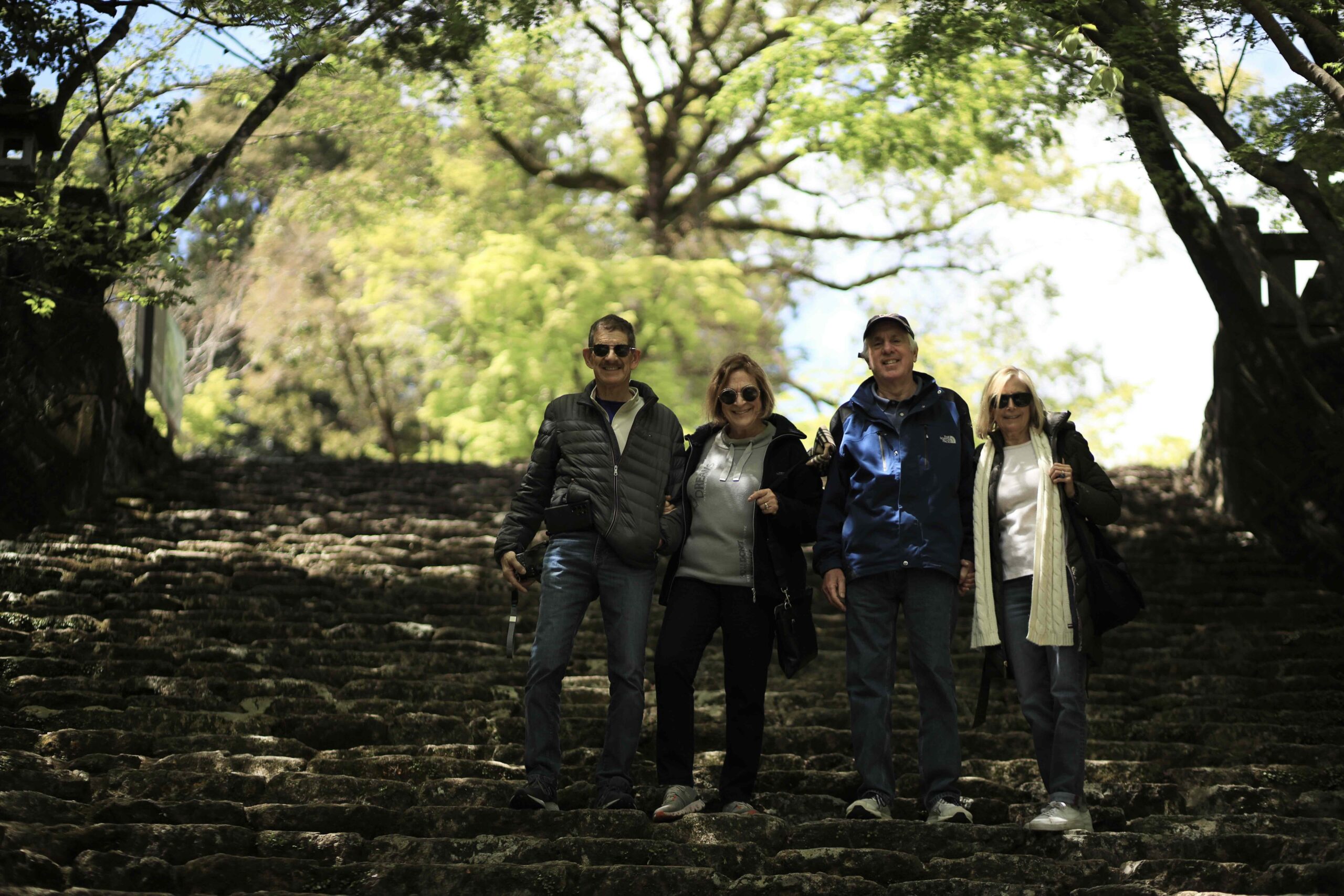
From Katsurahama, we drove up to Mount Godai and Chikurinji Temple — Temple 31 of the Shikoku Pilgrimage and one of the most beautiful temple complexes in all of Kochi. The approach along the ancient stone steps, shaded by towering camphor trees and fresh spring maple leaves, sets the mood perfectly.
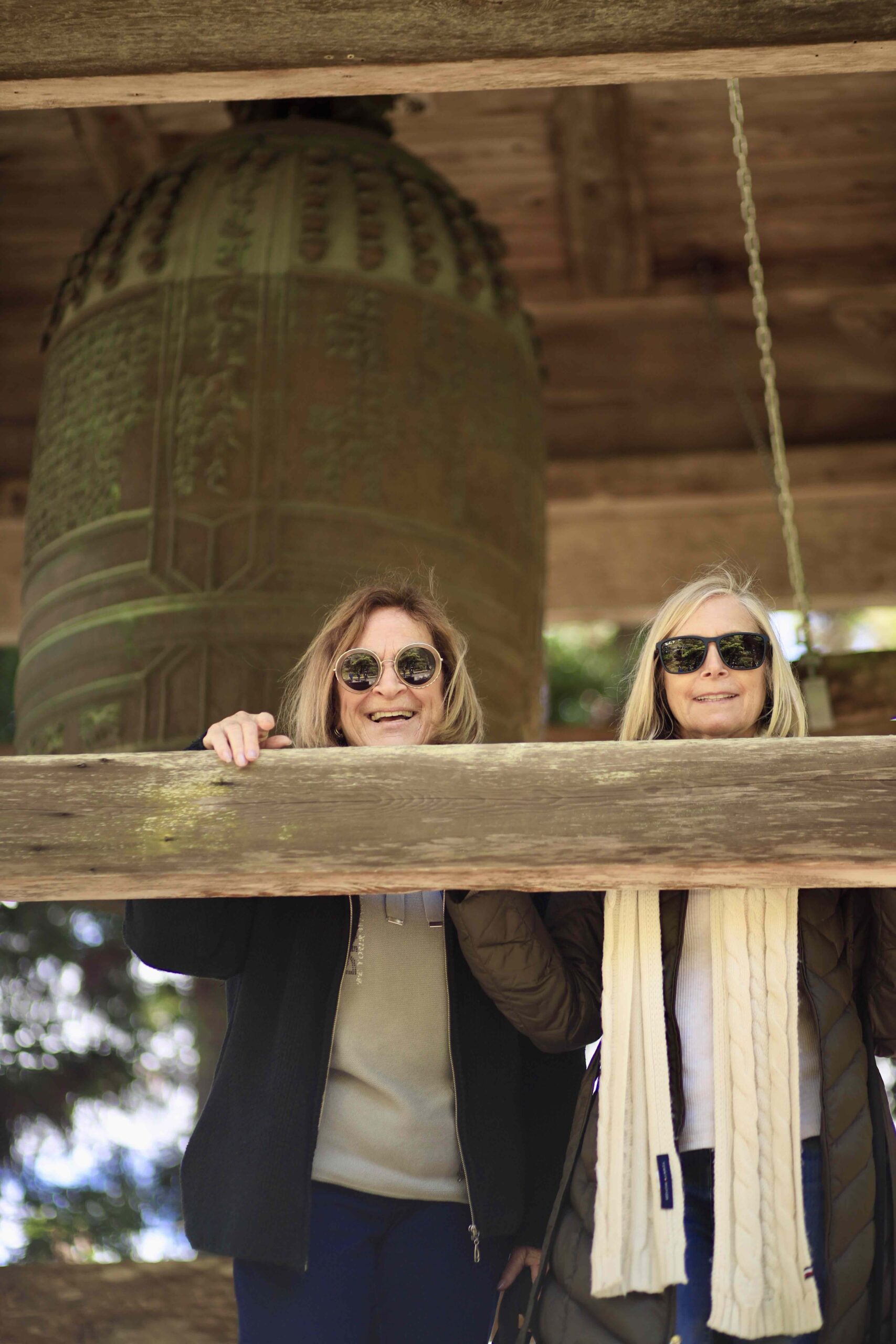
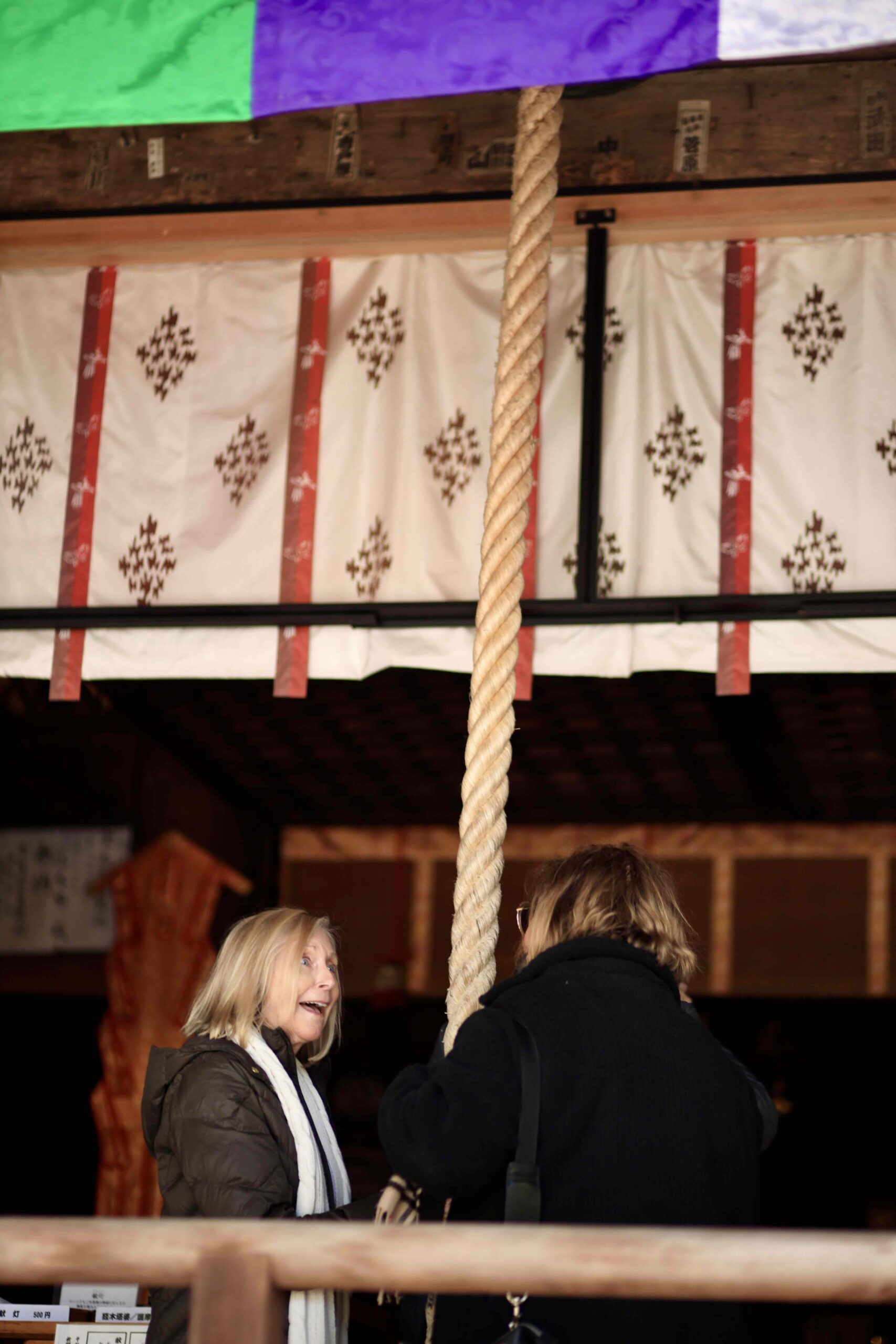
Chikurinji is believed to have been founded in 724 AD, and its grounds carry the weight of more than 1,300 years of continuous worship. The main hall and Daishi hall are striking examples of Edo-period Buddhist architecture — deep red lacquered pillars, intricate wooden carvings, and the thick rope of the prayer bell hanging in the entrance. For guests visiting a Japanese temple for the first time, the scale and craftsmanship are genuinely moving.
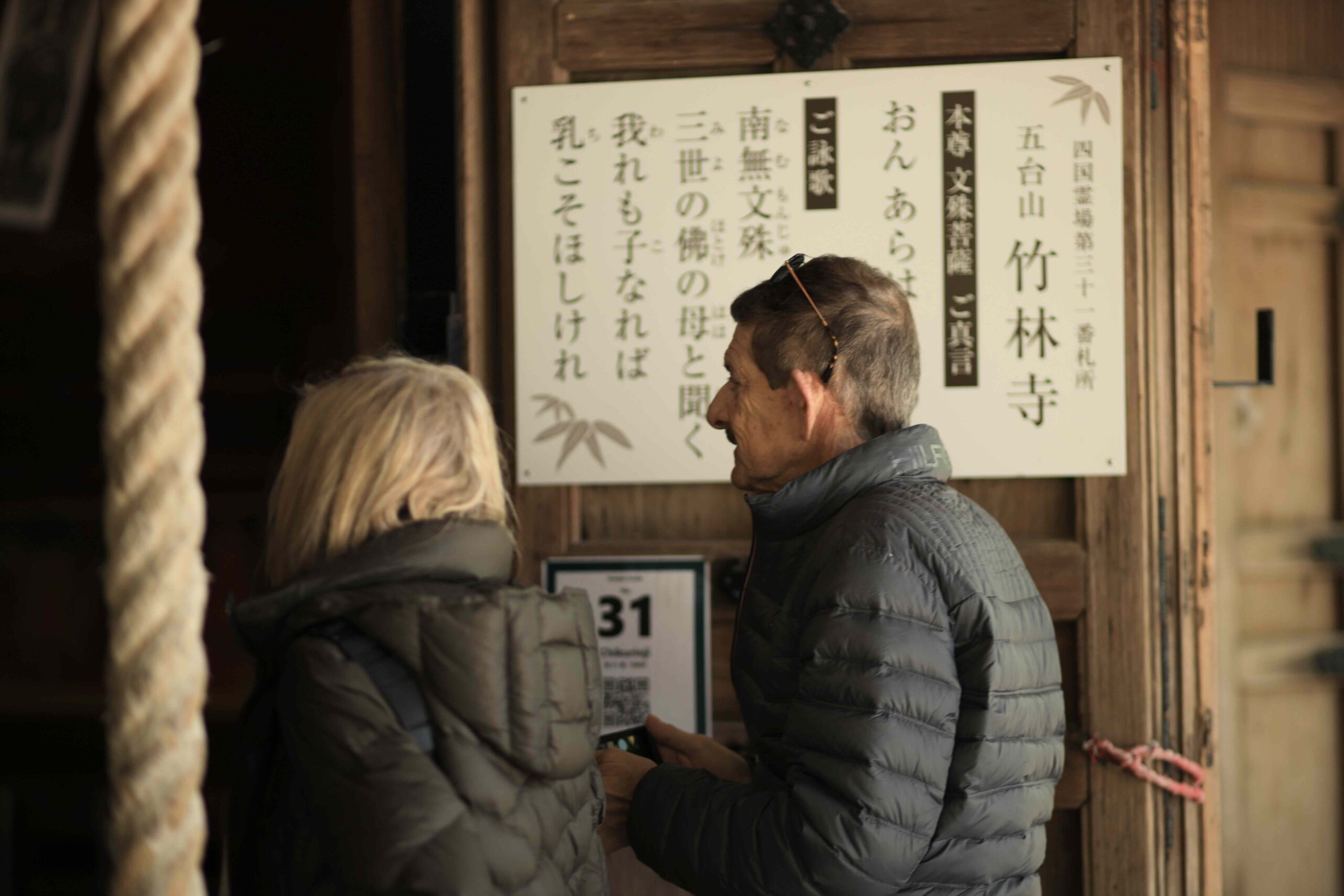
One of the pleasures of visiting Chikurinji with a small private group is the time to slow down and look closely. Guests read the temple’s sutra board — a poem in Japanese calligraphy that has been recited by pilgrims at this spot for centuries — and asked questions that don’t get answered on a group bus tour. What does the rope bell do? Who are the figures in the altar? What is the significance of the red lacquer? These conversations are the heart of what I do as a guide.
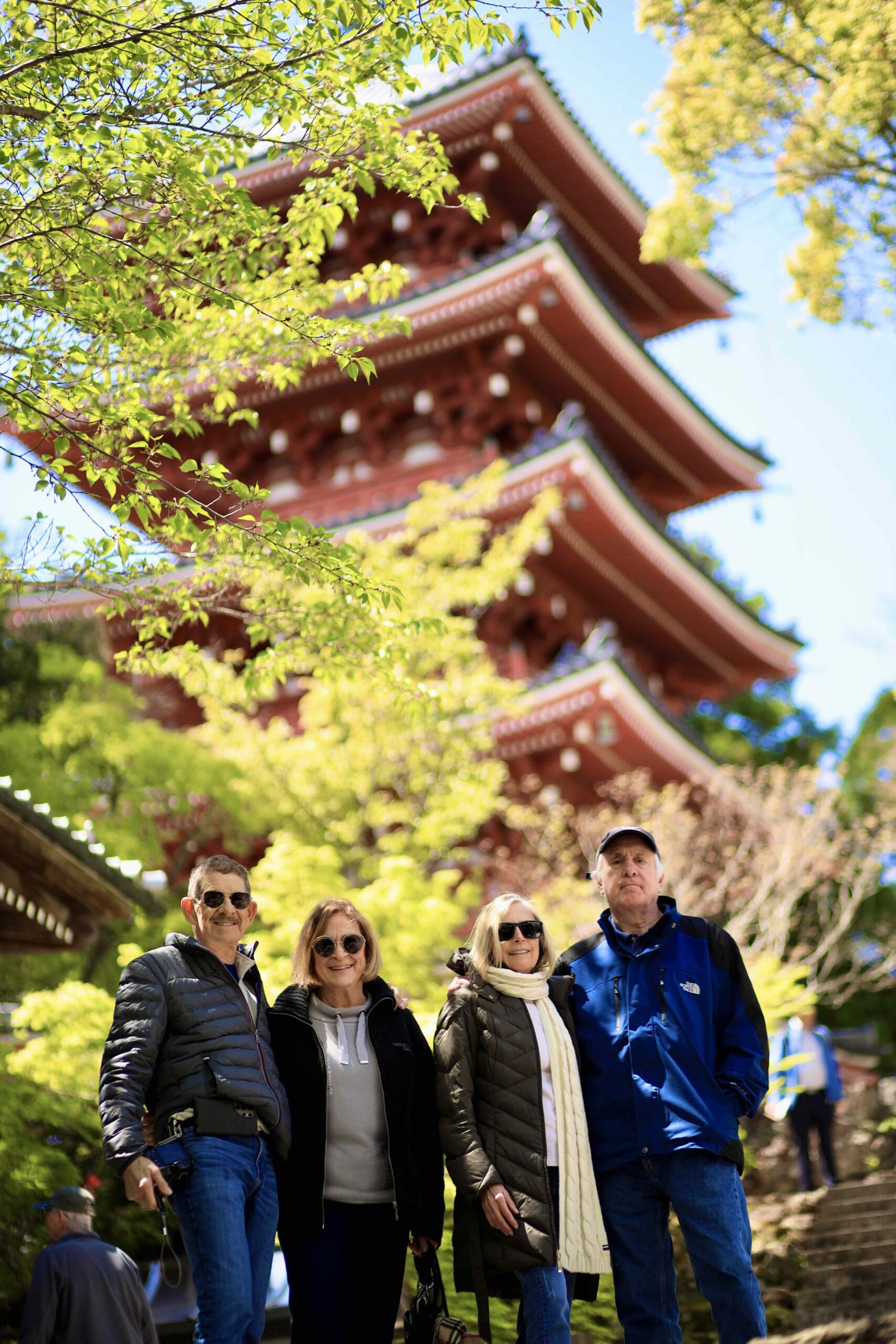
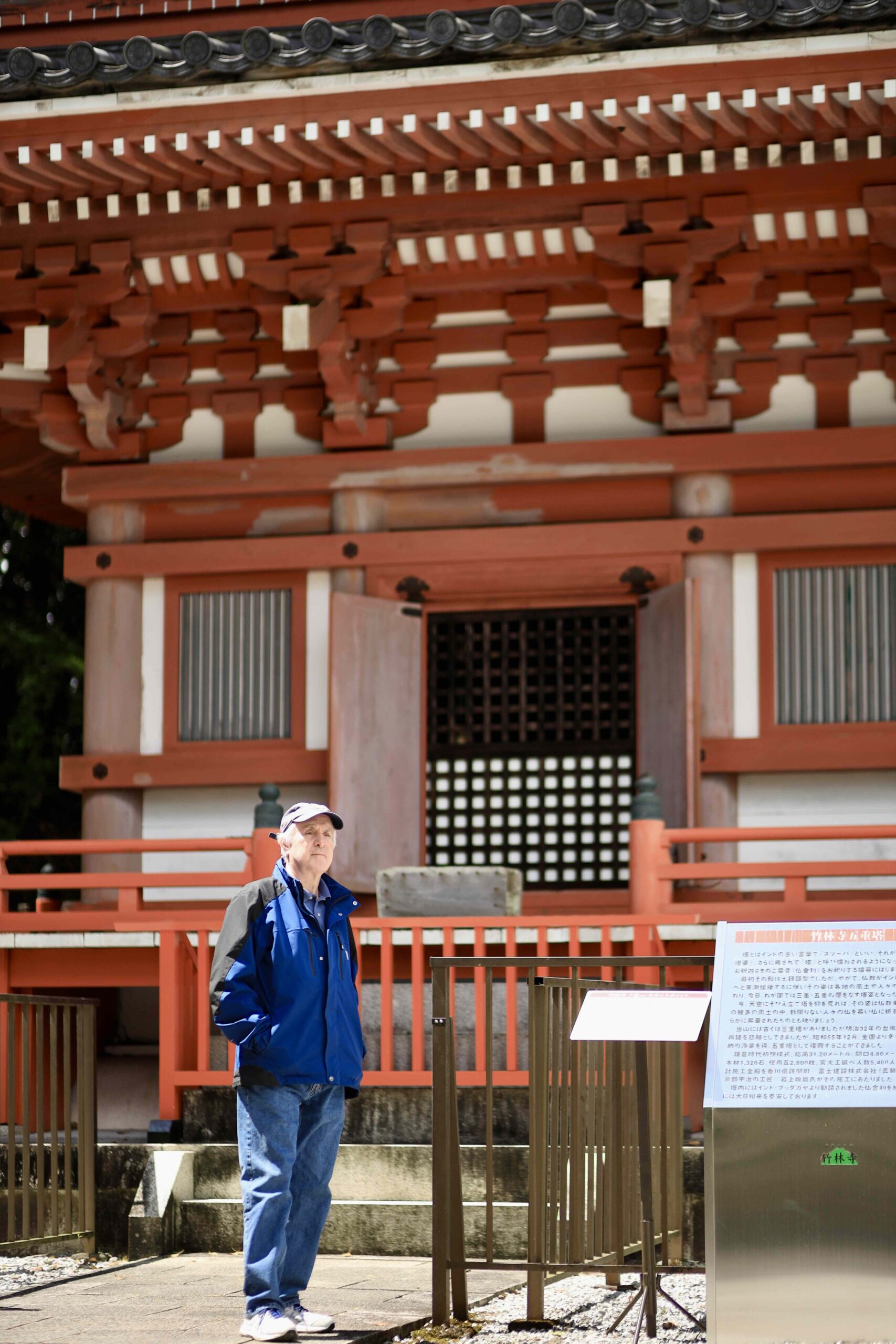
The five-story pagoda at Chikurinji is one of the temple’s most photographed features — and with good reason. Rising above the fresh green spring foliage, its bright vermilion tiers catch the light beautifully. We spent a good few minutes here, taking photos and simply looking up.
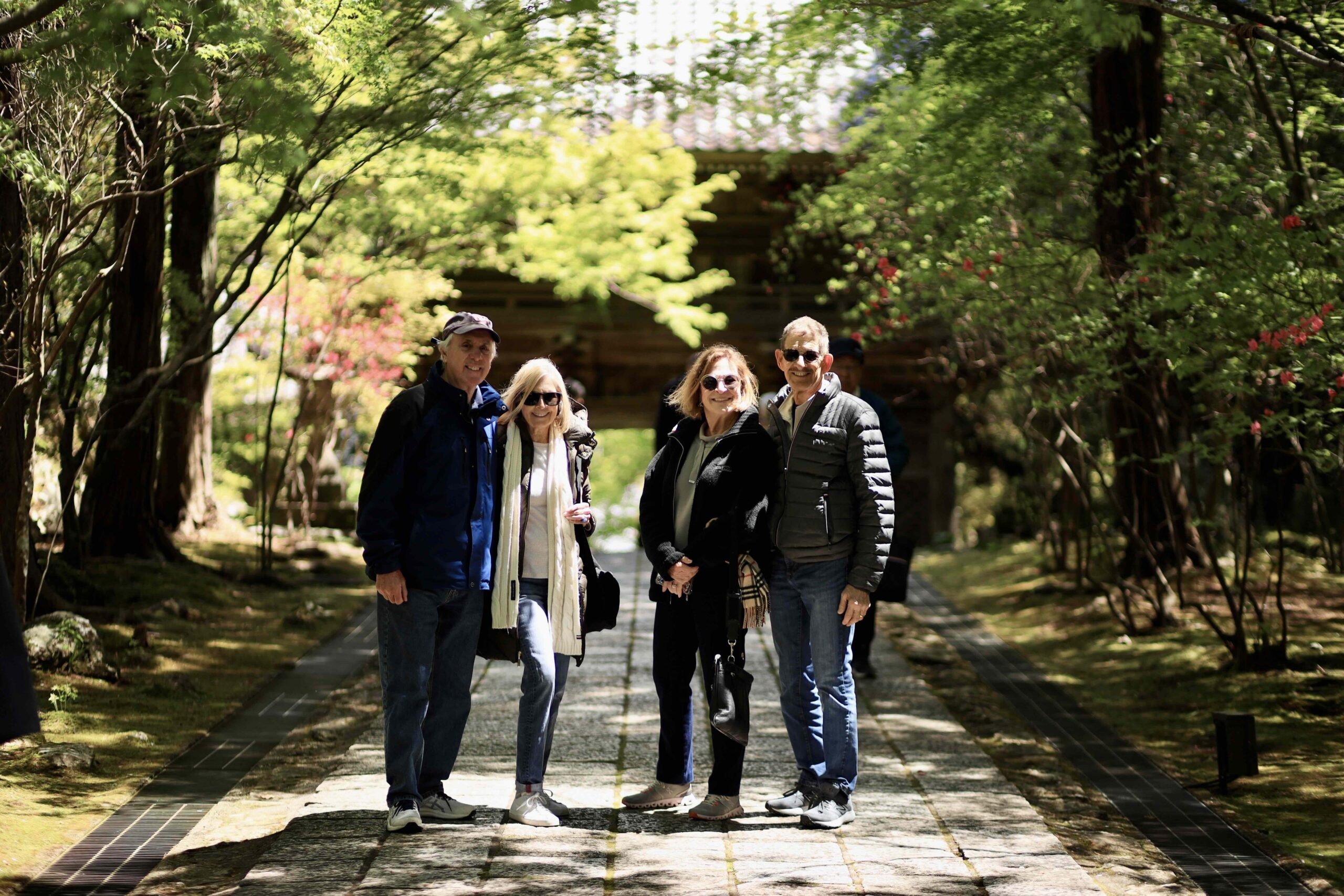
The stone-paved approach to the main gate runs through a tunnel of old trees, their branches meeting overhead and filtering the spring light into shifting patterns on the ground. On the day of our visit, a camellia tree in the garden was still in bloom, its red flowers vivid against the mossy stones.
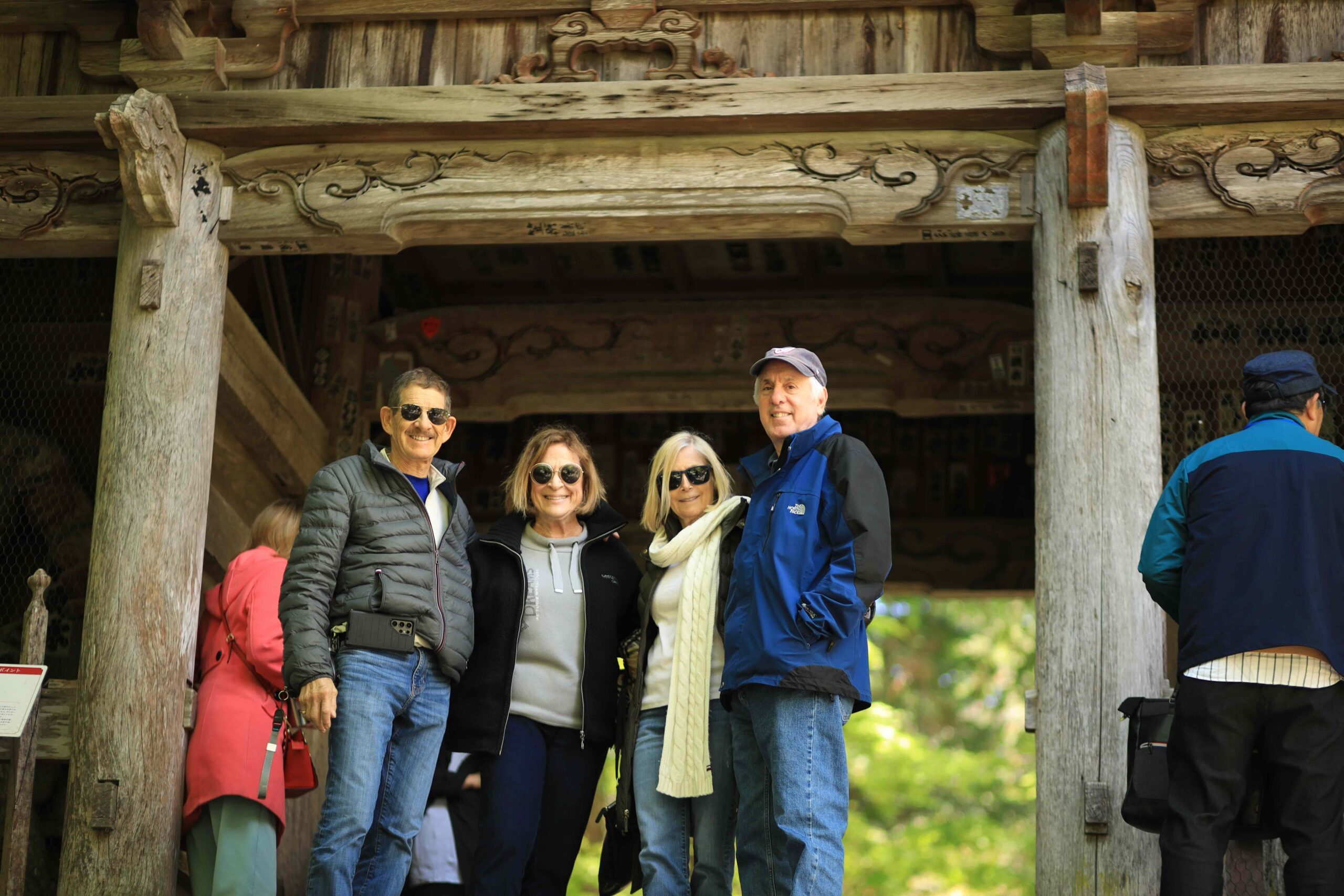
The Niomon gate — the two-storied wooden gate guarded by fearsome Buddhist guardian figures — is another highlight. The weathered timber is beautiful in its own right, and the carvings in the woodwork reward close inspection. We spent time here as well, out of the main flow of visitors, just taking it in.
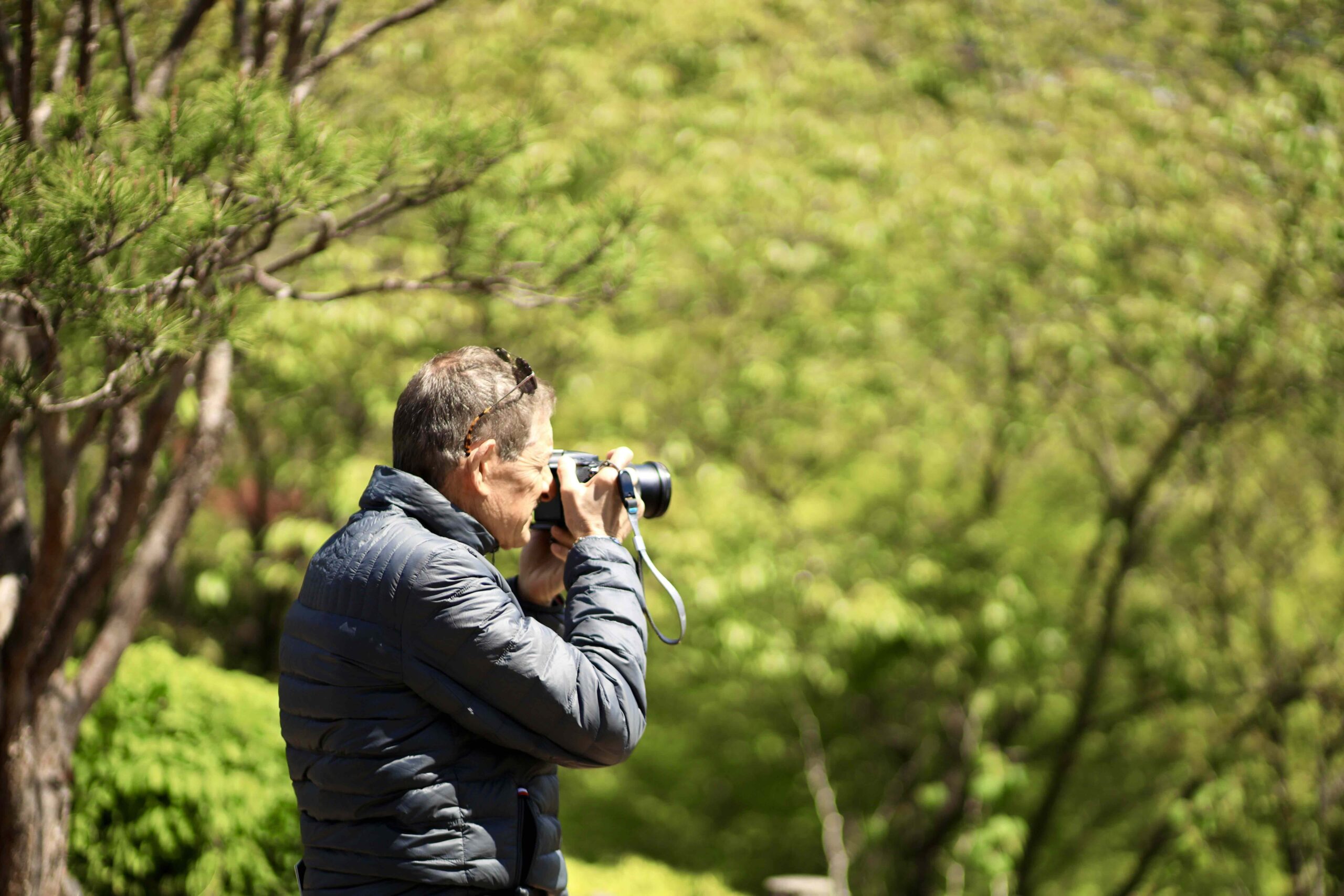
One of our guests spent a long time with his camera in the temple gardens, and I left him to it — the moss garden at Chikurinji, maintained in the tradition of Japanese dry landscape gardening, is simply one of the most serene spaces in Kochi. The fresh maple leaves overhead in spring add a softness that photographs can barely capture.
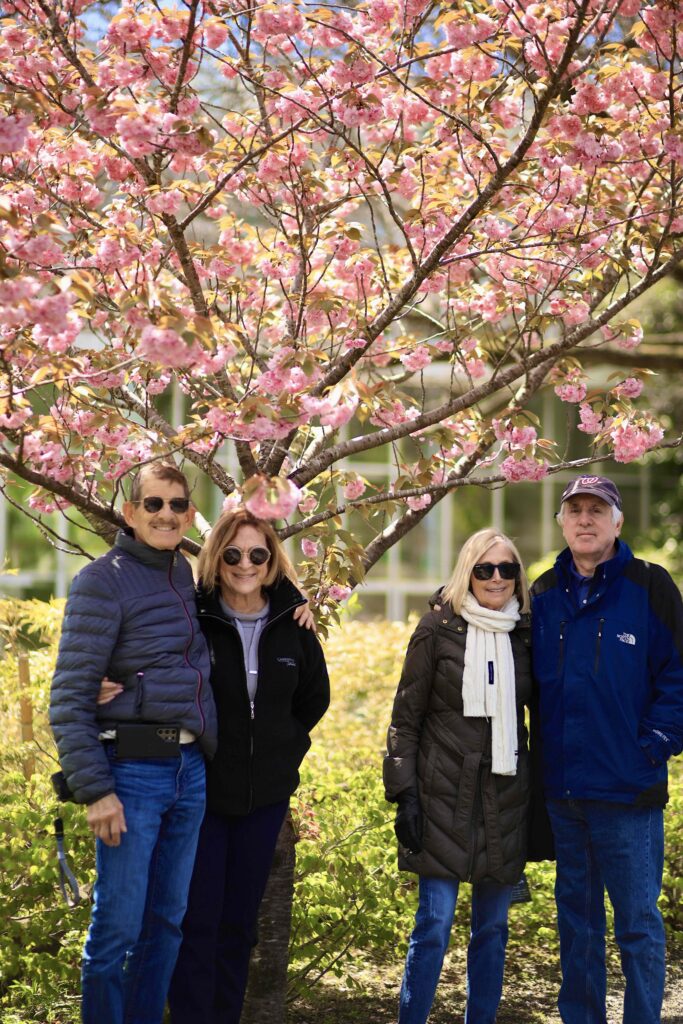
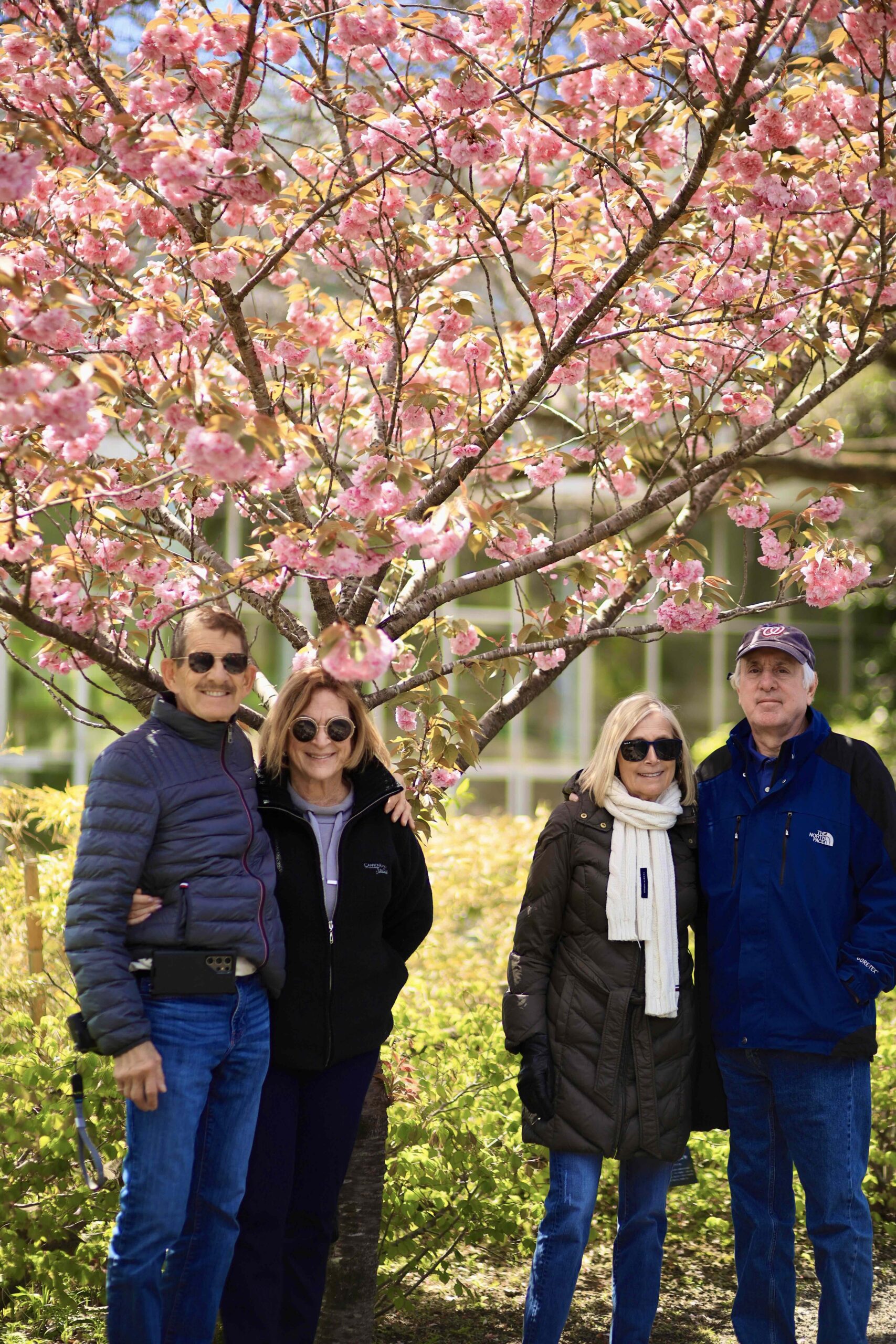
Before we left, we found a late-blooming cherry tree in a corner of the grounds — a yaezakura, with its distinctive double-layered pink blossoms that appear after the standard cherry season. It felt like a parting gift from the temple.
Makino Botanical Garden: A World-Class Garden in Full Spring Color
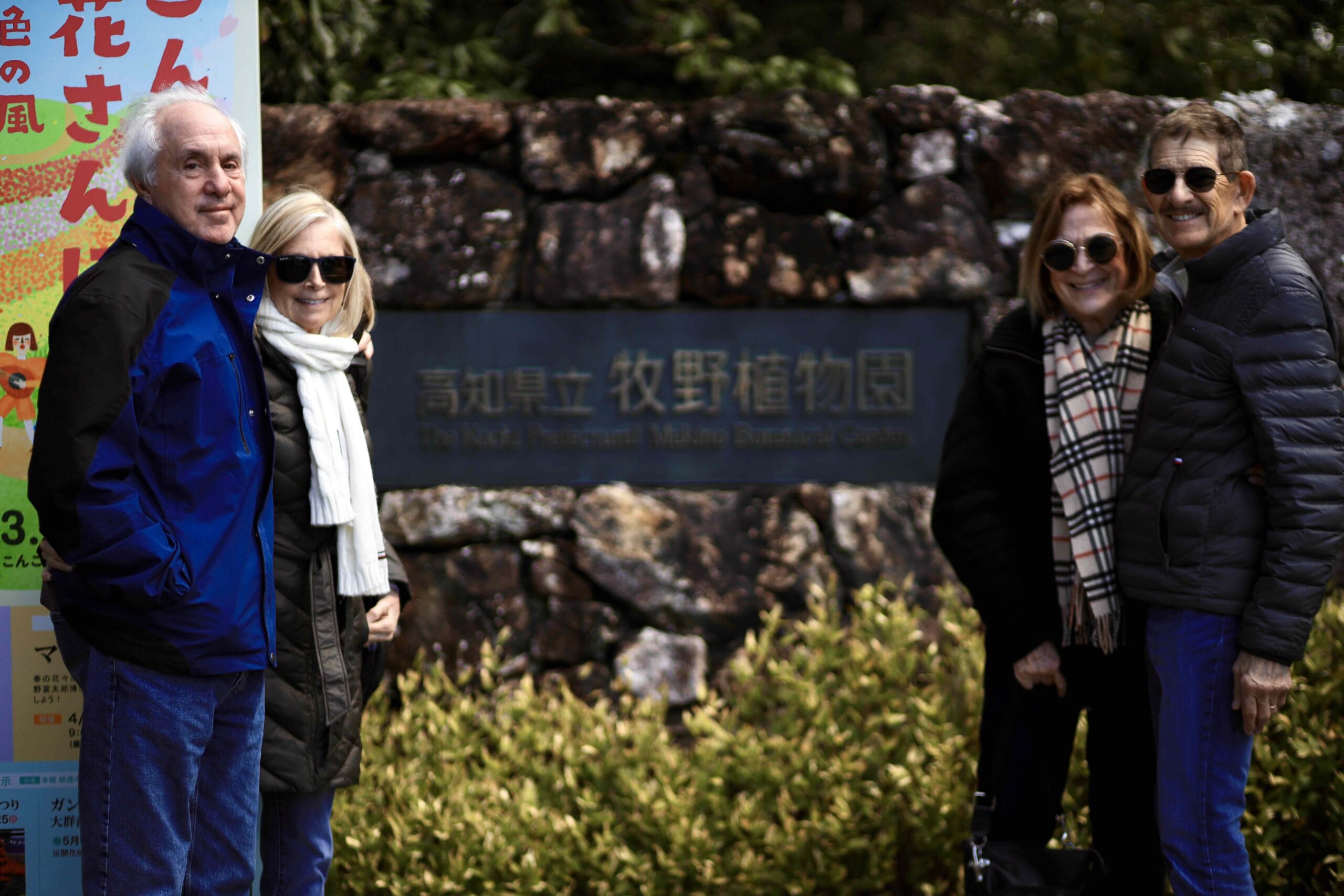
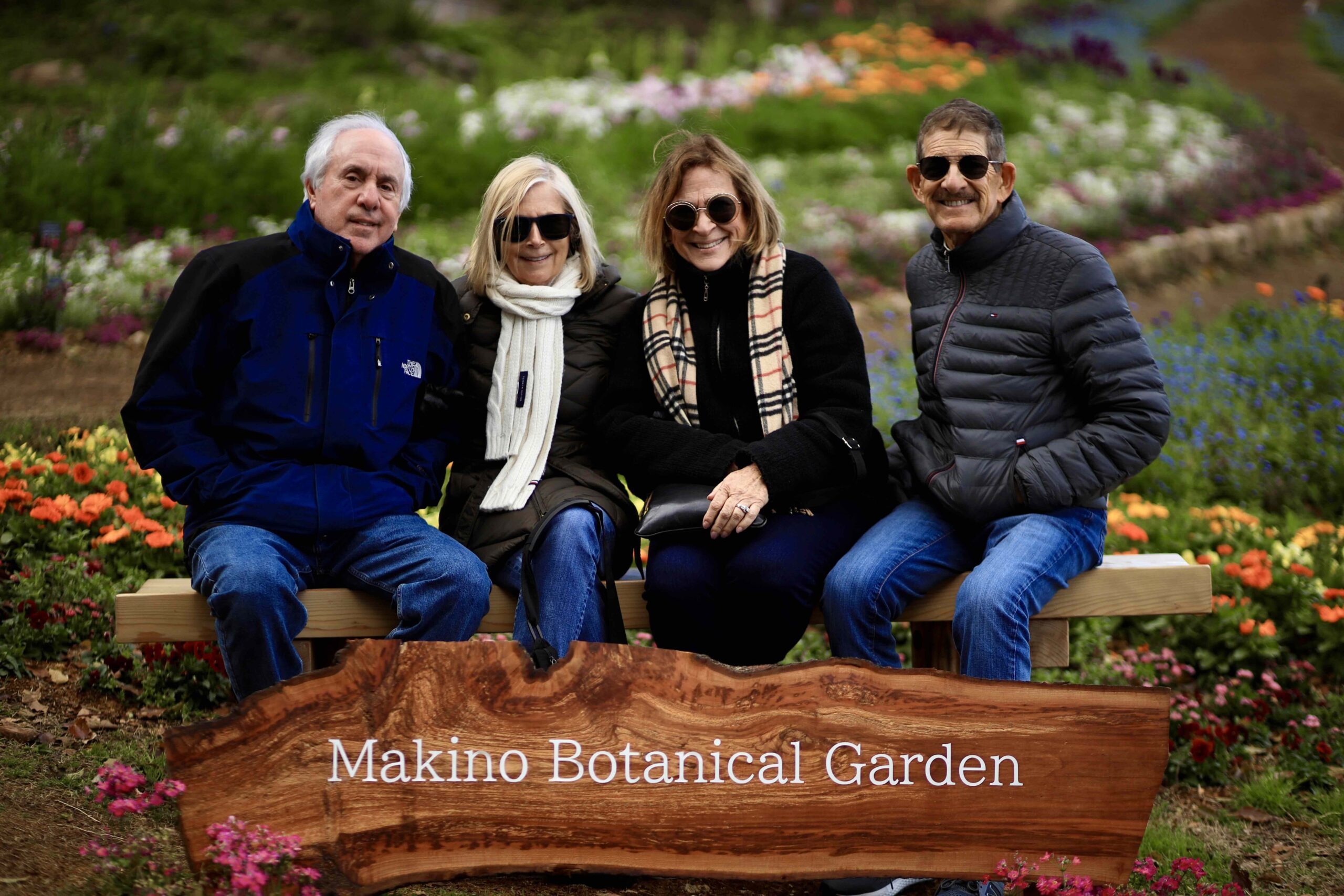
The afternoon brought us to Makino Botanical Garden — and if Chikurinji is Kochi’s spiritual heart, Makino is its soul of discovery. The garden is dedicated to Dr. Tomitaro Makino (1862–1957), the self-taught botanist from Kochi who became one of the most important plant researchers in Japanese history, identifying and naming over 1,500 species during his long career. His life was the inspiration for the NHK morning drama “Ranman,” which introduced Makino to audiences across Japan and the world.
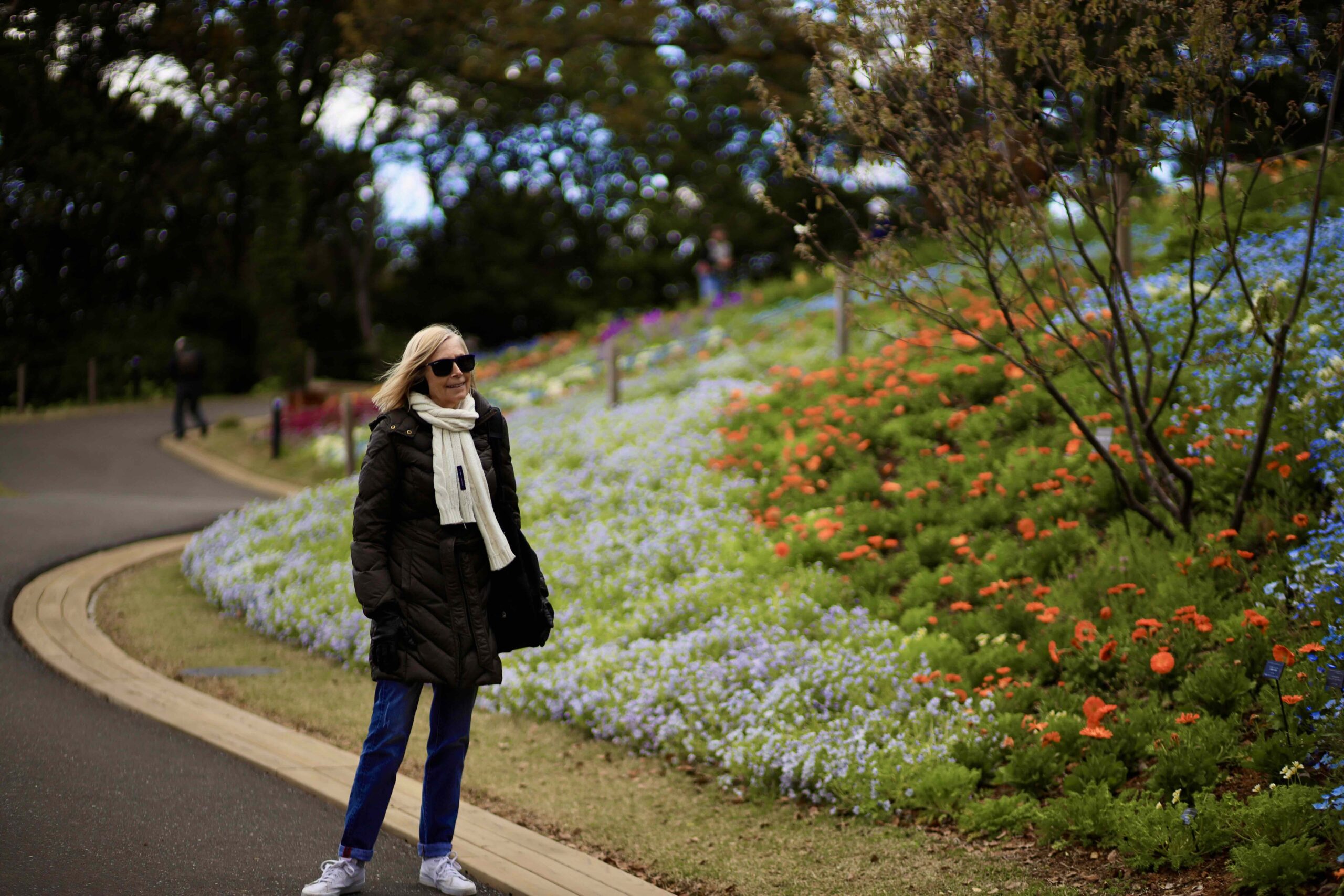
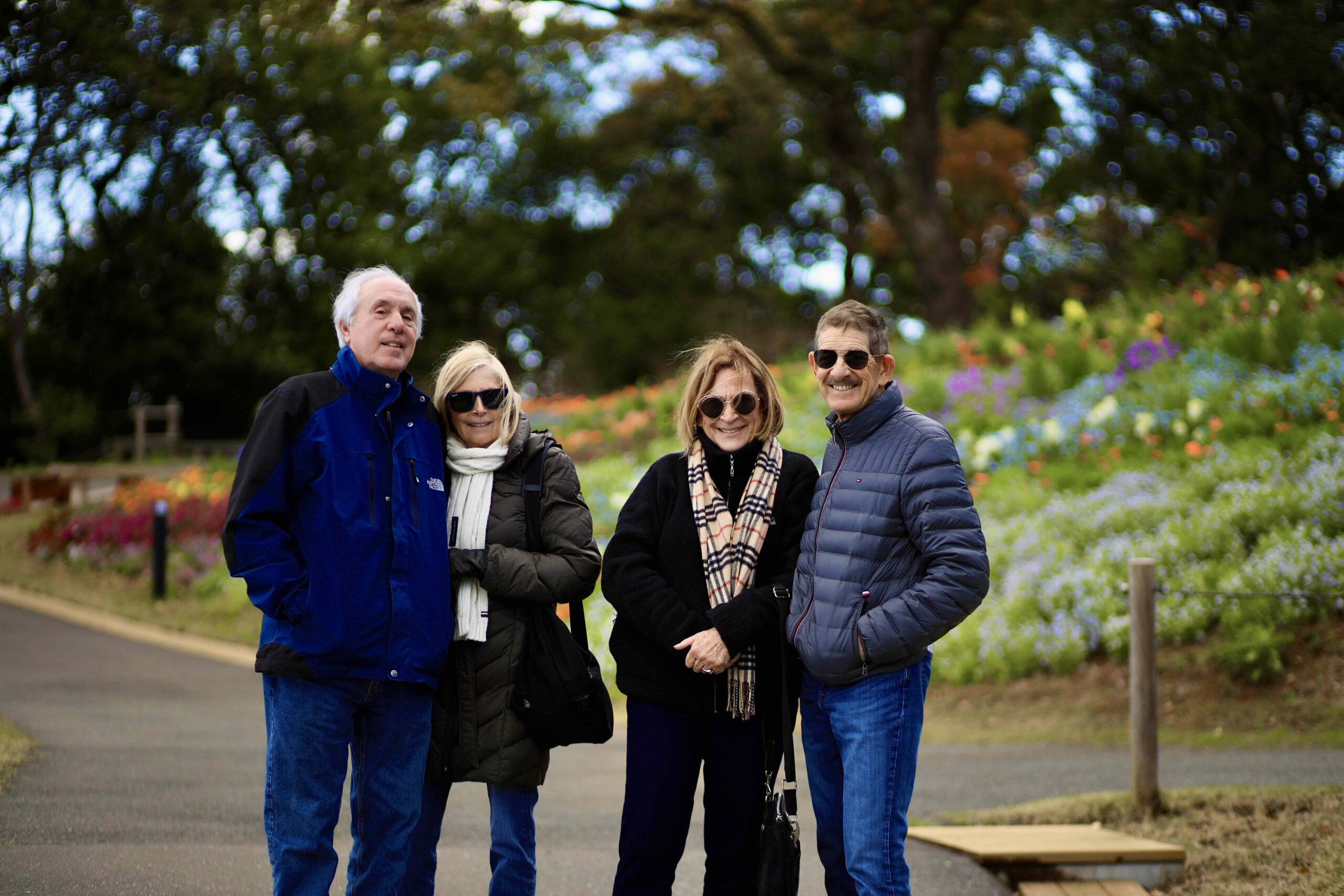
Spring is, quite simply, the best time to visit Makino. The hillside flower gardens are planted with thousands of plants in sweeping color gradients — vivid orange Gerbera daisies, blue forget-me-nots, purple stock, white alyssum — arranged across terraced slopes that seem to cascade with color. Walking through the garden on a spring afternoon feels like being inside a painting.
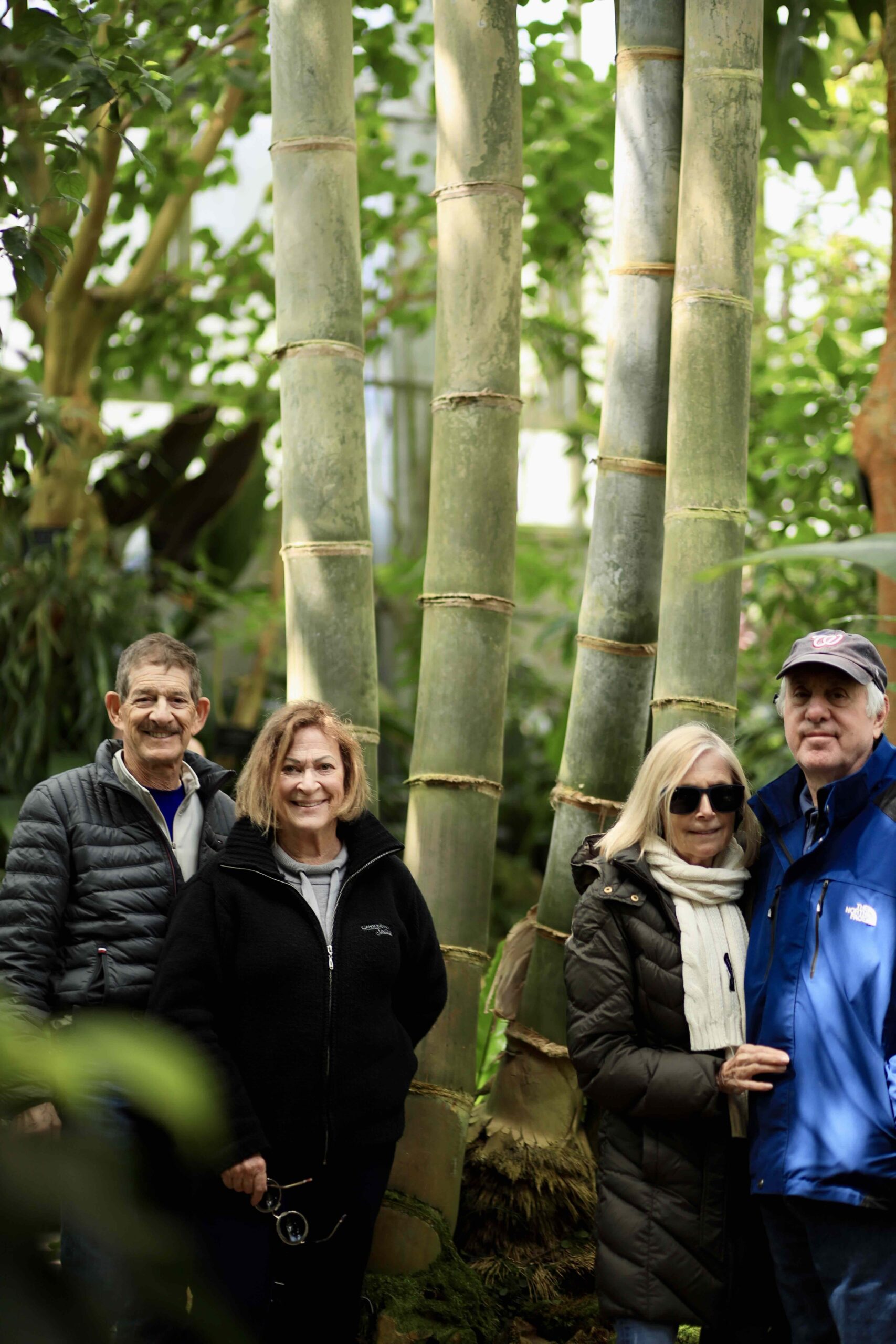
Inside the greenhouse, a stand of giant tropical bamboo — its culms thicker than a person’s torso — provided one of the most memorable photo stops of the day. Makino’s collections range from alpine plants to tropical species, reflecting the breadth of Dr. Makino’s botanical curiosity and the garden’s mission to preserve and celebrate plant diversity.
The garden sits on the slopes of Mount Godai, adjacent to Chikurinji Temple, and a visit to both in the same morning or afternoon is natural and unhurried. The combination — ancient temple and world-class botanical garden, separated by a short walk through forested hillside — is one of the best half-day experiences available anywhere in Shikoku.
Perfect for Cruise Ship Passengers
Arriving in Kochi by cruise ship? This combination of Katsurahama Beach, Chikurinji Temple, and Makino Botanical Garden is one of our most popular and highly rated shore excursions from the Kochi cruise port. We’ll pick you up directly from the cruise terminal and ensure you’re back on board with time to spare.
Spring visits are especially recommended — the cherry blossoms at Chikurinji and the flower gardens at Makino make this one of the most visually spectacular times to be in Kochi. But the tour runs year-round, and each season brings its own character to both sites.
- Private tour — just your group, no strangers
- Licensed English-speaking guide
- Flexible itinerary tailored to your port schedule
- Guaranteed return to Kochi cruise terminal on time