
Kochi’s Sunday Market: A 300-Year-Old Tradition Still Going Strong
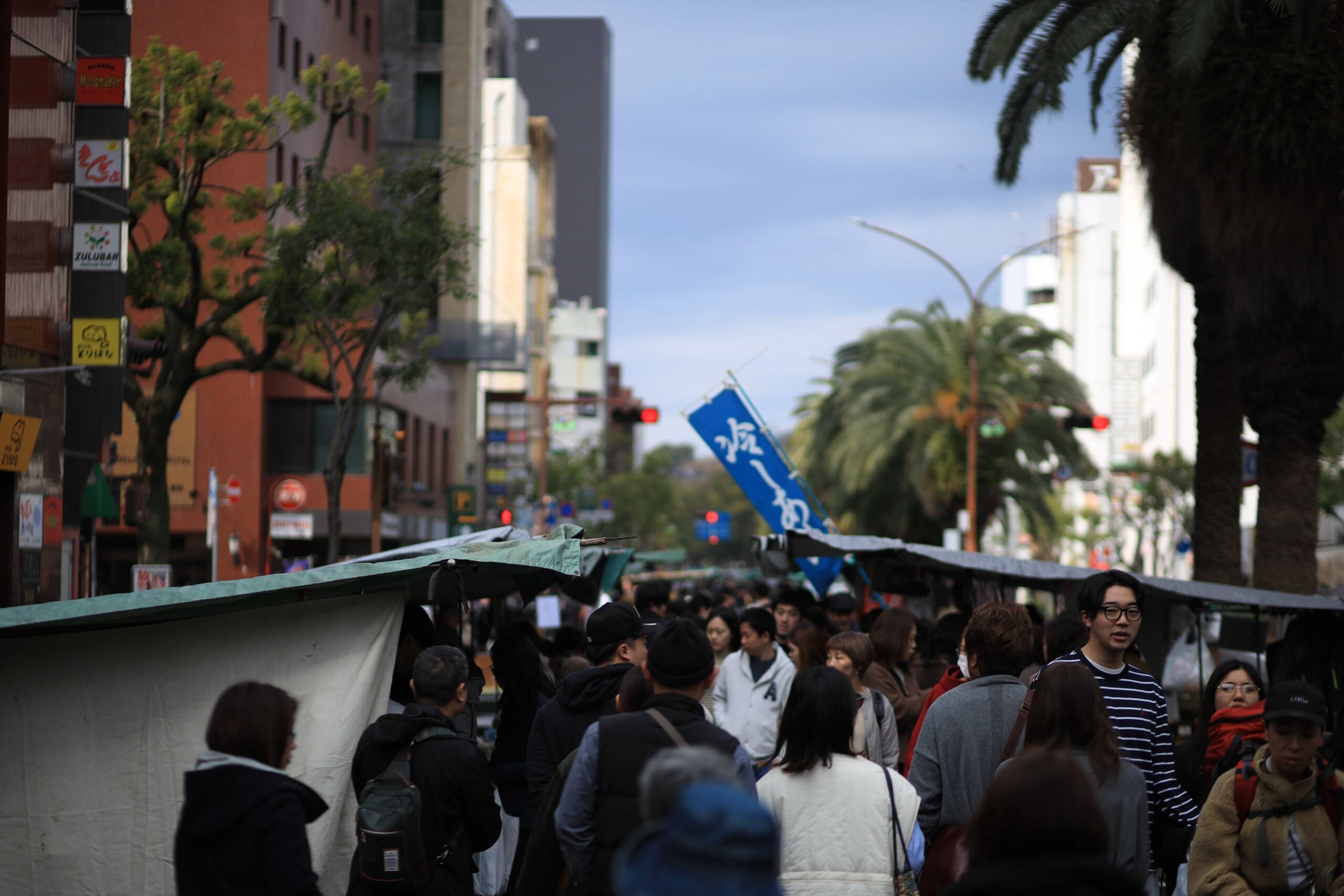
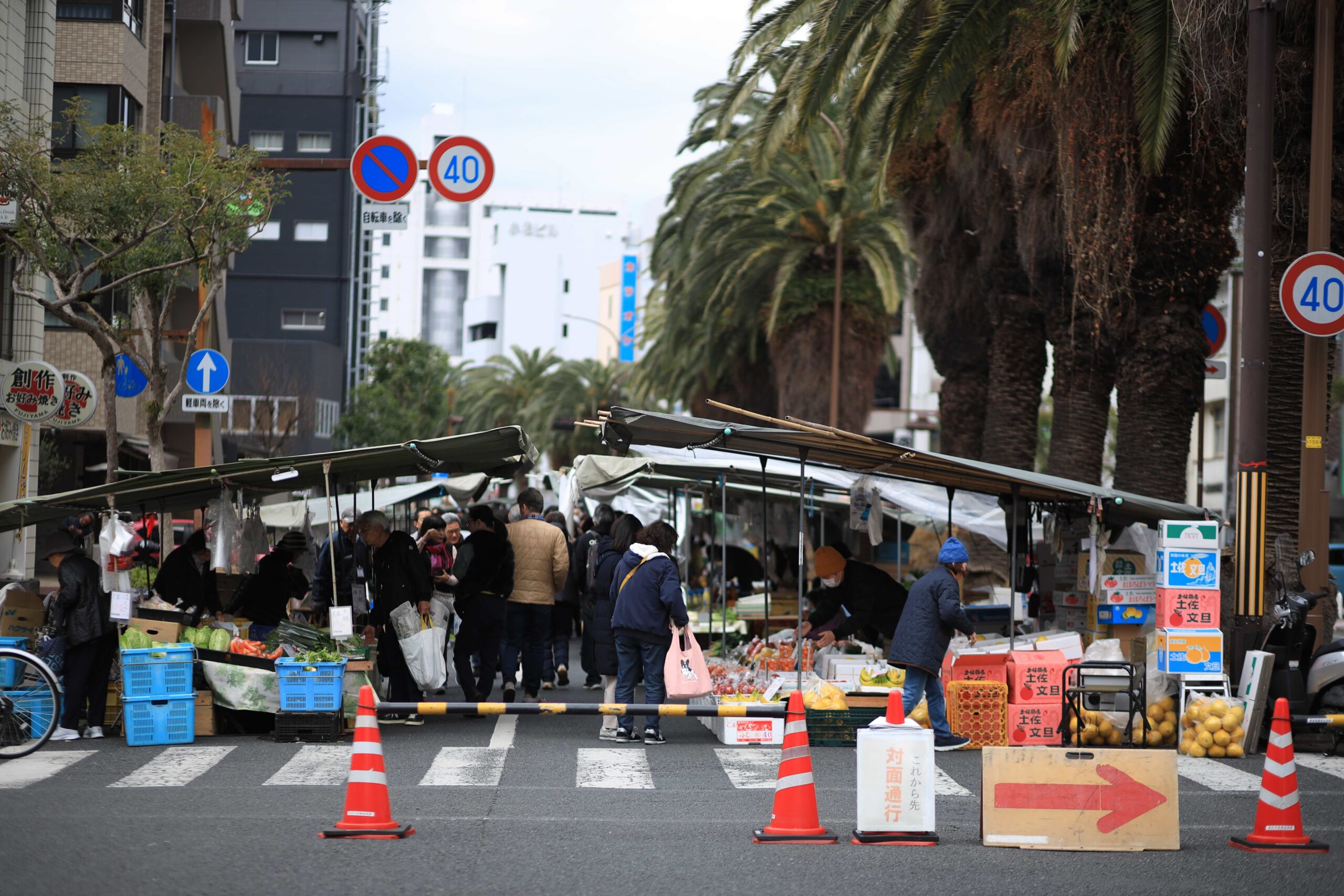
Every Sunday morning, the broad boulevard in front of Kochi Castle transforms into one of Japan’s most beloved and longest-running street markets. The Kochi Sunday Market — known locally as Nichiyo-ichi — has been held continuously since 1690, making it one of the oldest open-air markets in the country. For over 300 years, farmers, fishermen, artisans, and food vendors have set up their stalls along this palm-lined avenue, and locals have come to shop, eat, and connect with their community.
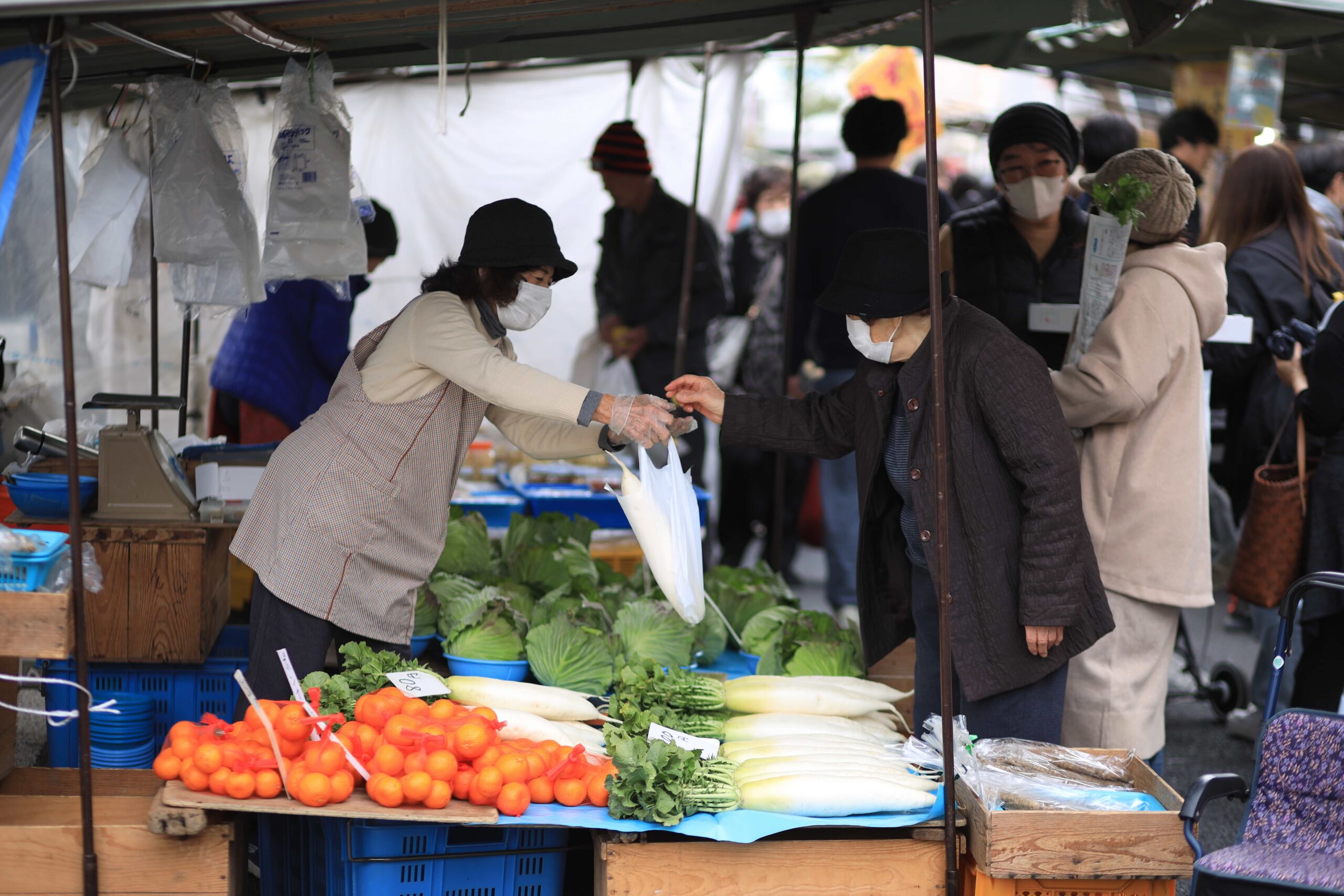
This isn’t a tourist market. It’s the real thing — a living piece of Kochi’s culture, where grandmothers haggle over daikon radishes, lines form for freshly fried tempura, and antique swords sit alongside ceramic owls on a vendor’s folding table. If you want to understand Kochi, the Sunday Market is where you start.
300 Years of Market History
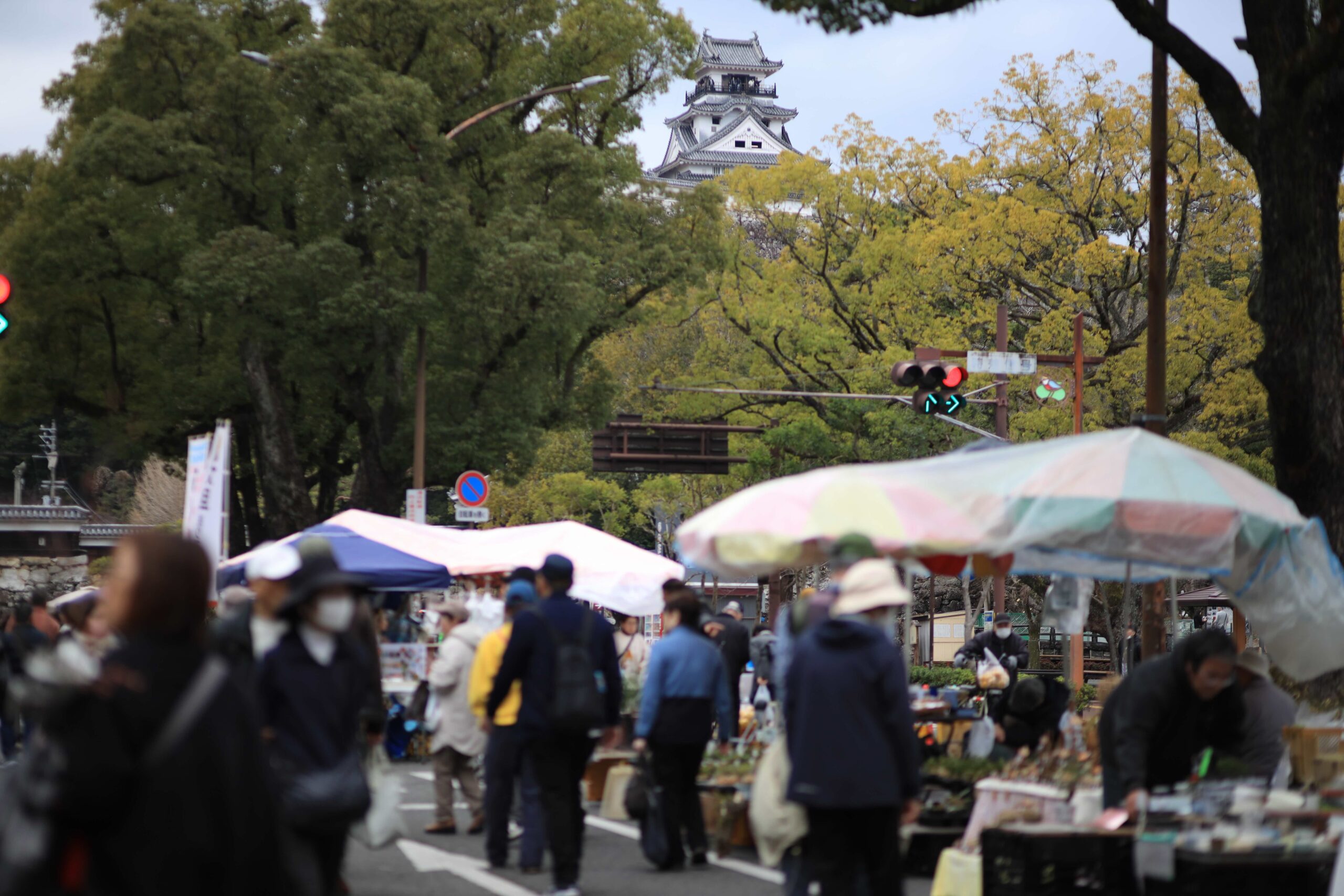
The Kochi Sunday Market began in 1690 under the patronage of the Yamauchi clan, the feudal lords who ruled the Tosa domain from Kochi Castle. The market was established to give farmers a dedicated day to sell their produce directly to townspeople — a practical arrangement that quickly became a social institution. The castle tower visible at the end of the market street serves as a constant reminder of this long history. Shoppers today walk the same avenue that generations of Tosa people have walked for more than three centuries.
The market stretches for approximately one kilometer along Otesuji Avenue, with around 500 stalls appearing each Sunday. It is one of the few markets in Japan that has operated continuously for this long without major interruption, and its survival is a testament to how deeply embedded it is in the fabric of Kochi life.
Imo-Ten: Kochi’s Beloved Street Food
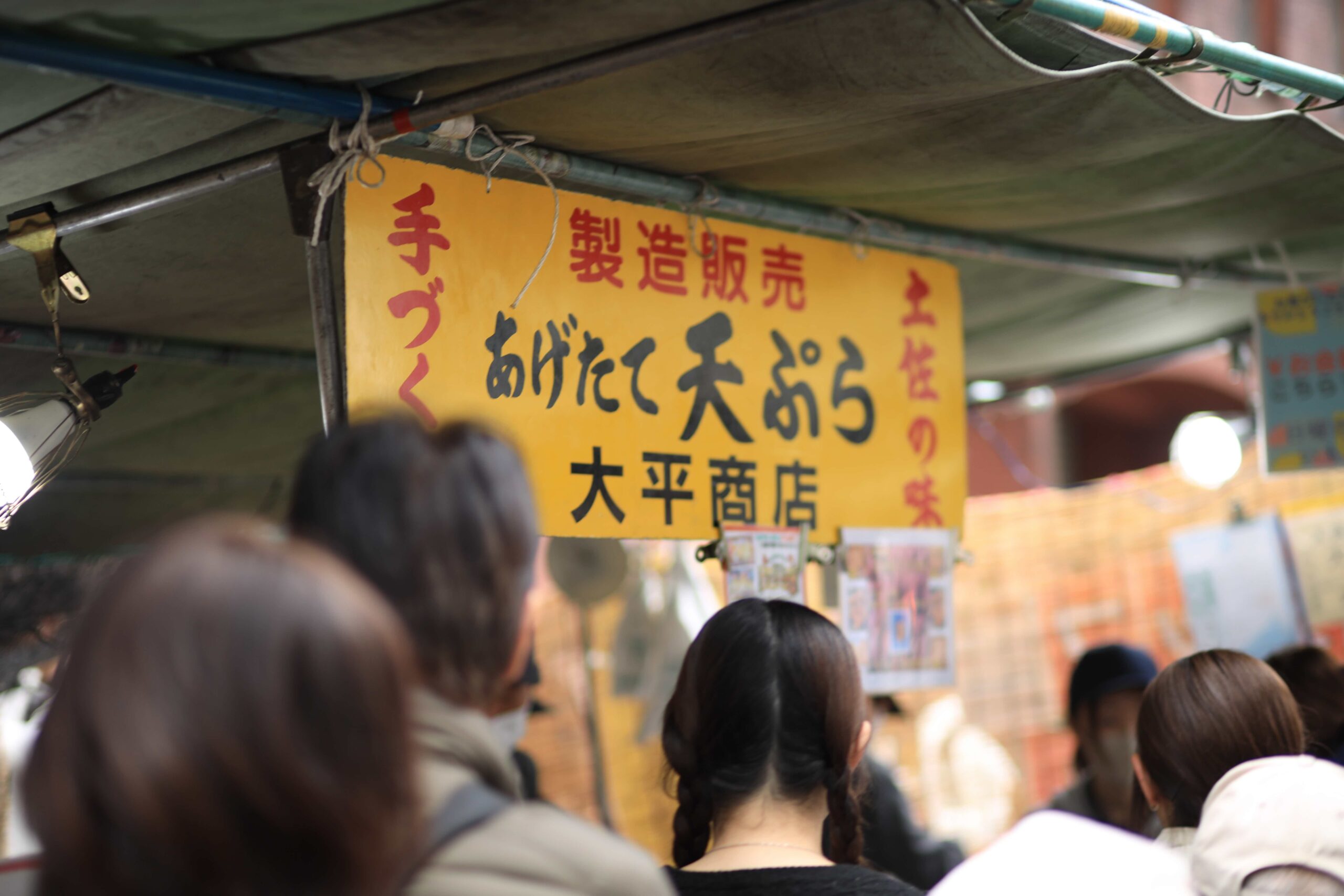
If there is one thing you must eat at the Sunday Market, it is imo-ten — sweet potato tempura. This is not the delicate, lightly battered tempura of Tokyo restaurants. Kochi-style imo-ten is thick, sweet, and deeply satisfying: slices of sweet potato coated in a slightly sweet batter and fried until golden. Locals eat it as a snack, a breakfast, or simply because it’s Sunday and that’s what you do.
The most famous stall is Ohira Shoten, where the queue extends well beyond the yellow signboard bearing the hand-painted characters for “freshly fried tempura.” There is no menu. There is no decision to make. You join the line, you wait, you receive a bag of hot imo-ten, and you eat it standing on the street.
Tosa Knives: A Craft Tradition Since the Edo Period
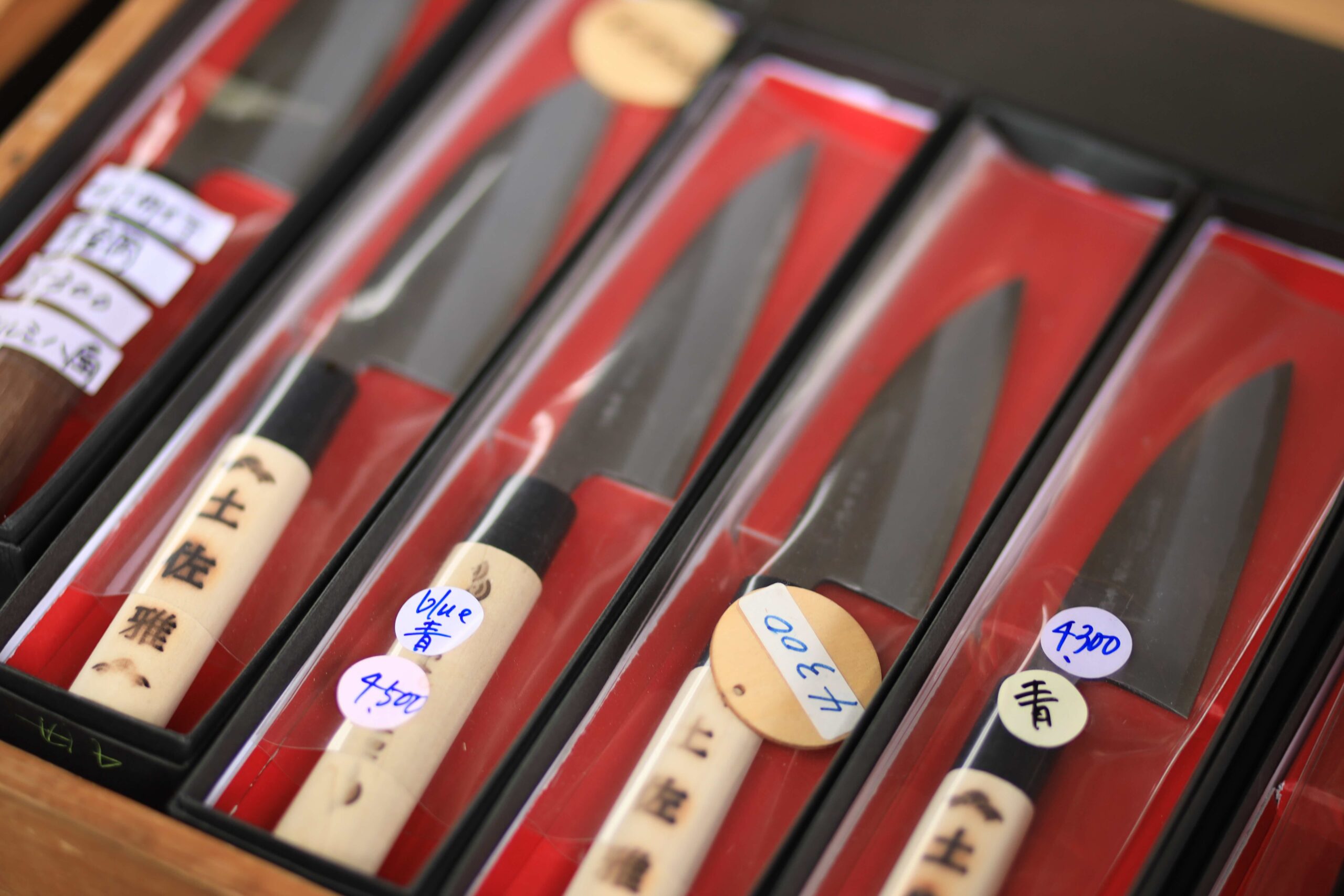
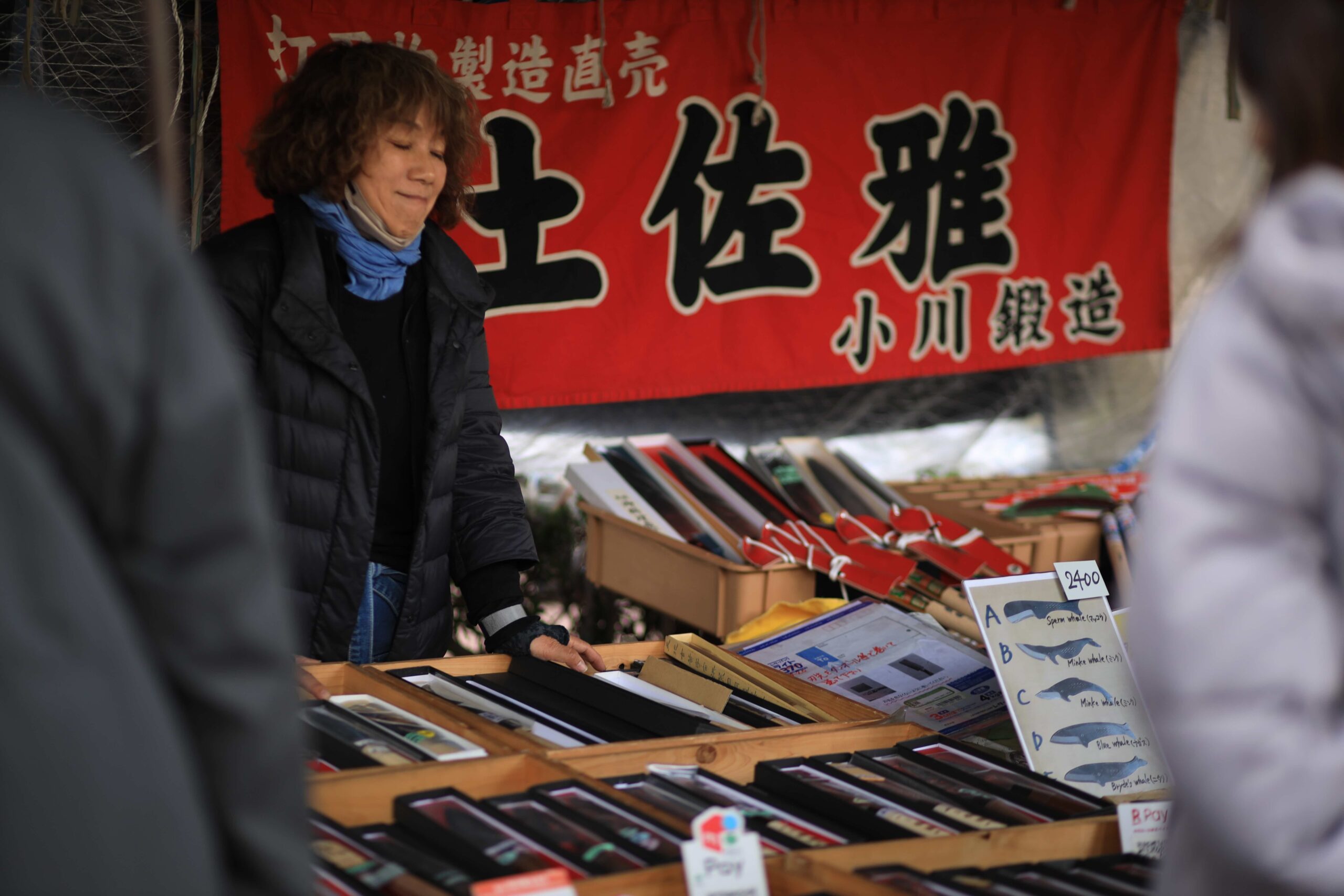
Kochi has been a center of blade craftsmanship since the Edo period, and the Sunday Market is the best place in the city to see — and buy — authentic Tosa knives. Several vendors specialize in Tosa hamono, forged blades prized by professional chefs and home cooks across Japan for their sharpness, durability, and distinctive blackened finish.
One of the most recognizable stalls belongs to Ogawa Tanzo, trading under the name Tosa Miyabi (土佐雅). Their knives are handcrafted at their forge and sold directly — no middleman, no retail markup.
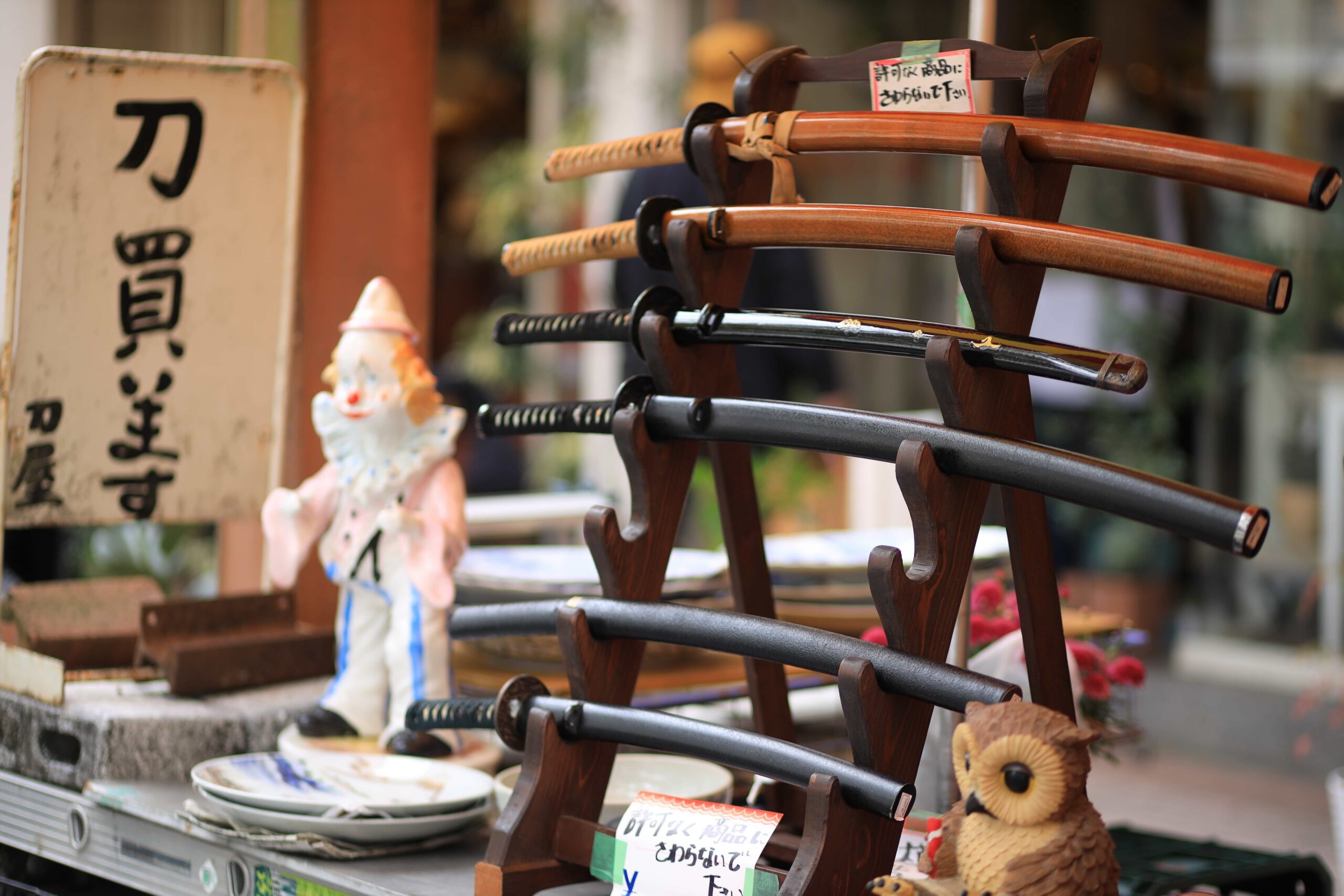
For collectors and antique enthusiasts, there are also dealers selling antique swords — katana displayed on tiered wooden stands, their lacquered scabbards ranging from deep black to warm brown. Signs remind visitors not to touch the genuine pieces, which command prices reflecting their age and craftsmanship.
The Produce: Kochi’s Agricultural Abundance
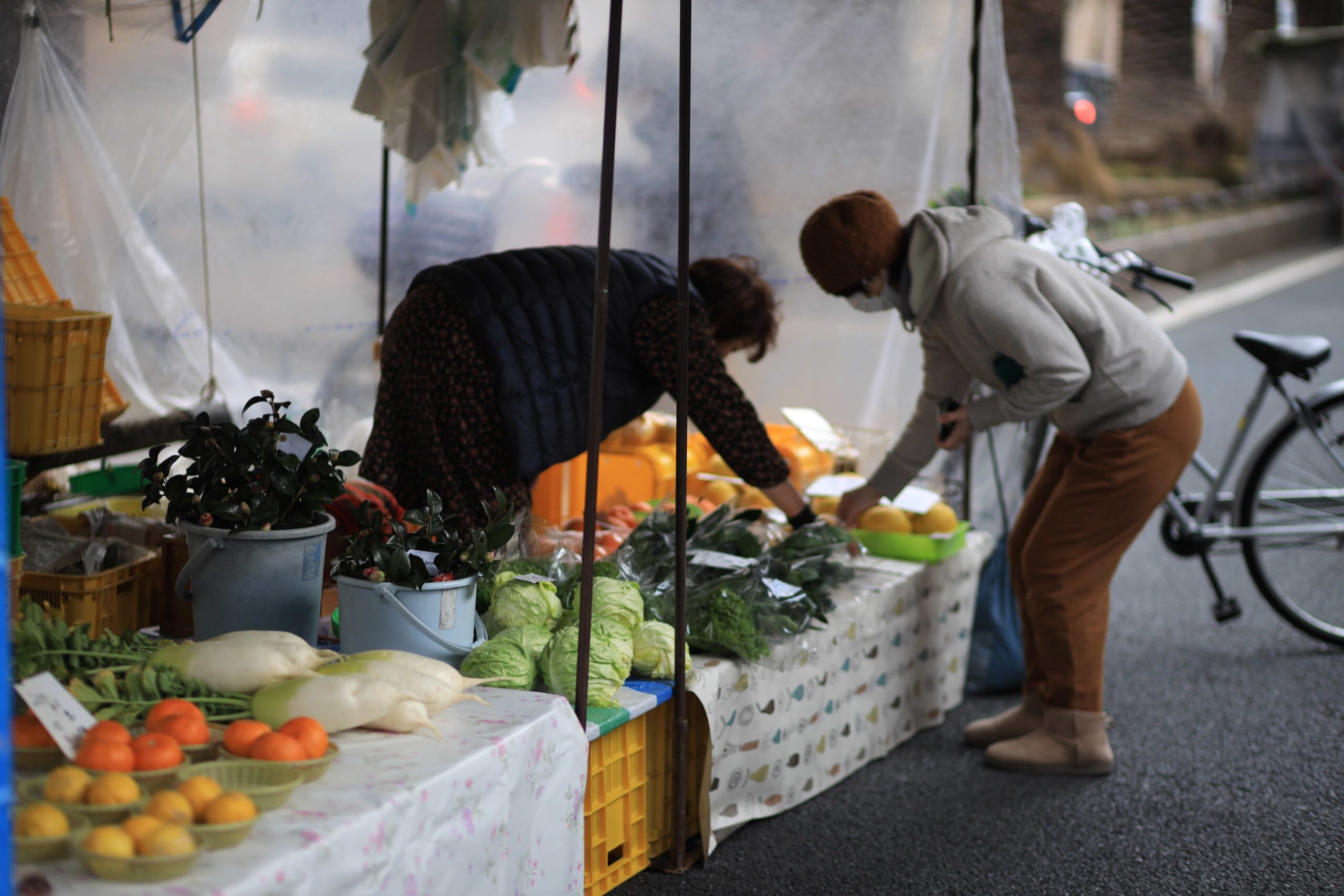
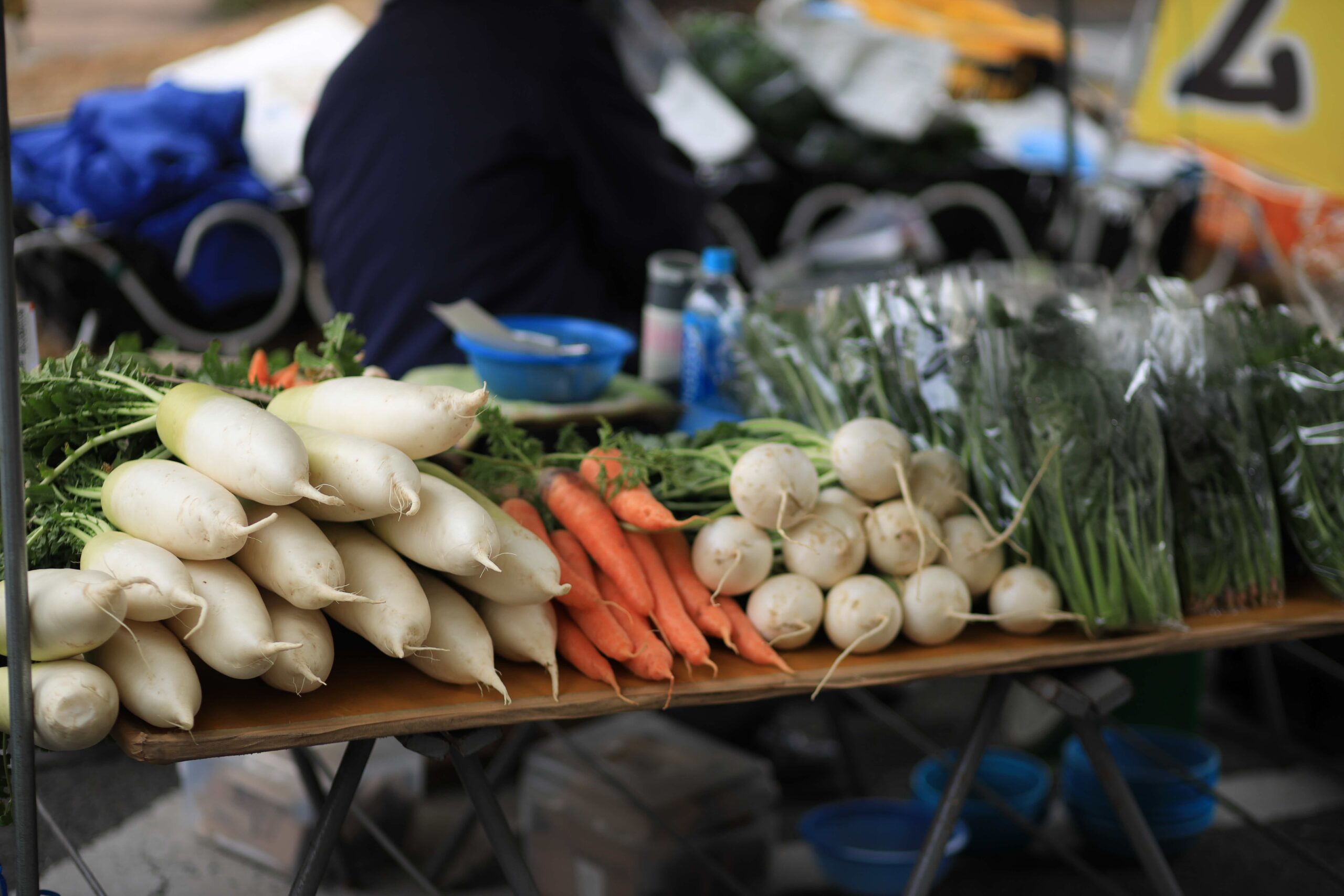
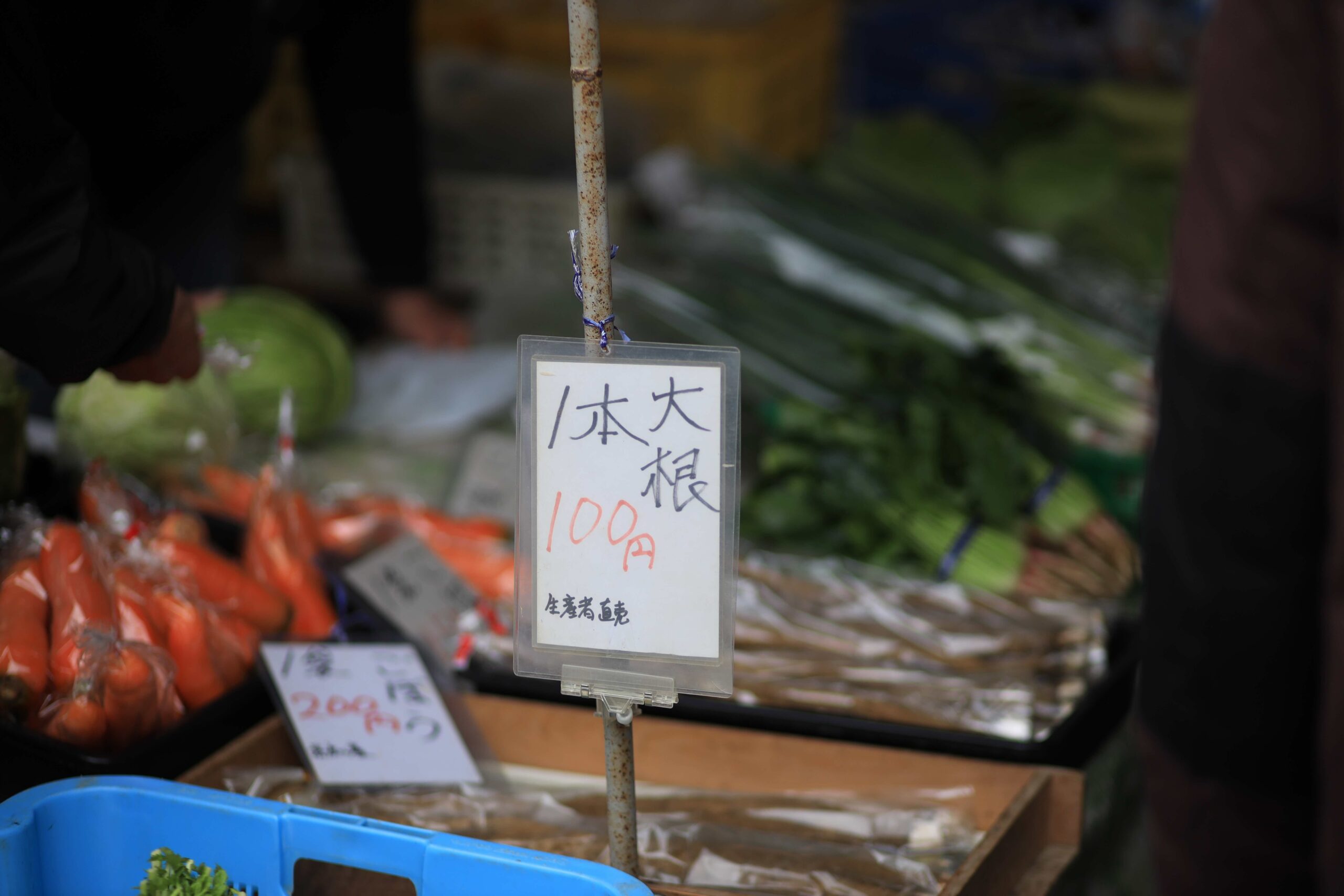
Kochi Prefecture is one of Japan’s most productive agricultural regions, blessed with abundant sunshine, clean water, and a warm climate that allows year-round cultivation. The Sunday Market showcases this abundance in full color. Tables overflow with daikon radishes, carrots, turnips, and leafy greens — much of it picked that morning by the farmers selling it.
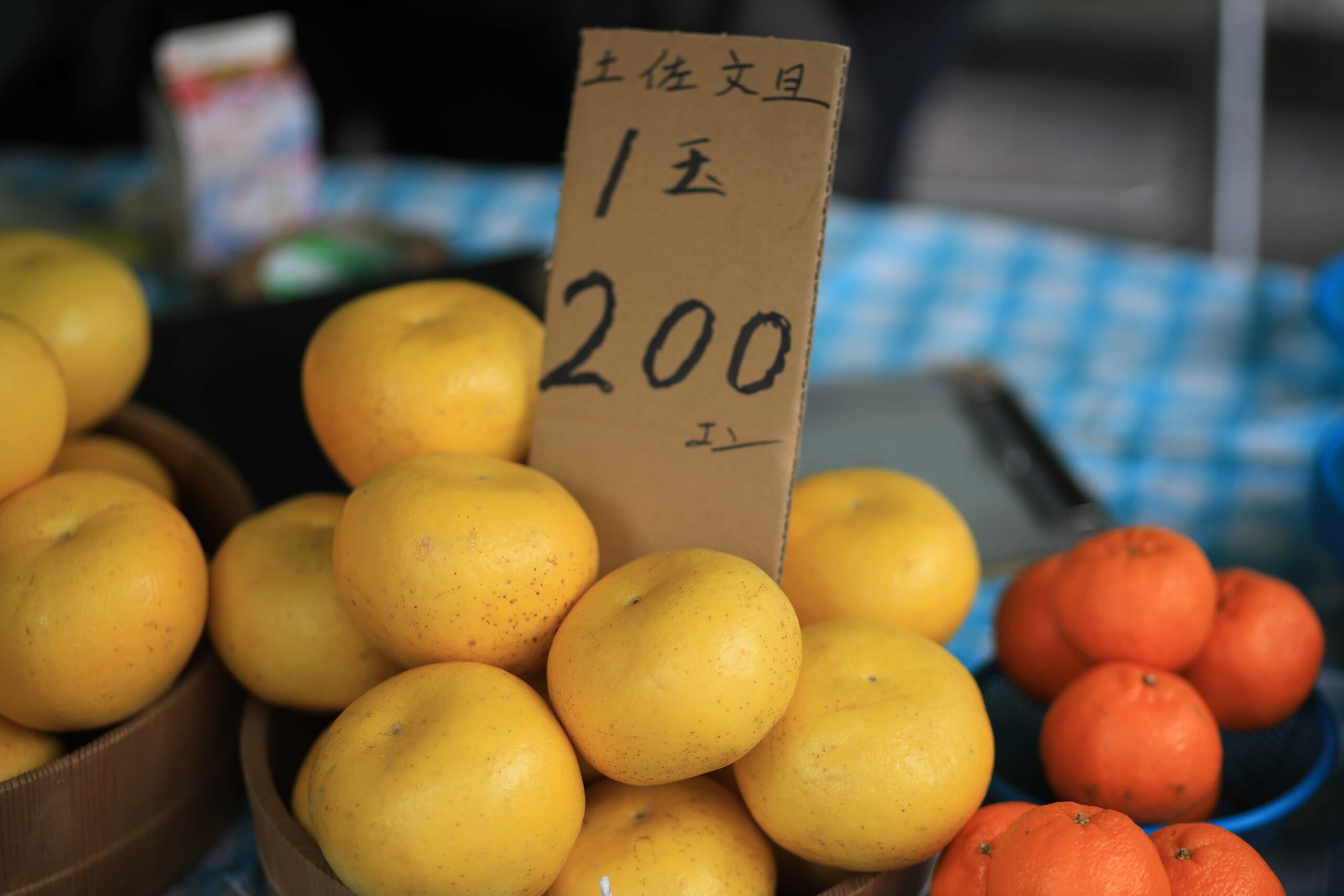
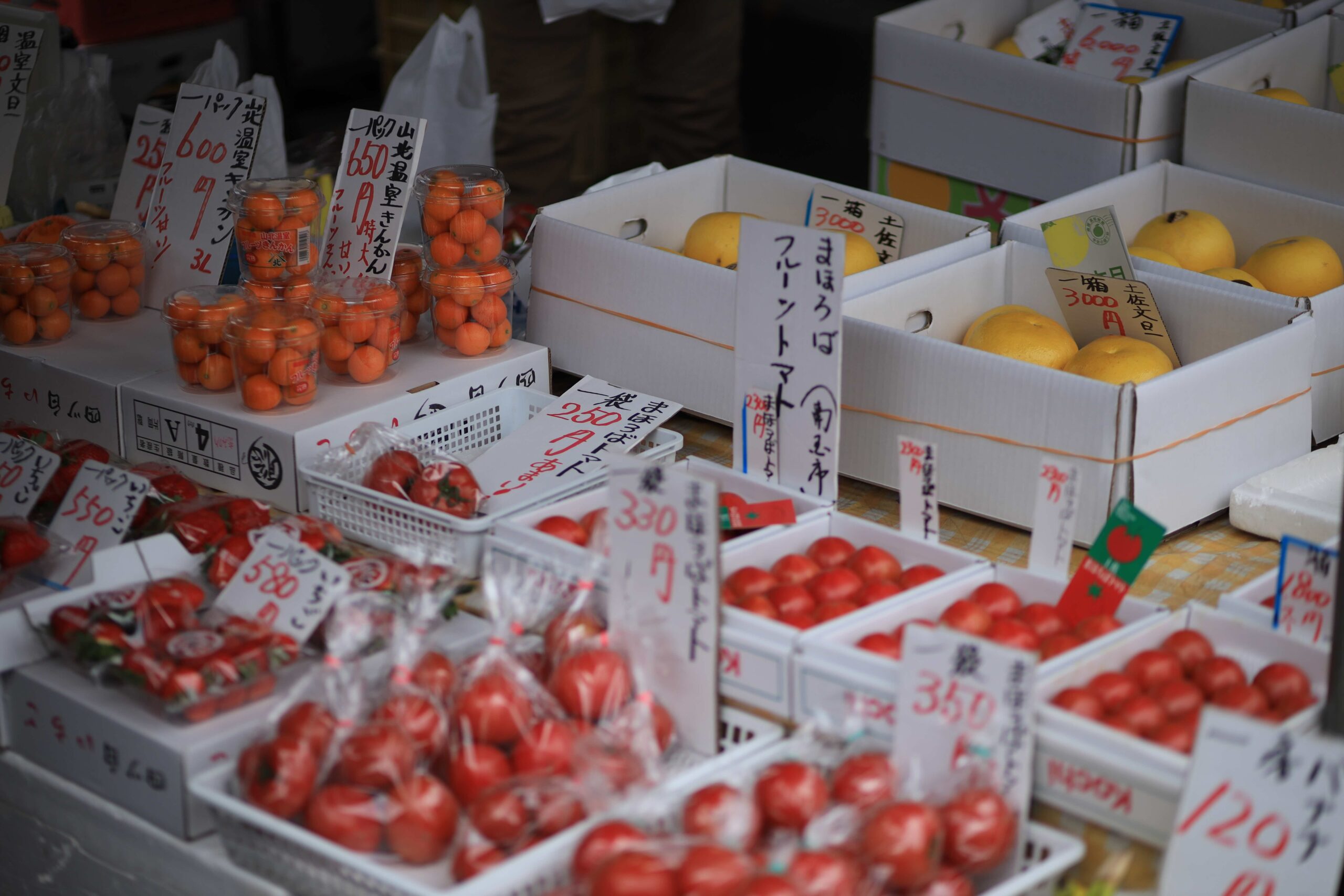
Fruit stalls are equally impressive. The most eye-catching are the Tosa buntan — large yellow citrus fruits unique to Kochi, cultivated in Tosa since the 17th century and one of the prefecture’s most iconic products. Alongside the buntan, you’ll find strawberries, sweet tomatoes, and the tiny golden kinkan kumquats that appear in winter and early spring.
Dried Fish and the Taste of Tosa
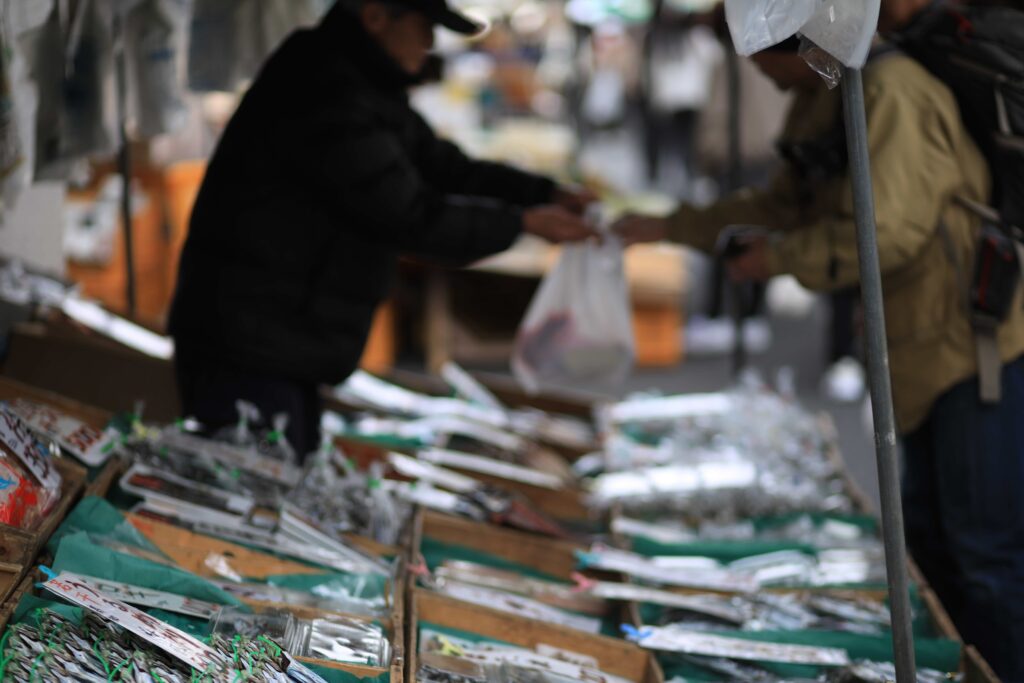
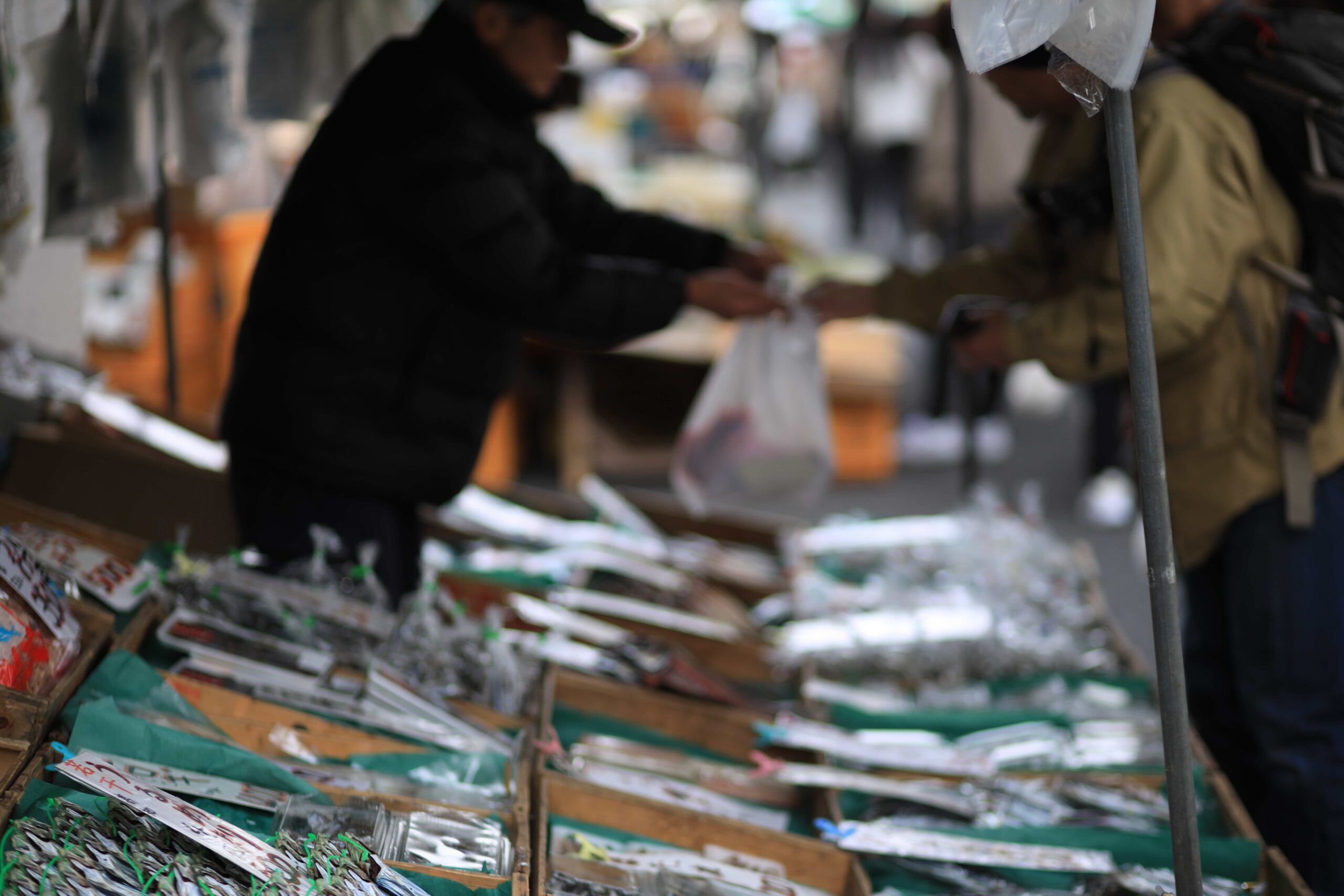
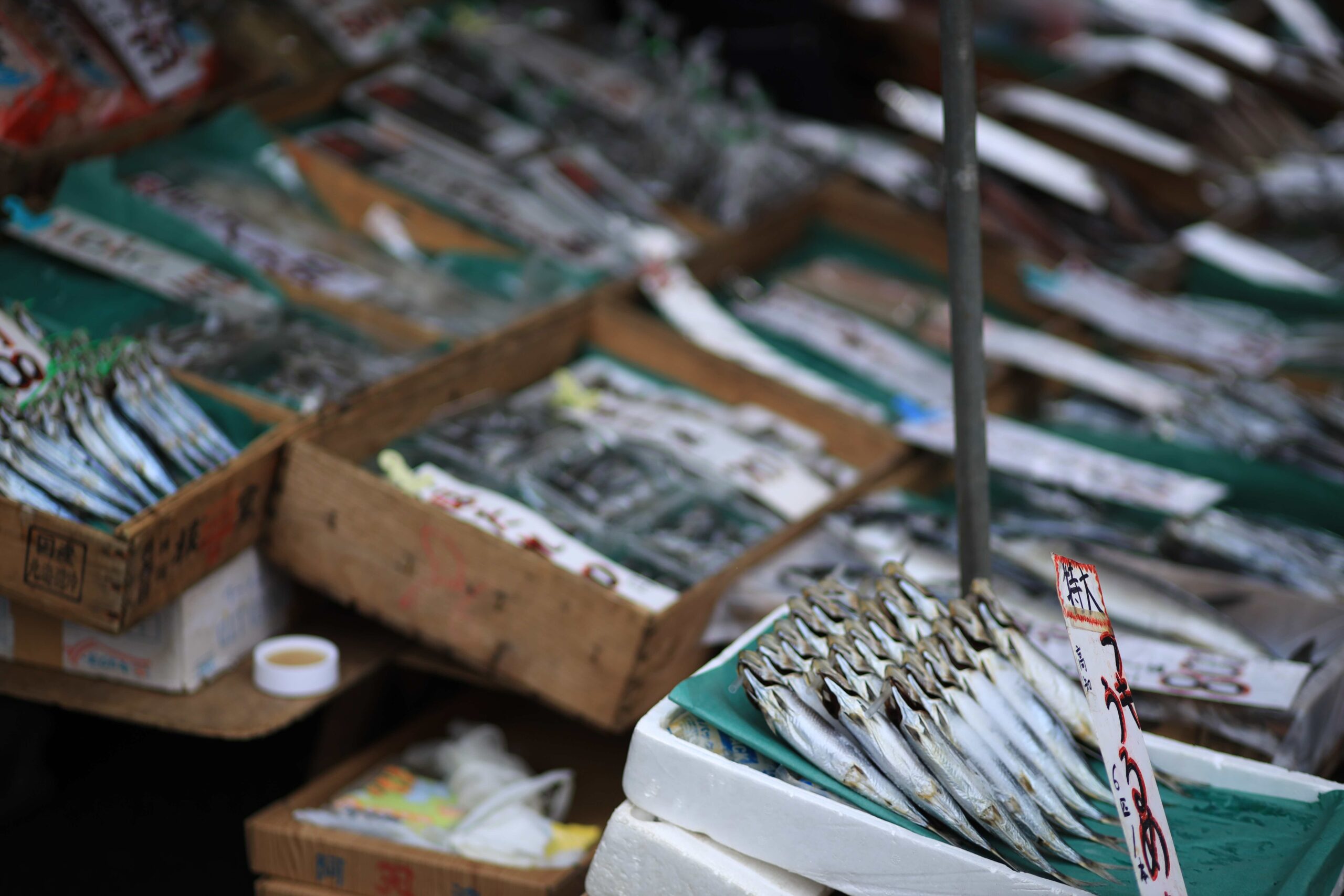
Kochi faces the Pacific Ocean, and the sea has shaped its food culture as profoundly as its mountains. Several vendors specialize in dried and salted fish — himono — laid out in flat cardboard boxes by type and size. Sardines, horse mackerel, saury, and small bream are among the most common, their silver bodies arranged in neat rows. These are made by the vendors themselves or by local fishing households, using traditional drying methods passed down through families.
Aisu-Kurin: Kochi’s Nostalgic Ice Cream
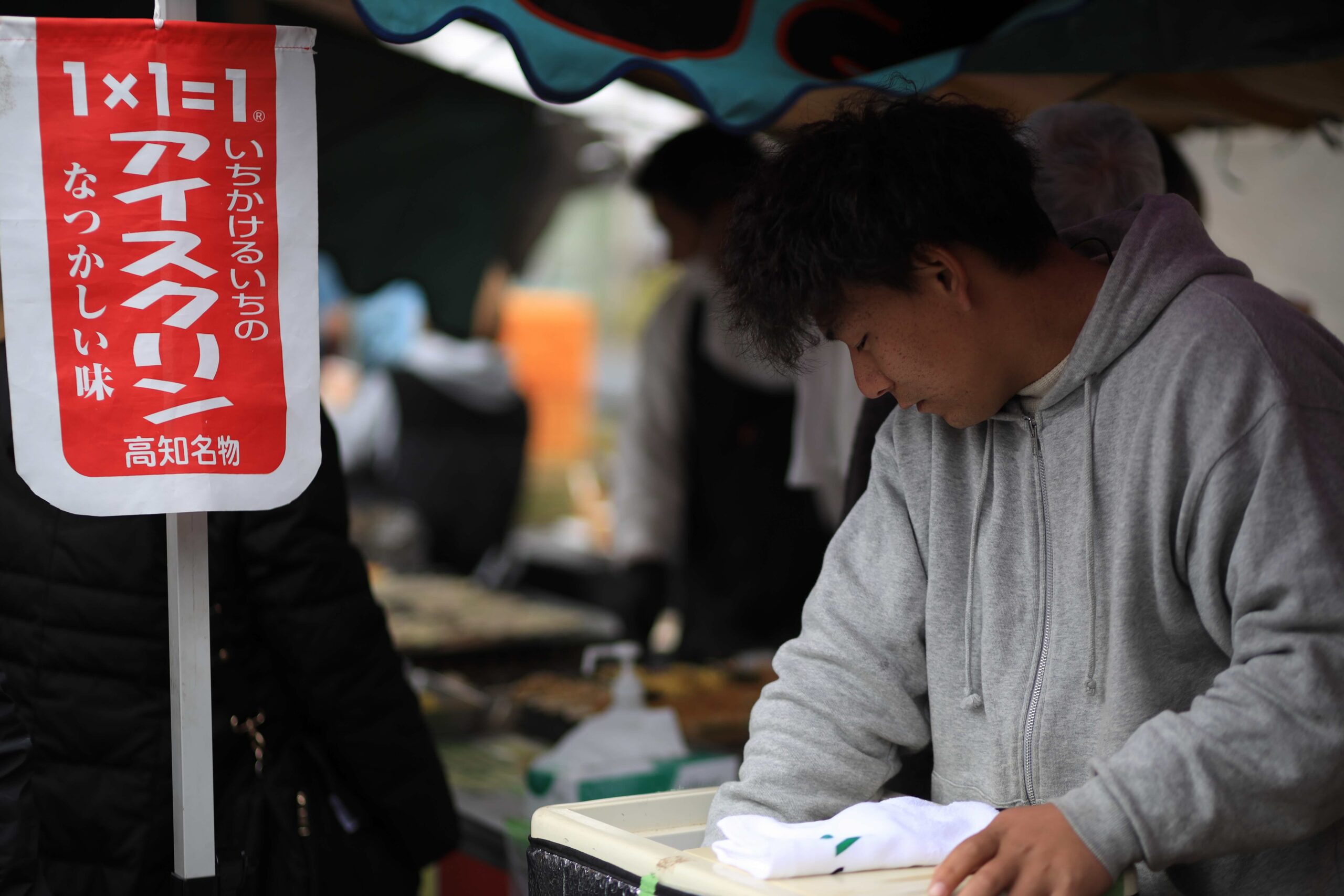
Among all the food on offer at the Sunday Market, few things capture Kochi’s character quite like aisu-kurin — the city’s beloved old-fashioned ice cream. Softer and less sweet than modern soft serve, aisu-kurin has been a Kochi specialty since the Meiji era. The distinctive red-and-white signage reading “1×1=1” is a classic sight at the market, and on even the coldest winter Sundays, there is always someone eating one.
Prepared Foods and Local Specialties
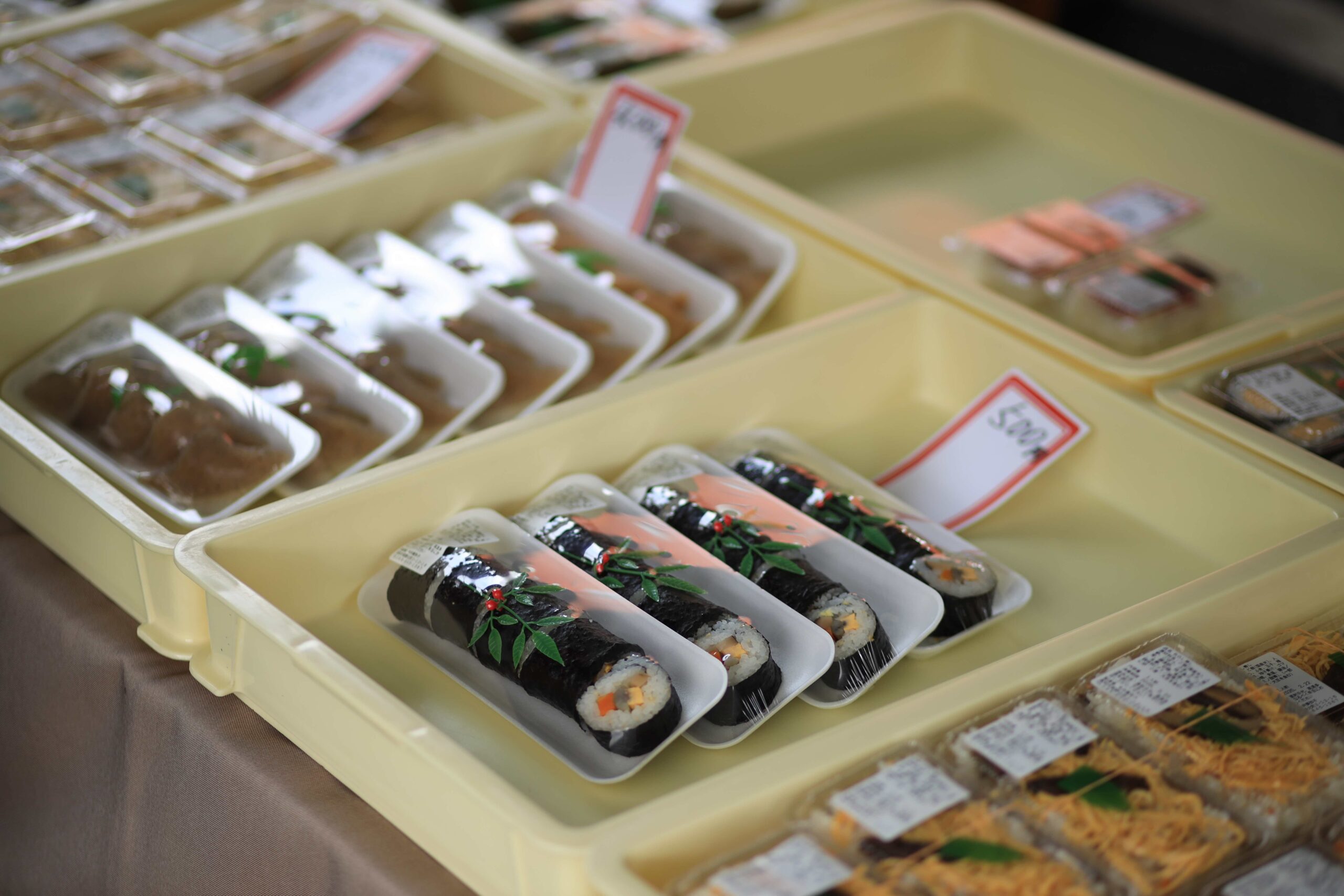
Beyond the raw ingredients and street food, the Sunday Market also features stalls selling prepared Kochi dishes — nori-maki rolls, simmered vegetables, local sweets, and seasonal specialties packed neatly for carrying home. Small-scale home producers bring food they have made themselves: pickled vegetables, handmade mochi, and local dishes that rarely appear in restaurants.
A Market That Belongs to Everyone
What makes the Kochi Sunday Market remarkable is not any single product or vendor, but the accumulated weight of everything together — the castle at one end, the palm trees lining the street, the grandmother selling 100-yen daikon from a bicycle cart, the college students queuing for imo-ten, the retired man examining blades he has no intention of buying. It is a place where Kochi’s past and present coexist without effort, because the market itself has always been both.
Visit the Sunday Market on Your Kochi Tour
The Kochi Sunday Market is held every Sunday along Otesuji Avenue, rain or shine, from approximately 6:00 AM to 5:00 PM. It is a short walk from Kochi Castle and easily combined with a castle visit as part of a half-day or full-day Kochi tour.
On our Kochi Highlights Tour, we include a visit to the Sunday Market (when your ship is in port on a Sunday) alongside Kochi Castle, Katsurahama Beach, and a katsuo no tataki experience. We’ll guide you through the stalls, translate the signs, and make sure you leave with imo-ten in hand.