
Yamauchi Shrine and Sansuien: Kochi’s Hidden Samurai History in the City Center
Most visitors to Kochi city walk straight to Kochi Castle, and that is completely understandable — it is one of the most beautiful castles in Japan. But just a short walk away, there is a quiet corner of the city that tells a very different part of the same story. Yamauchi Shrine (山内神社) and the historic grounds of Sansuien (三翠園) are places where you can feel the weight of Kochi’s samurai past in a very personal way.
I have a personal connection to Yamauchi Shrine. I had my wedding ceremony here — a traditional Japanese Shinto wedding. So every time I bring guests to this place, it means something a little special to me.
Who Were the Yamauchi Clan?
To understand these two places, you first need to know a little about the Yamauchi family. They were the lords of Tosa Province — which is the old name for Kochi — from the early 1600s all the way until the end of the samurai era in the late 1800s. That is more than 260 years of rule by one family.
The first Yamauchi lord, Kazutoyo, arrived in Tosa in 1601 after receiving the domain as a reward from Tokugawa Ieyasu, the shogun who unified Japan. The Yamauchi family went on to govern Tosa for generations, and their legacy is still very much a part of Kochi today — in its culture, its festivals, and its history.
Yamauchi Shrine was built in 1872, just after the samurai era ended, to honor the Yamauchi lords. It is a place where the people of Kochi came to remember and pay respect to the family that ruled their land for so long.
Yamauchi Shrine: A Peaceful Place in the Middle of the City
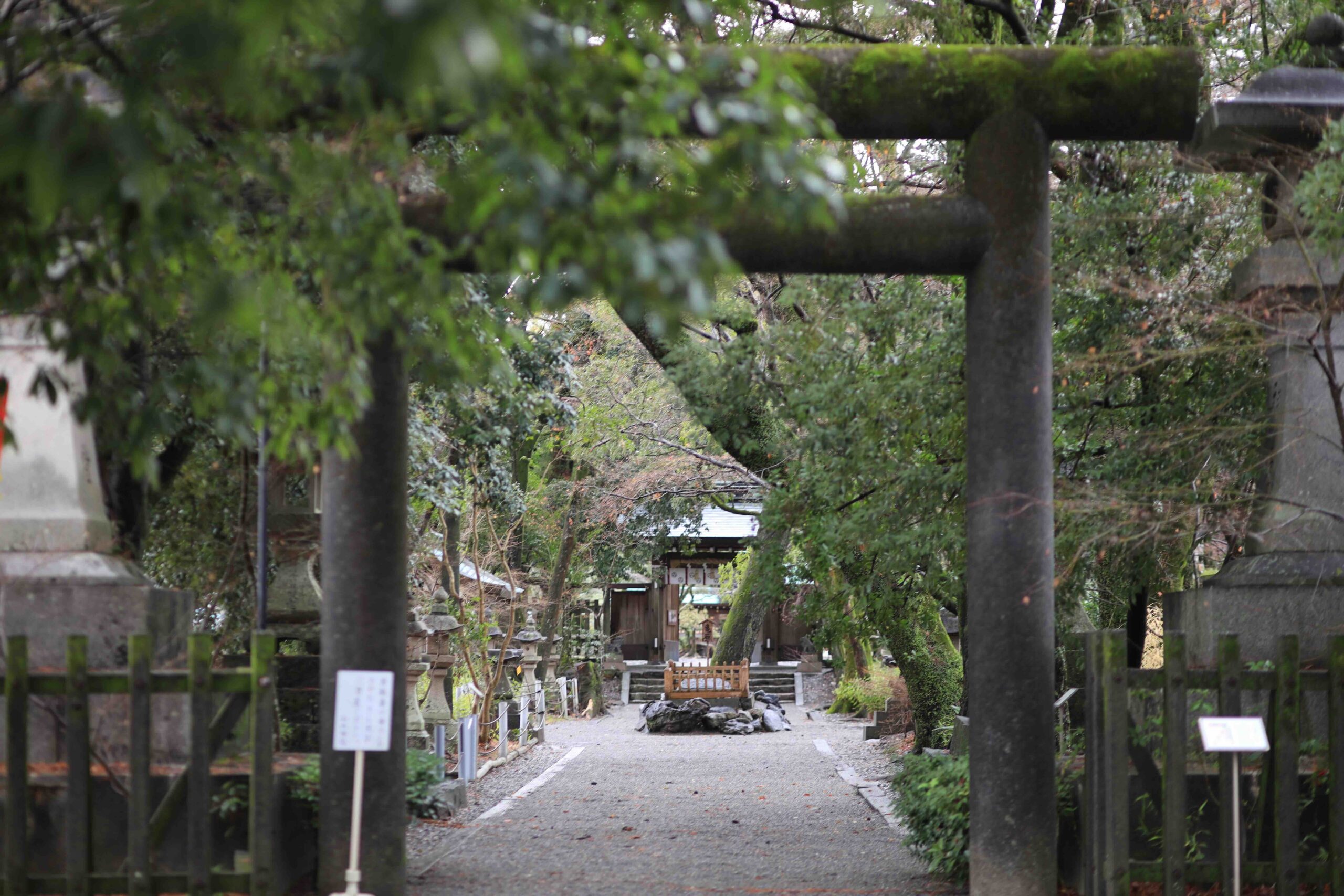
The shrine sits in a quiet, wooded area that feels completely separate from the busy streets nearby. You pass through a stone torii gate and walk down a gravel path lined with old stone lanterns and tall trees. It is calm, a little cool, and very peaceful — even on a weekday.
The main hall of the shrine is simple and dignified. When I visit with guests, I always take a moment to explain the Shinto tradition of clapping twice and bowing before the shrine. Many visitors enjoy trying this themselves — it is a small gesture, but it connects you to a tradition that has been practiced in Japan for over a thousand years.
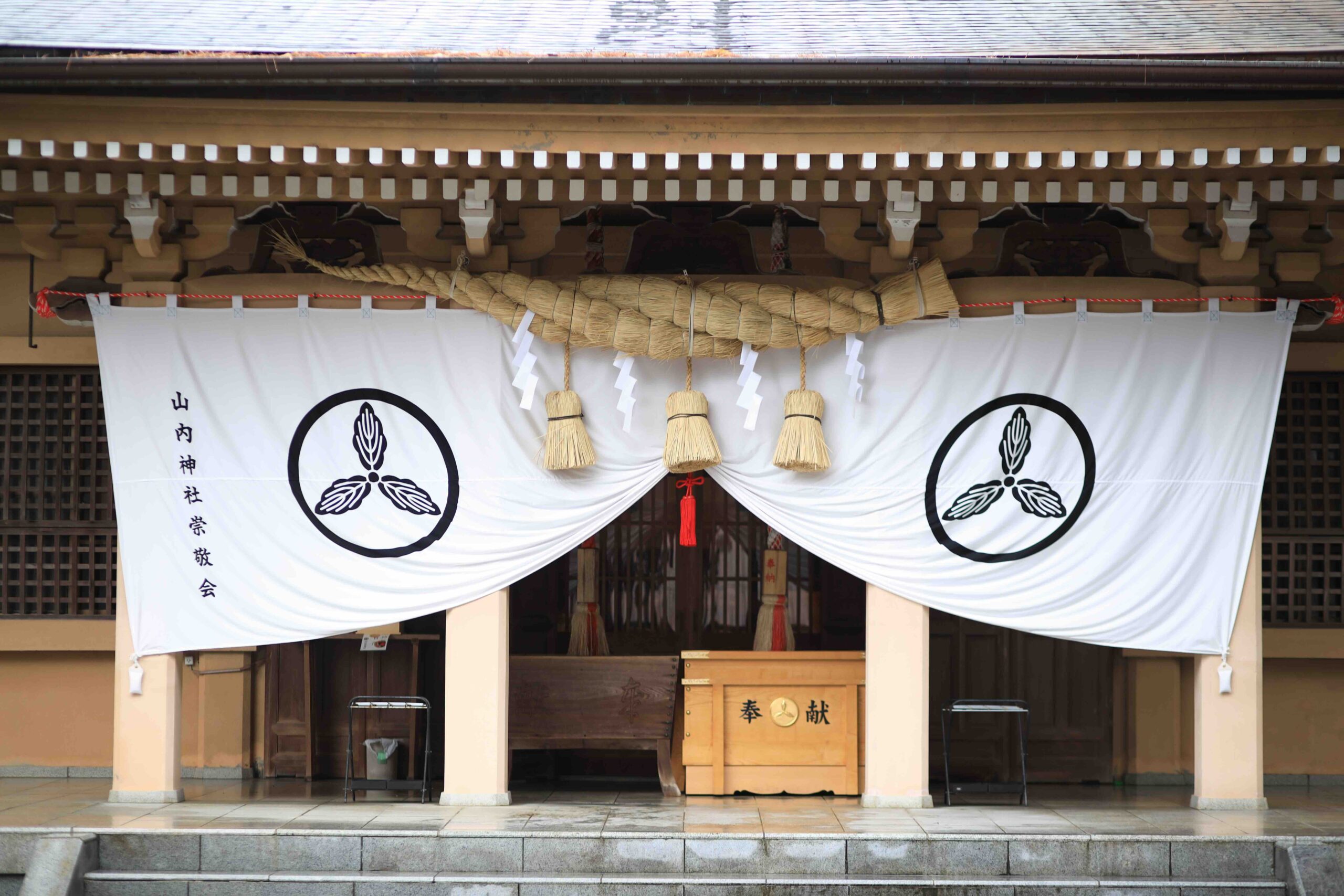
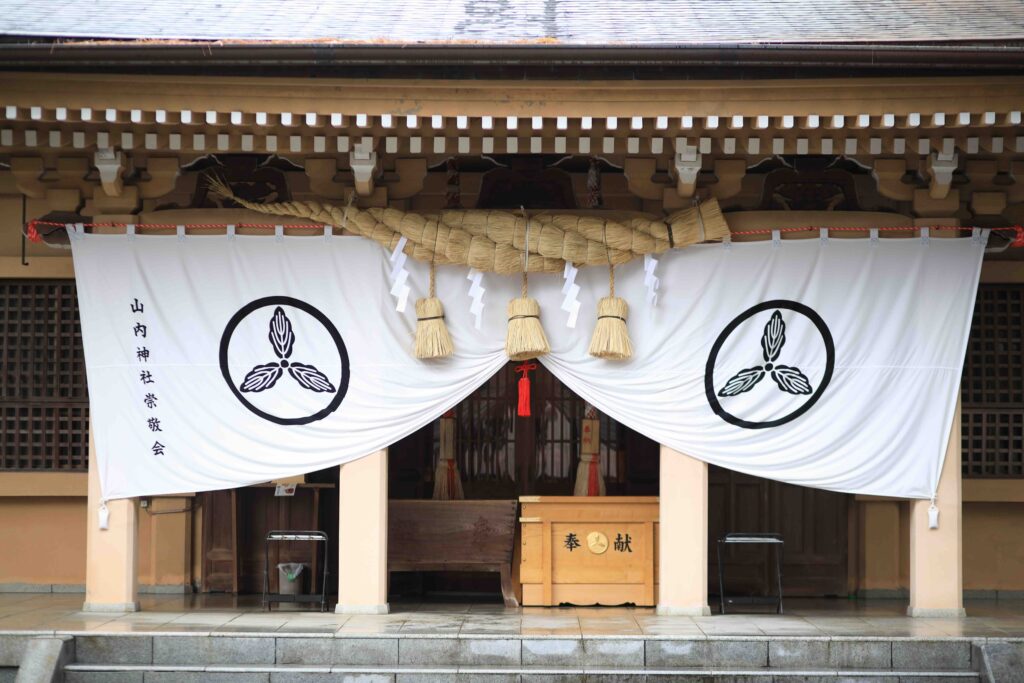
Inside the shrine grounds, there is also a beautifully decorated inner gate with curtains showing the Yamauchi family crest — three leaves arranged in a circle. This crest appears throughout the shrine and is a symbol of the family’s long history in Kochi.

Small Details That Tell a Big Story
One of the things I enjoy about visiting Yamauchi Shrine with guests is pointing out the small details that are easy to miss. Near the entrance path, there is a rounded stone enclosed in a small wooden fence. It is called the Kame-ishi (亀石), or “Turtle Stone.” It is said to bring good luck, and its smooth, domed shape really does look like the back of a turtle.

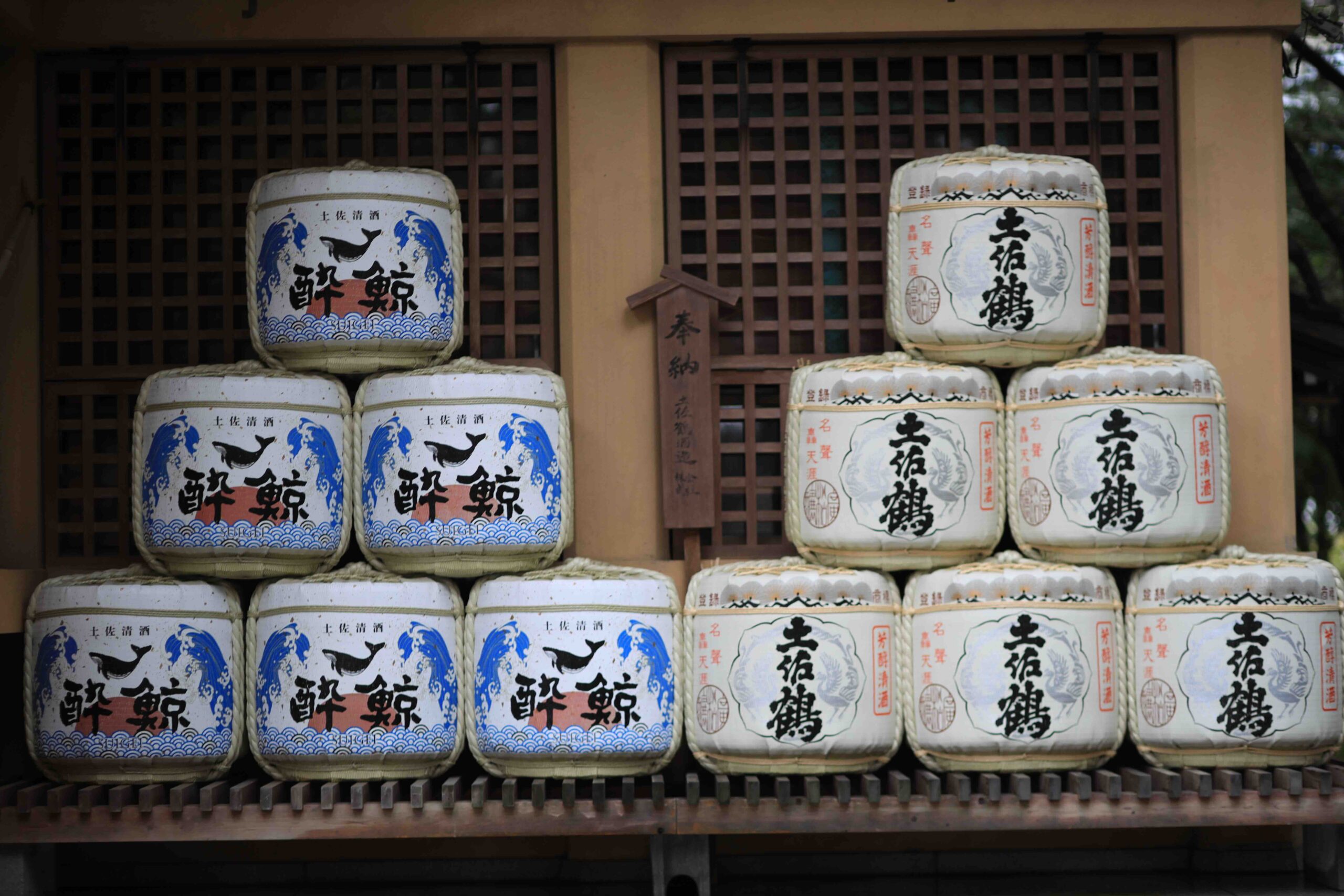
There are also rows of sake barrels displayed at the shrine — a traditional offering to the gods. You can see barrels from two of Kochi’s famous sake breweries: Tosazuru (土佐鶴) and Suigei (酔鯨). Both are still made in Kochi today, and both are well worth tasting if you have the chance.
You will also see racks of omikuji — small paper fortunes that visitors tie to the rack after reading. This is a very common sight at Japanese shrines, but it is always a colorful and interesting thing to see. If you would like to draw your own fortune, they are usually available for a small fee at the shrine office.
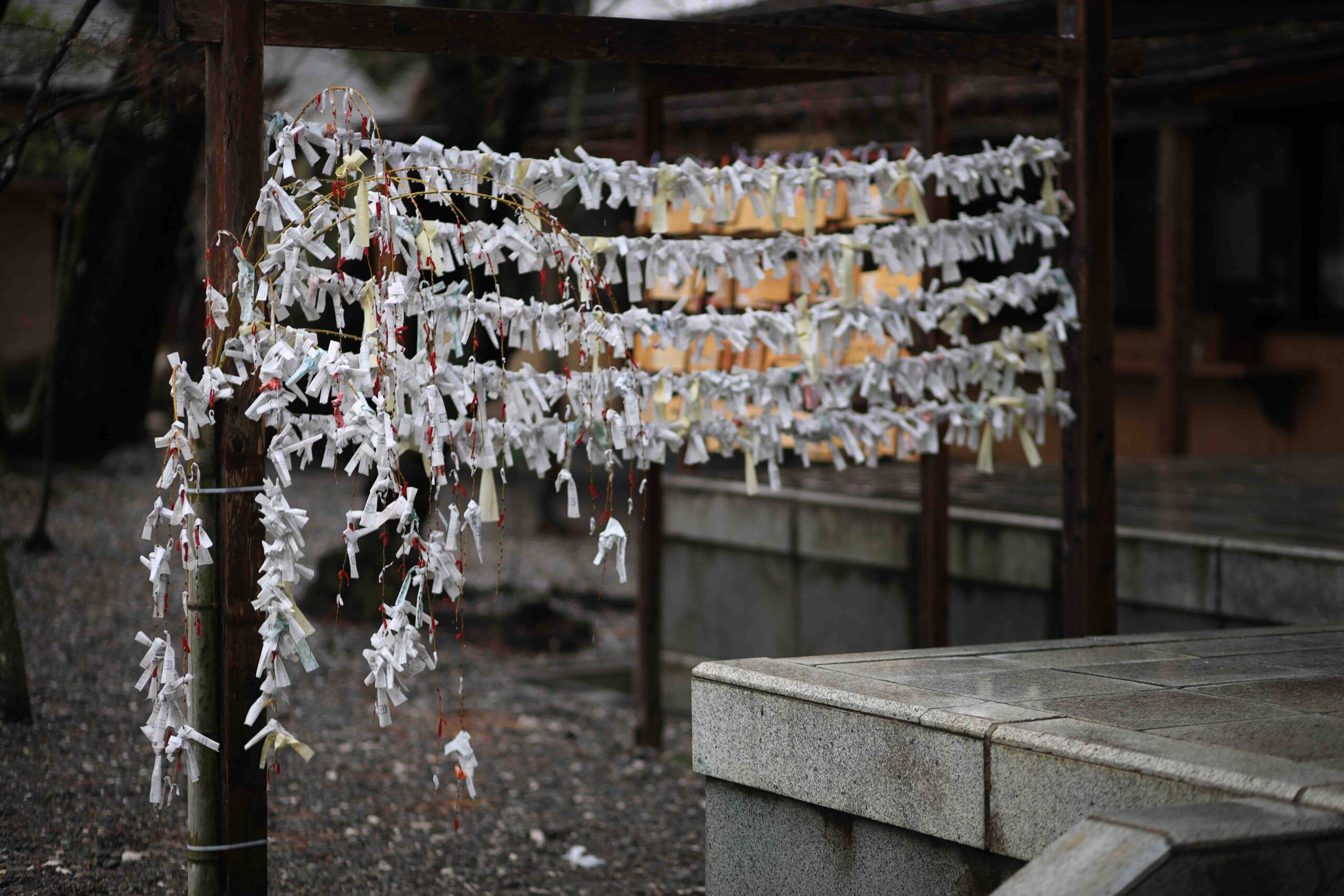
Tip: Yamauchi Shrine is also used for traditional Shinto weddings. If you visit on a weekend, you might be lucky enough to see a wedding ceremony taking place.
Sansuien: A Historic Garden Built on Samurai Grounds
Right next to Yamauchi Shrine is Sansuien (三翠園). Today it operates as a hotel and hot spring facility, but the land itself has a remarkable history. This was the private residence of the Yamauchi clan — the place where the lords of Tosa lived when they were in the city.
The entrance gate is impressive. It is a large, traditional Japanese gate with a heavy tiled roof, dark wooden pillars, and two paper lanterns hanging on each side. It looks exactly like the kind of gate you would expect at a samurai lord’s residence — because that is exactly what it was.

Along the outer walls of the property, you can still see the original samurai-era architecture. Long white plaster walls with dark wooden lattice, heavy roof tiles, and stone foundations — these structures have survived for hundreds of years and are now protected as important cultural properties.

If you walk around the outside of the grounds, you will also find a quieter path along the stone walls. This is one of my favorite spots in Kochi city — it feels like a place that time has not quite caught up with yet.

Kyu Yamauchi-ke Shimoyashiki Nagaya Exhibition Hall (Free to Enter)
One of the best-kept secrets in Kochi city is inside the Sansuien grounds. The Kyu Yamauchi-ke Shimoyashiki Nagaya Exhibition Hall (旧山内家下屋敷長屋展示館) is a beautifully preserved building that was once part of the Yamauchi clan’s lower residence. You can step inside and explore at no cost — no ticket, no reservation needed.
This long, low structure is a nagaya — a type of building used by the samurai clan for storage, servants’ quarters, and administrative purposes. Walking through it gives you a real sense of the scale and daily life of a powerful feudal lord’s household. The woodwork, the thick plaster walls, and the heavy roof tiles have all been carefully maintained.
Look closely at the roof details — the decorative tiles at the corners are carved with incredible precision. These ornamental tiles were made by skilled craftsmen and were designed both to protect the building and to display the family’s status.
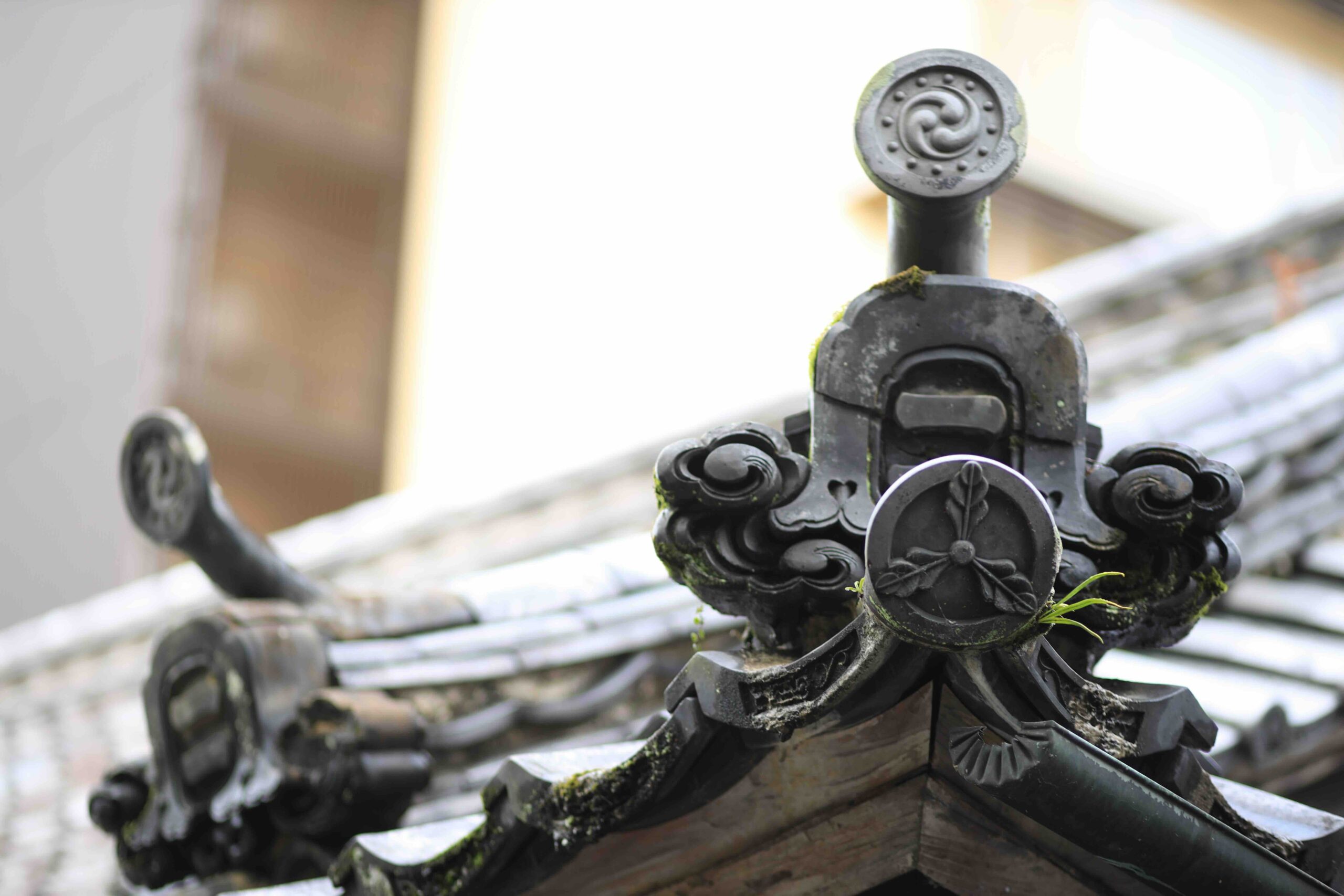
Tip: The entrance to the exhibition hall is easy to miss. Walk through the main Sansuien gate and look to your left. Most visitors walk straight past it without realizing they can go inside for free.
A Personal Note
I had my wedding ceremony at Yamauchi Shrine. It was a traditional Shinto wedding, and I still remember the feeling of walking through those old stone gates on that day. For me, this shrine is not just a historic site — it is a place with real personal meaning.
When I take guests here, I enjoy sharing not just the history of the Yamauchi family, but also the quieter, more personal side of what places like this mean to the people who live in Kochi. Shrines like this are still part of everyday life here — for weddings, for new year visits, for festivals. They are not museums. They are living places.
Visiting Yamauchi Shrine and Sansuien with Kochi Insider
Yamauchi Shrine and Sansuien are located in the center of Kochi city, very close to Kochi Castle. They make a perfect combination for a half-day of exploring Kochi’s samurai history. I include these sites as part of my private guided tours for visitors who want to go beyond the usual tourist spots and understand the real history of this city.
- Private transportation from Kochi cruise terminal or your hotel
- English-speaking licensed guide with personal knowledge of these sites
- Combined with Kochi Castle, Hirome Market, and other city highlights
- Flexible schedule to fit your time in Kochi