
Uchiwa Fan Making in Kochi: A Hands-On Shore Excursion You Will Not Forget
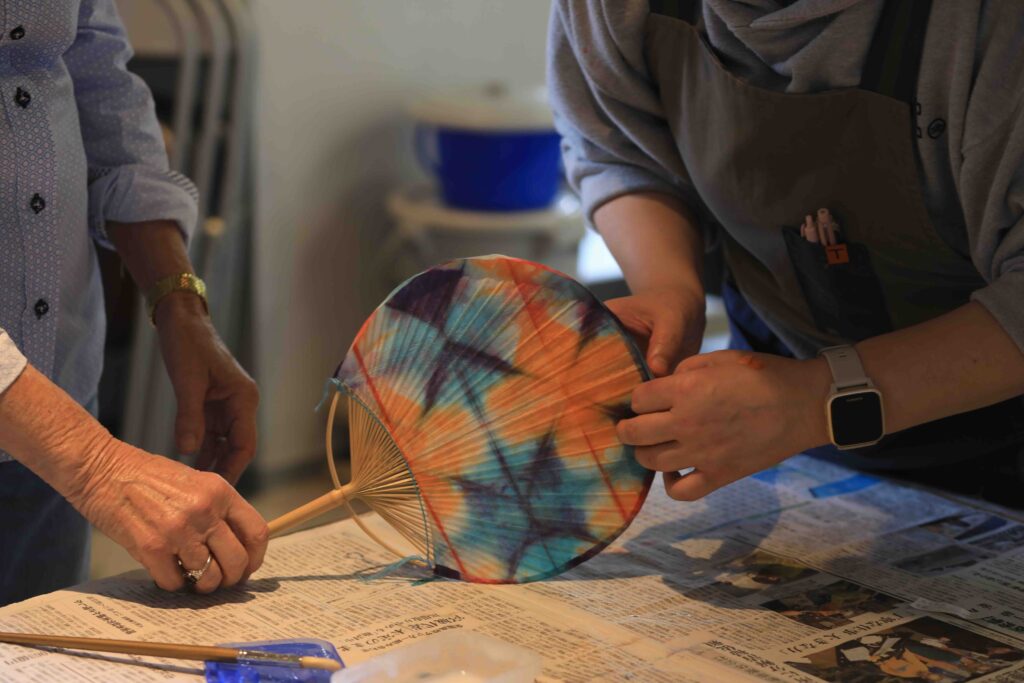
What if you could make something with your own hands and take it home as a souvenir? On this day in Kochi, a couple from Australia did exactly that. At a small workshop in Ino Town, they sat down, picked up a brush, and started creating their own uchiwa — a traditional Japanese round fan. It was one of those moments that no gift shop can give you.
What Is an Uchiwa Fan?
An uchiwa is a flat, round Japanese fan. Unlike a folding fan, it has a fixed shape. It has been used in Japan for over 1,000 years — to cool yourself in summer, to fan a fire when cooking, and even in traditional festivals and dance. Kochi is one of the few places in Japan where uchiwa fans are still made by hand, using local washi paper and bamboo.
The town of Ino, just outside Kochi City, has a long history of washi paper production. The workshop we visited, Kuraud, is one of the best places to experience this craft firsthand. You do not need any skills or experience. The staff will guide you through every step, and by the end, you have something truly one of a kind.
How the Fan-Making Experience Works
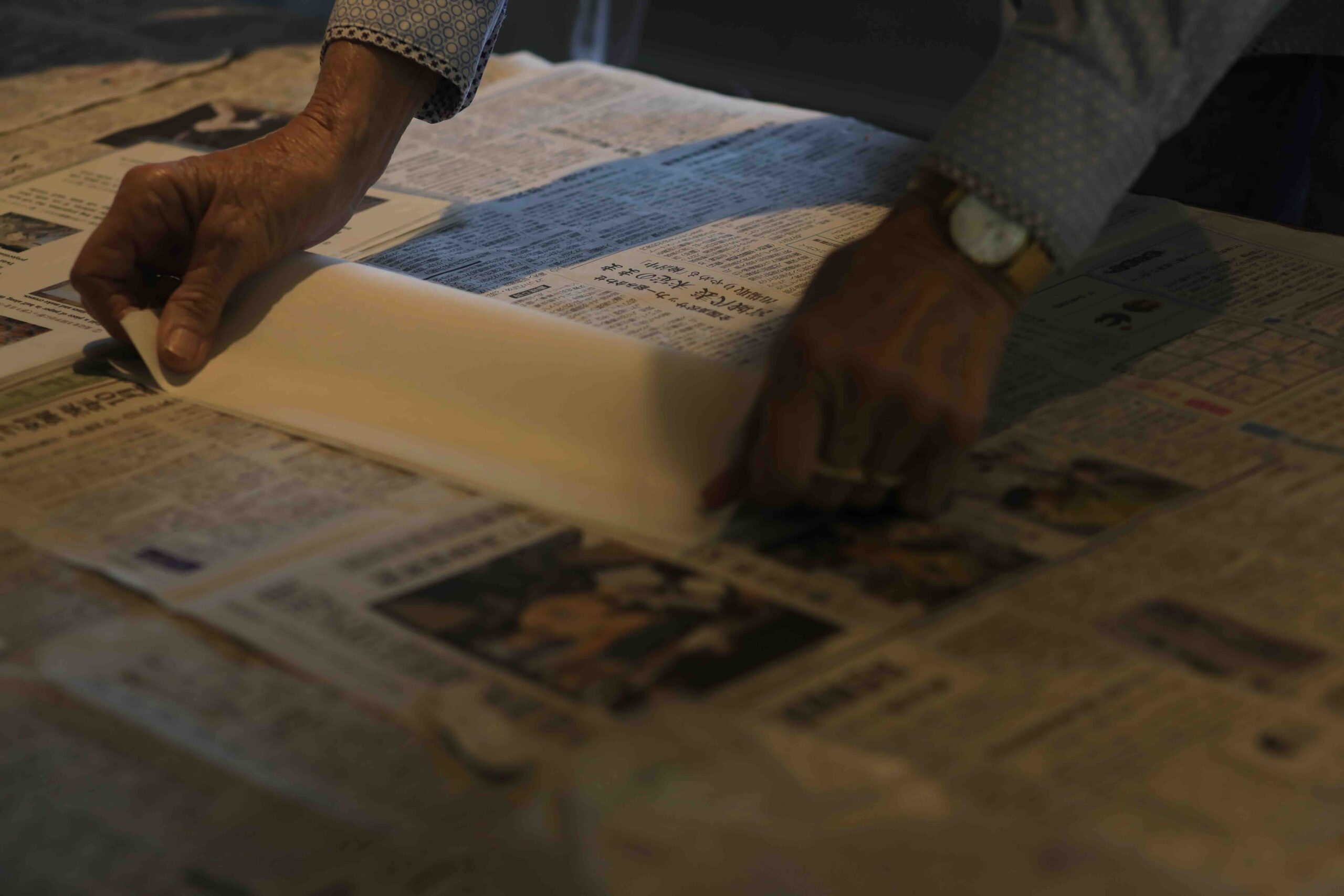
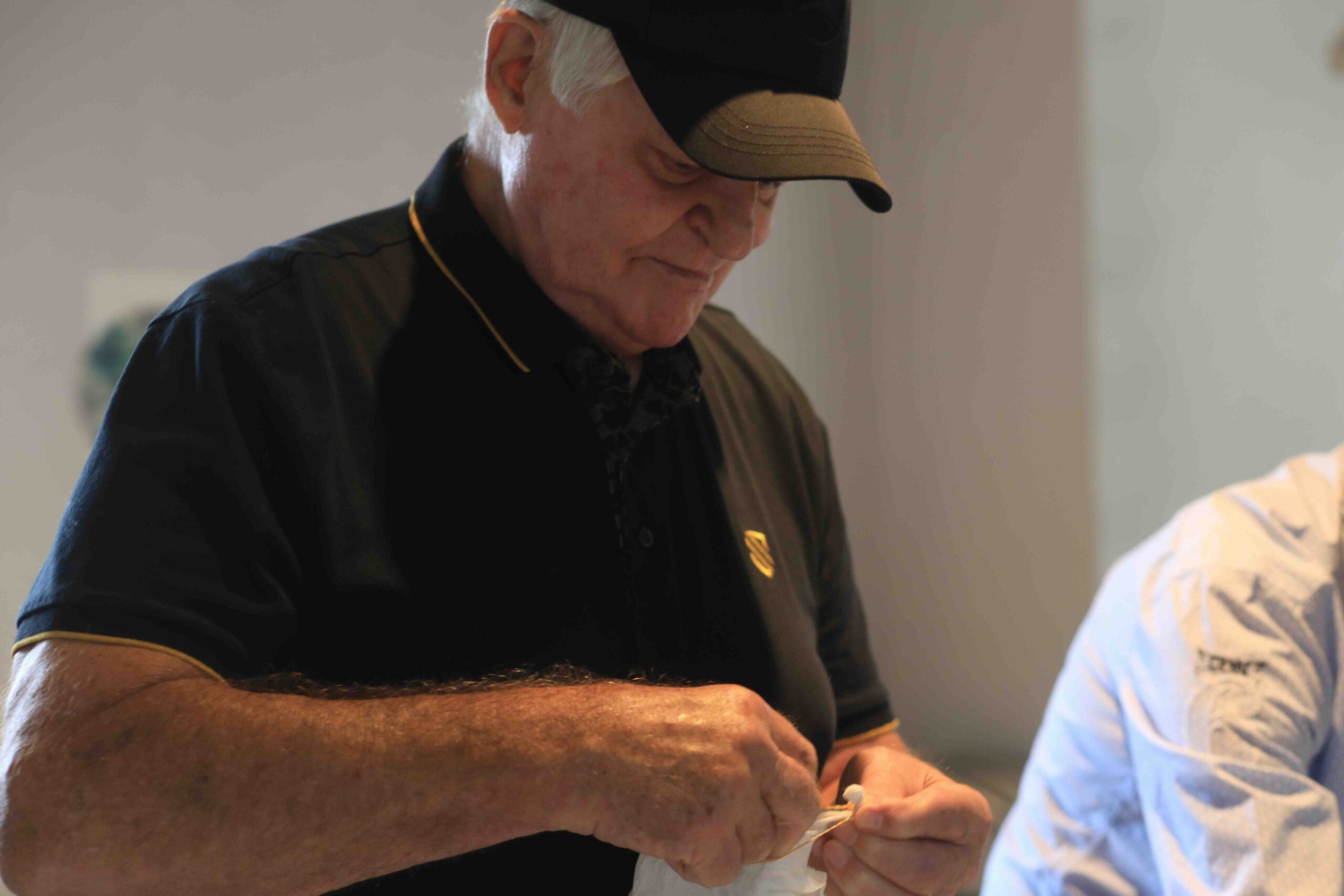
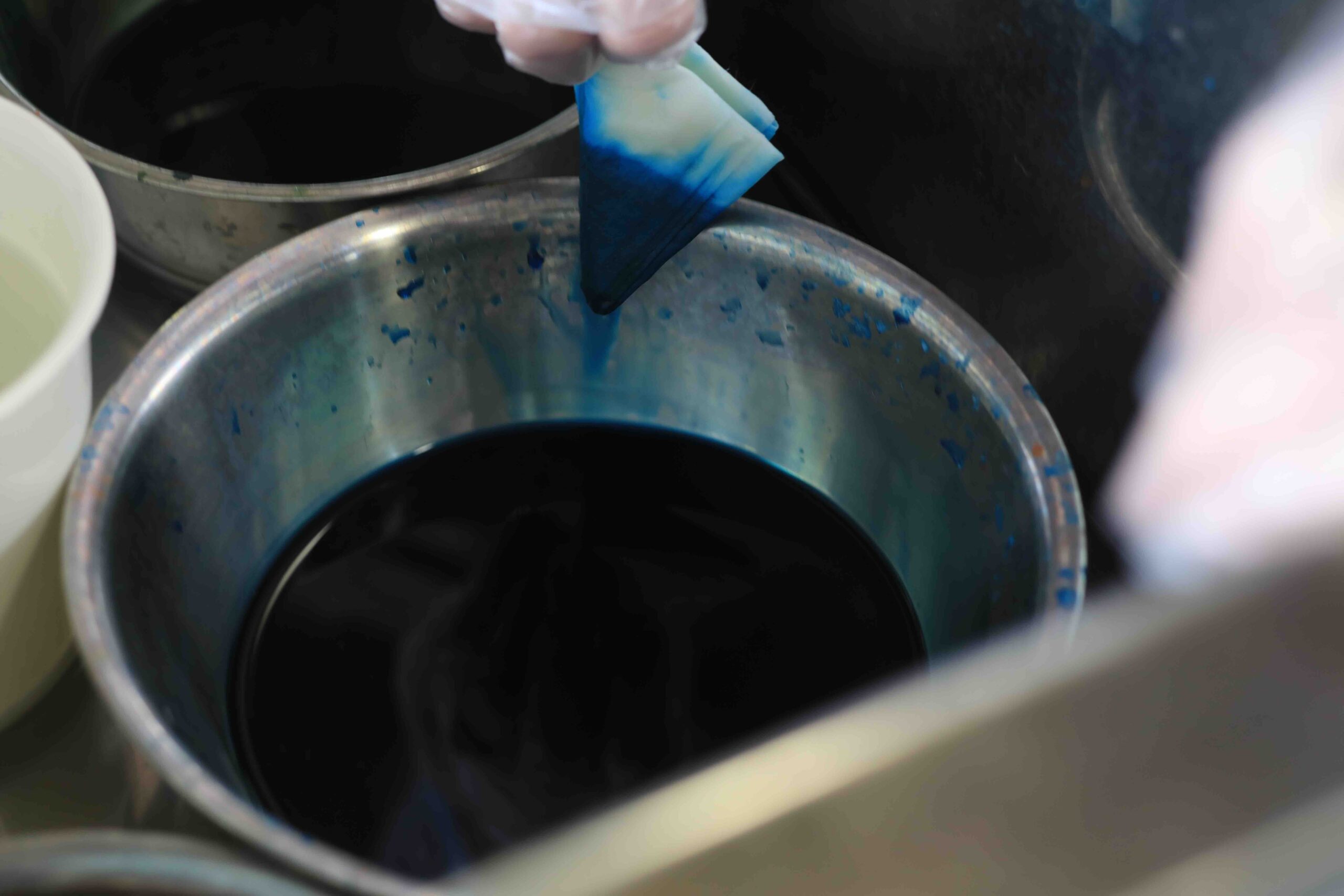
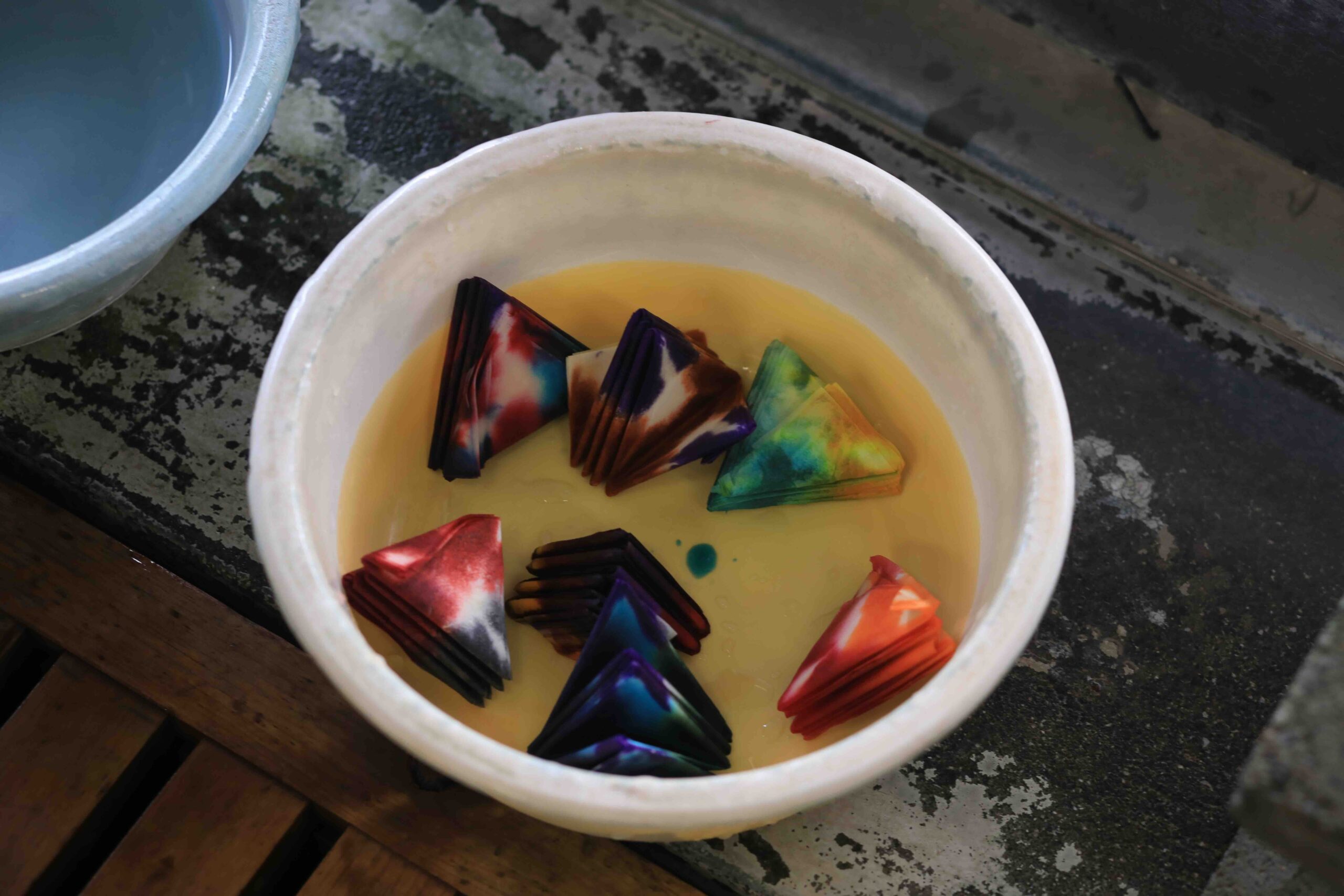
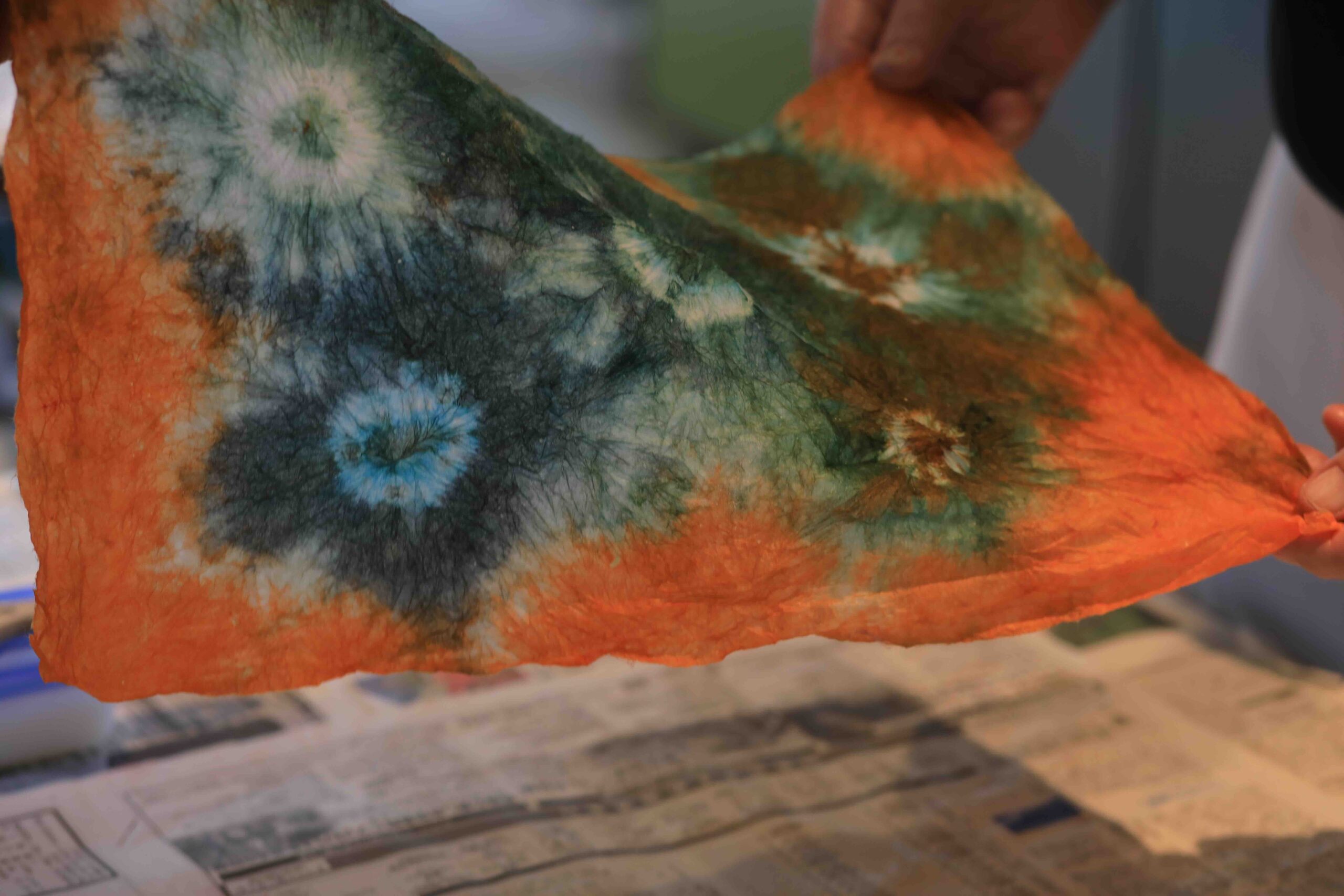
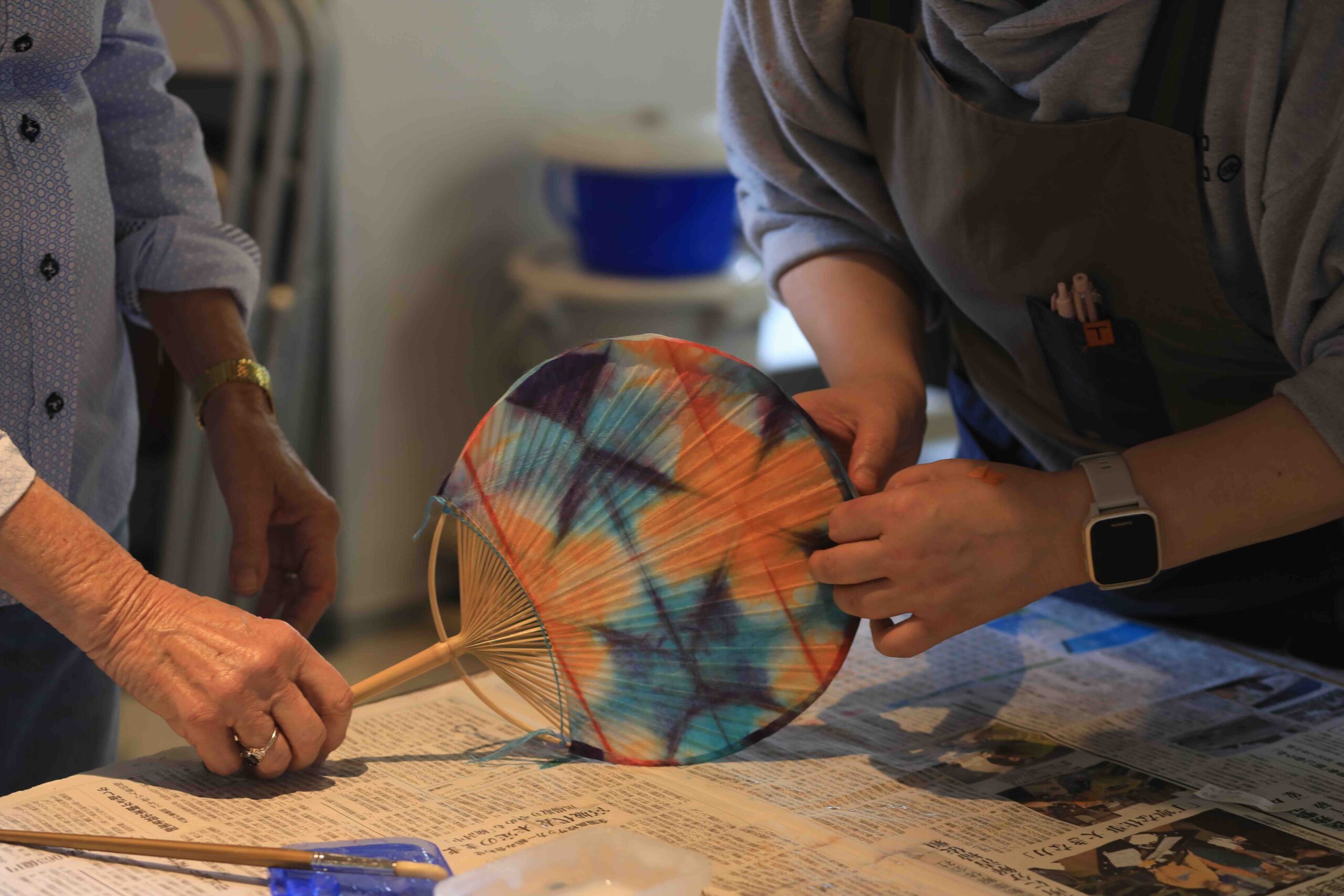
The process starts with a sheet of washi paper. You fold it into a small triangle, then dip or press each corner into different colors of dye. The colors bleed into the paper in a beautiful, unpredictable way — no two fans ever look the same. This is part of the magic.
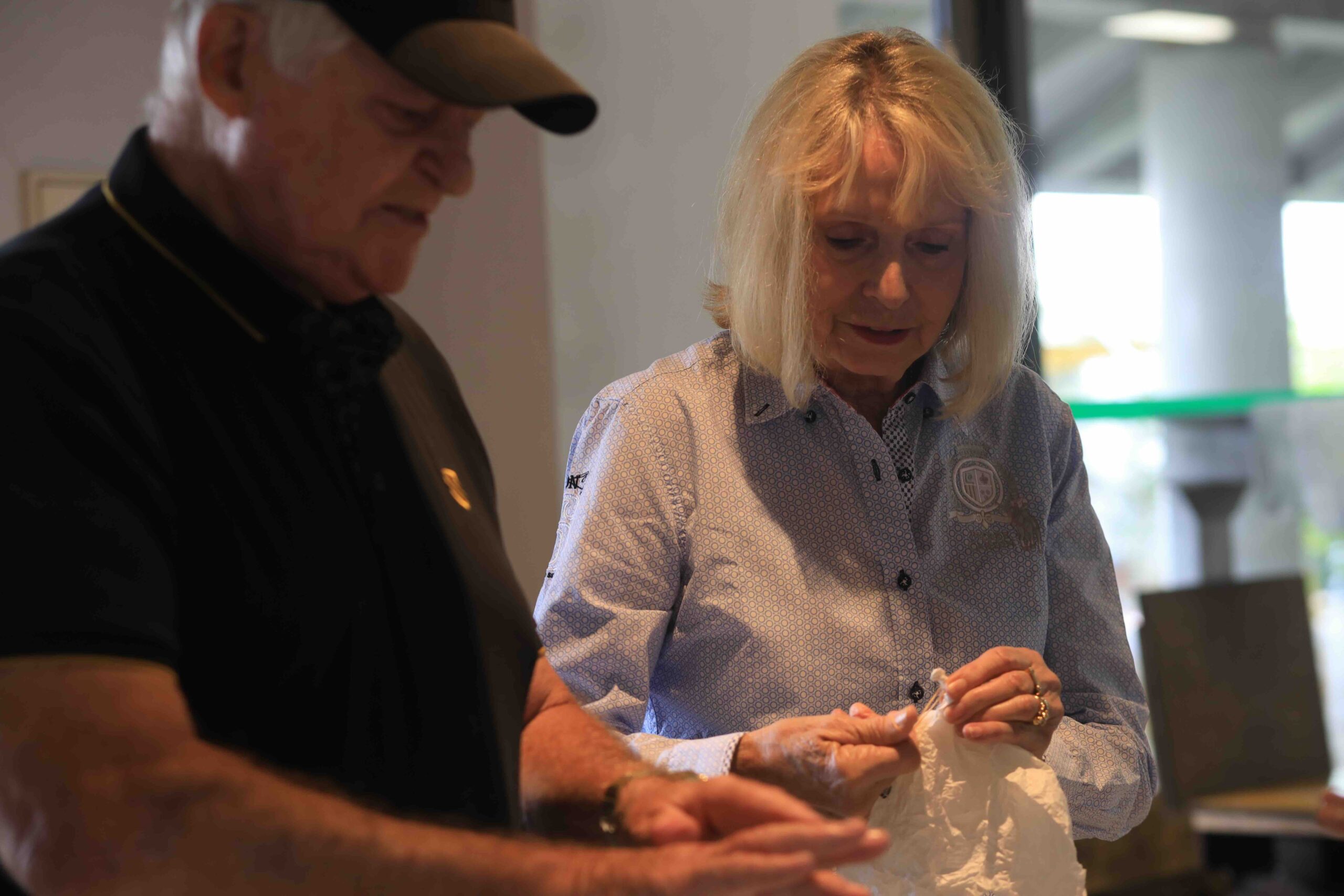
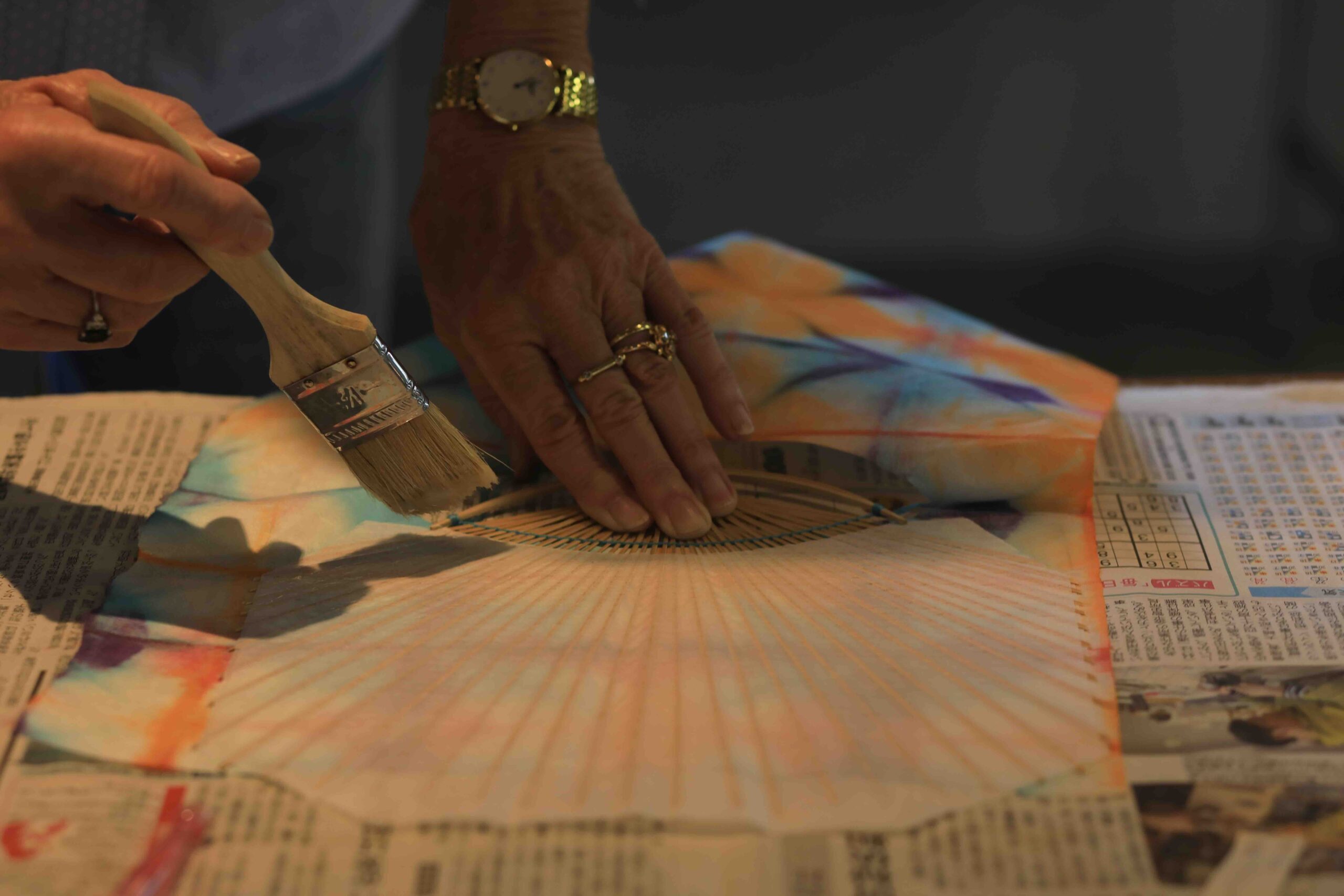
Once you open the paper, the full pattern appears. It always gets a reaction — people cannot believe the colors they made. Then the paper is laid flat on a bamboo frame and smoothed out carefully by hand. A brush is used to press the paper gently onto the ribs of the frame, making sure everything is attached evenly.
The final step is finishing the edges and attaching the handle. The workshop staff help with the more technical parts, but you do the most important steps yourself. When it is done, you hold up your finished uchiwa fan and realize — this is something you actually made.
After the Workshop: The Niyodo River and Kochi City
After the fan-making experience, we drove to Nagoya Chinkabashi — a traditional stone subsidence bridge on the Niyodo River. This is one of those quiet, beautiful spots that most visitors to Japan never see. The river here is an incredible shade of blue-green, and standing on the low bridge, with the water flowing around your feet on rainy days, is an experience you remember.
From there, we headed into Kochi City to see Kochi Castle. Even from the outside, the castle is impressive. We walked through the Otemon Gate — the original gate from the Edo period — and looked up at the main keep from the grounds below. For guests who prefer not to climb steep stairs, the exterior and the gate alone are well worth the visit.
Lunch was at Hirome Market, Kochi’s most lively food hall. We had Yasubee gyoza — a local specialty with a crispy bottom and juicy filling — and aonori tempura, made with Kochi’s famous green seaweed. Everything was fresh, flavorful, and very Kochi.
On the way back, we stopped at an antique kimono shop near Harimayabashi. A beautiful haori — a traditional short kimono jacket — caught the eye of one of our guests, and it came home with them to Australia. That is the kind of unexpected find that makes a private tour different from a group tour.
We finished the day at Okawasuji Samurai Residences, a quiet street of preserved Edo-period samurai houses that most tourists never find. It was the perfect ending to a day full of genuine Kochi experiences.
What Guests Said
After the tour, the guests left a review that said it was “a very worthwhile experience” and that their guide “took his time to explain everything of interest.” That is exactly what a private tour in Kochi should feel like — not rushed, not scripted, just a real day in a place that most people never get to know.
Perfect for Cruise Ship Passengers
Arriving in Kochi by cruise ship? This kind of day is designed with you in mind. I will pick you up directly from Kochi cruise terminal, and we will make sure you are back to your ship with plenty of time before departure.
The uchiwa fan-making experience at Kuraud takes about 60 to 90 minutes and involves sitting at a table, so it is comfortable for guests with any fitness level. Combined with a stop at the Niyodo River, a visit to Kochi Castle, and lunch at Hirome Market, this makes for a very full and satisfying shore excursion.
- No experience needed for the fan-making workshop
- Comfortable for guests who prefer less walking
- You take home a unique, handmade souvenir
- All transport is included as part of the guided tour
- Comfortable return to port with time to spare